Queensland Australia part one
This post follows a road trip between my home town of Melbourne and far north Queensland Australia, then traces the return journey inland. It is an eclectic travelog, containing anything I find interesting. Mainly centered on bird photography but not exclusively. I use both a mirrorless interchangeable lens camera and a mobile phone, sometimes I care about the image, then at other times its just a record.
While many birds were encountered, (and photographed) I have only included here those species not found in the south or that have meaning in some other way. Seeing birds was disappointing in the dense rainforest cover. Photographing them near impossible as the light levels in the forests was several times dimmer than that encountered in the few clearings. Nonetheless, I include those images I was able to capture even if the photographic merit is not the best.
Winton Wetlands Victoria
The Winton wetlands is a nature reclamation project Near Wangaratta in Victoria.
It was known previously as Lake Mokean, which was an artificial reservoir built in the late 1960s for irrigation purposes. Before that it was rural settlements. Prior to this it was an important wetland area for indigenous peoples.
The damming of these wetlands killed the Eucalypt forests and the ghosts of these trees can be seen throughout the basin. The reservoir was drained about two decades ago and some effort made to regenerate the wetland environment and introduce tourism. It is a good location for birding enthusiasts. The day I moved through was drizzle, and not so inspiring. As this area is relatively close to home and is also a rare example of land parcel ‘nature regeneration’ I will return to this place in the future.
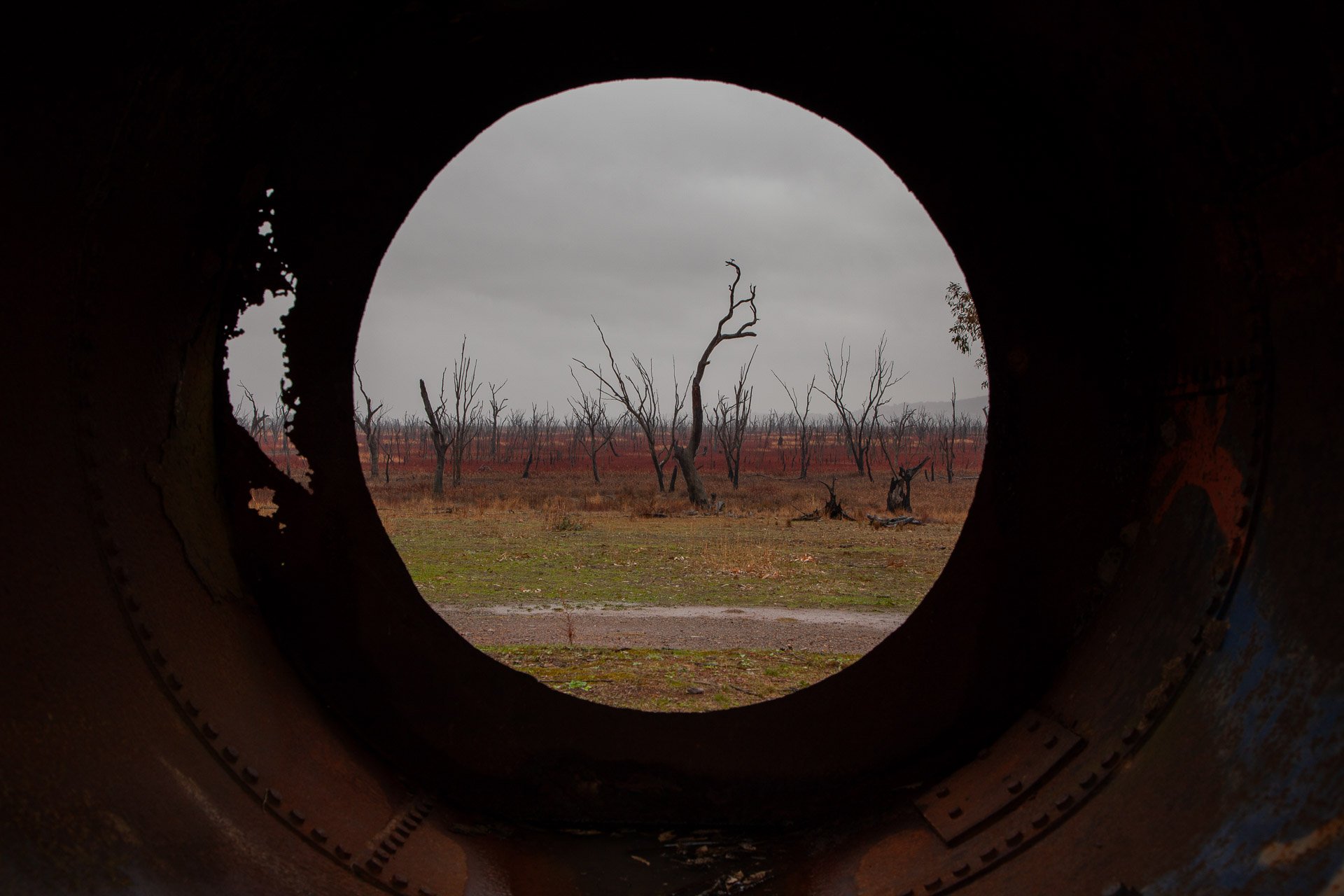
Winton wetlands. Here is an image looking through a relic from the agricultural past.
Old Pacific Highway NSW
The old highway north of Sydney (the one I used) is a winding single lane mountain road in each direction.
This old road has been superseded by a super highway that cuts right through the mountains and crosses under the old road several times. This new road is an engineering ‘marvel’ removing entire hills in its pursuit of faster, straighter, bigger. (see my blog on land classification). To obtain this shot I perched precariously on the edge of a ten-storey high vertical drop to the road below.
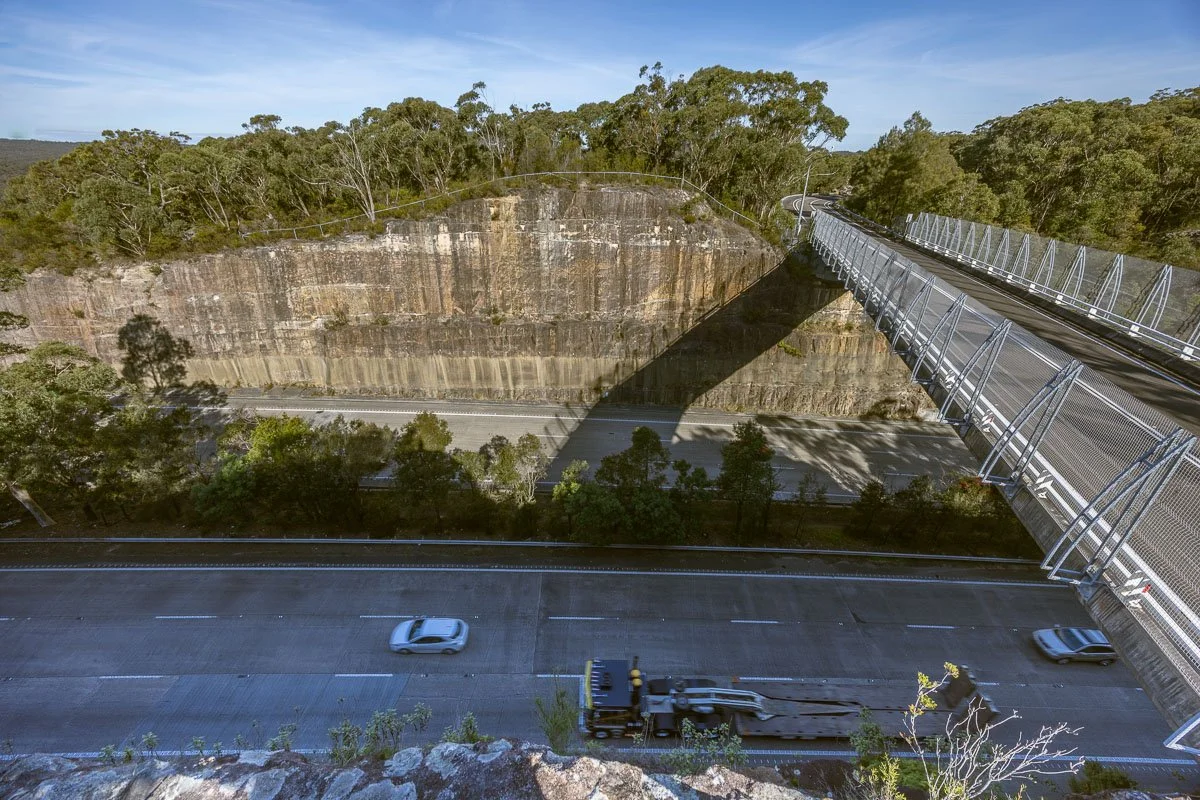
The expressway undercuts the old Pacific Highway
Lamington National Park. QLD
A magnificent tree on the edge of a clearing so it is visible (many are not). This massive tree is an entire eco system in itself. The base of the tree is about 3 meters across.
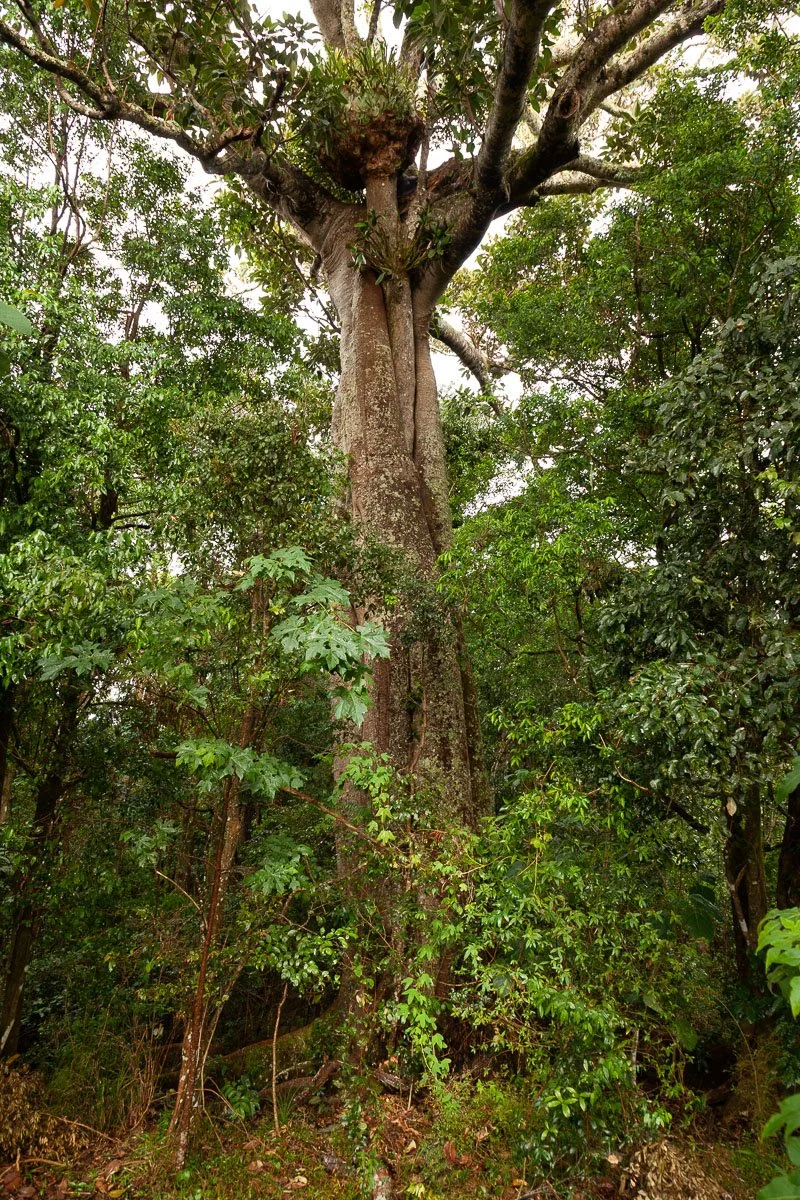
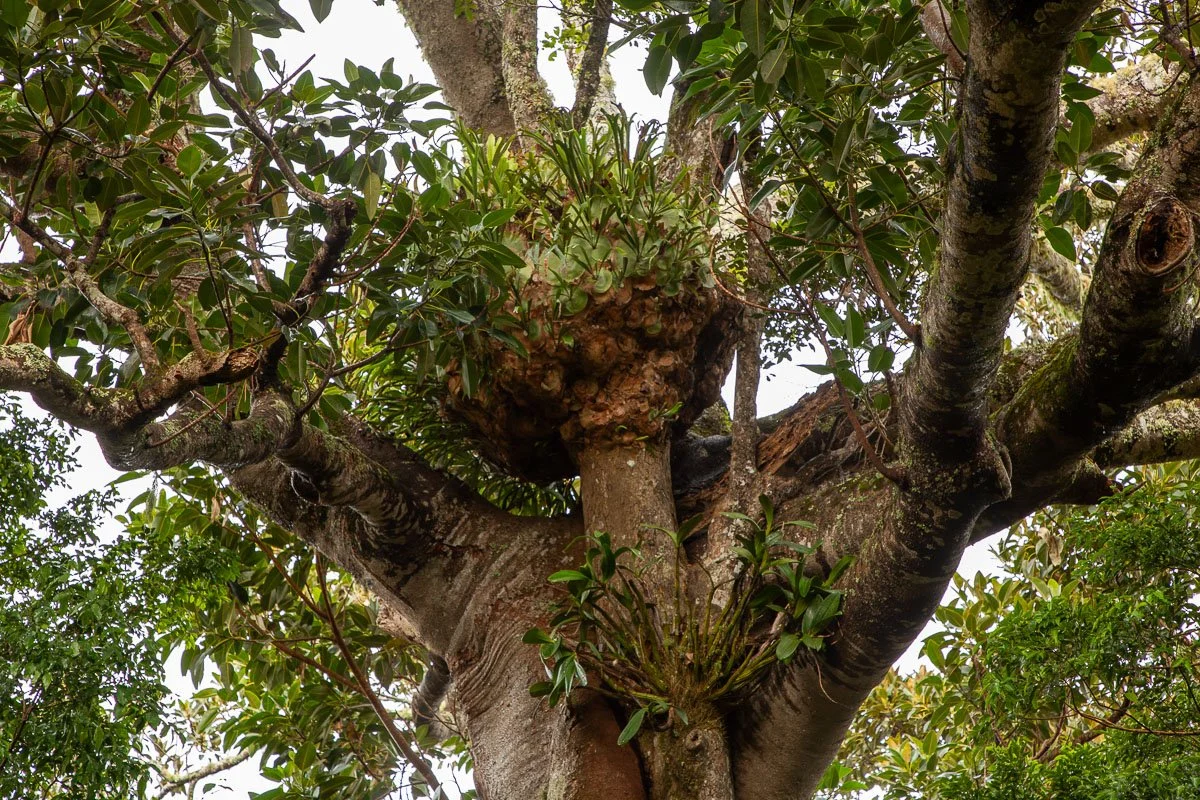
And here is a closer look at the crown, and the Stag Ferns attached.
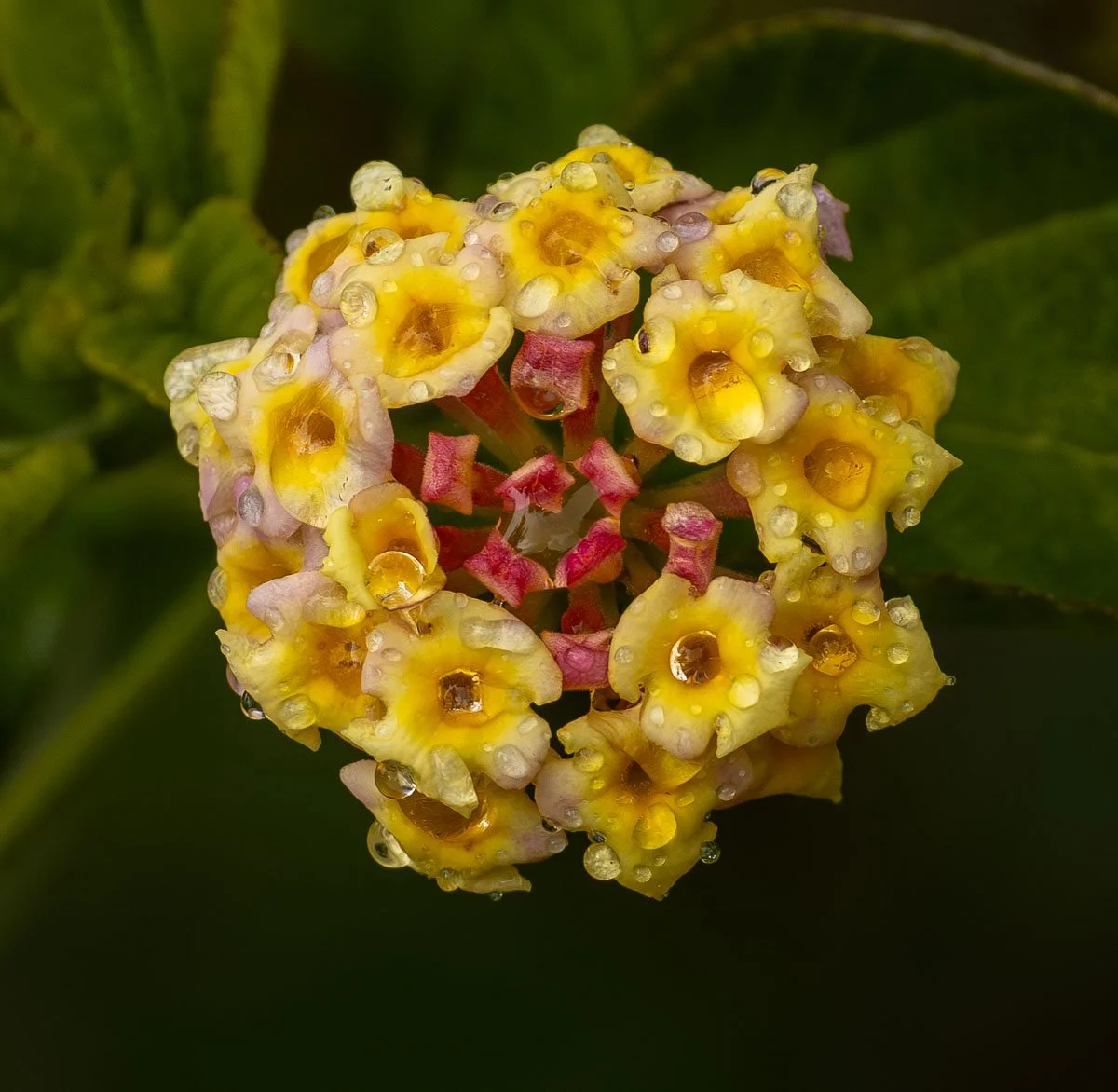
A flower of Lantana camara growing at the base of this tree wet from recent rain. This is a weed plant in the rain forests.
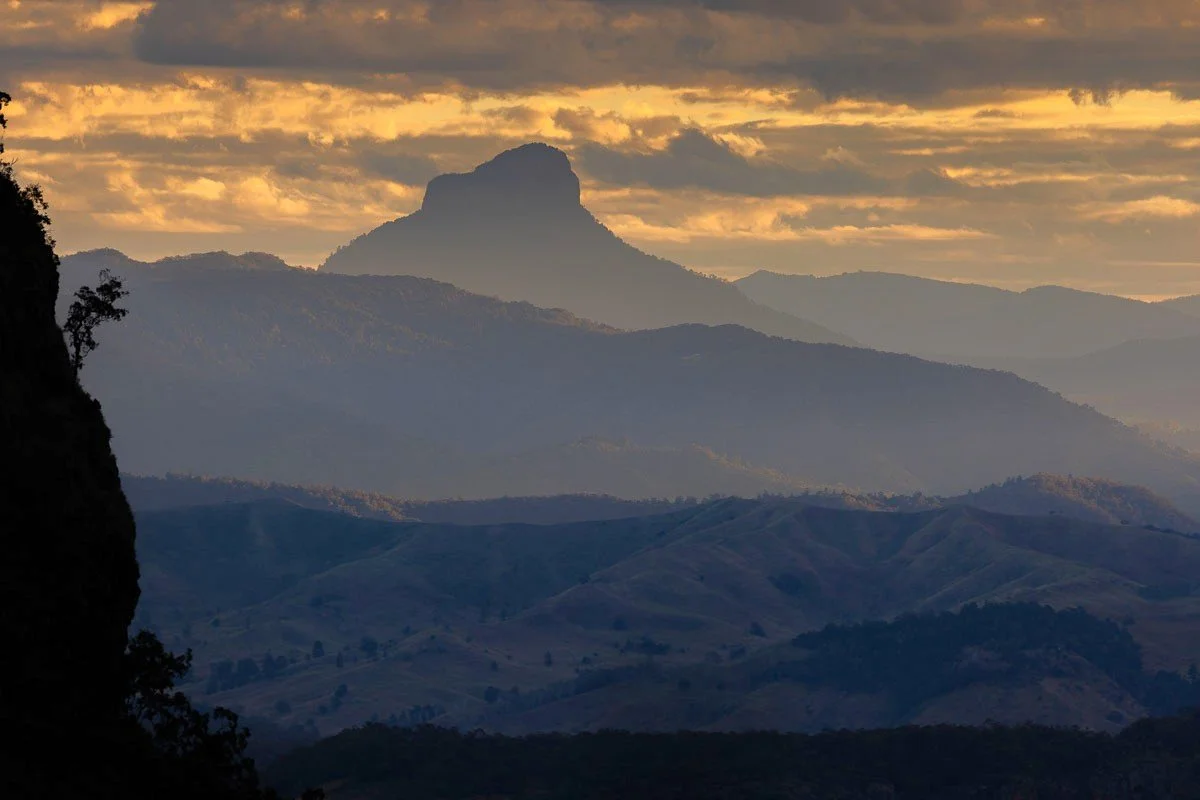
Sunset on Mt Lindesay Lamington National Park QLD. 4:37pm 22/6/2025
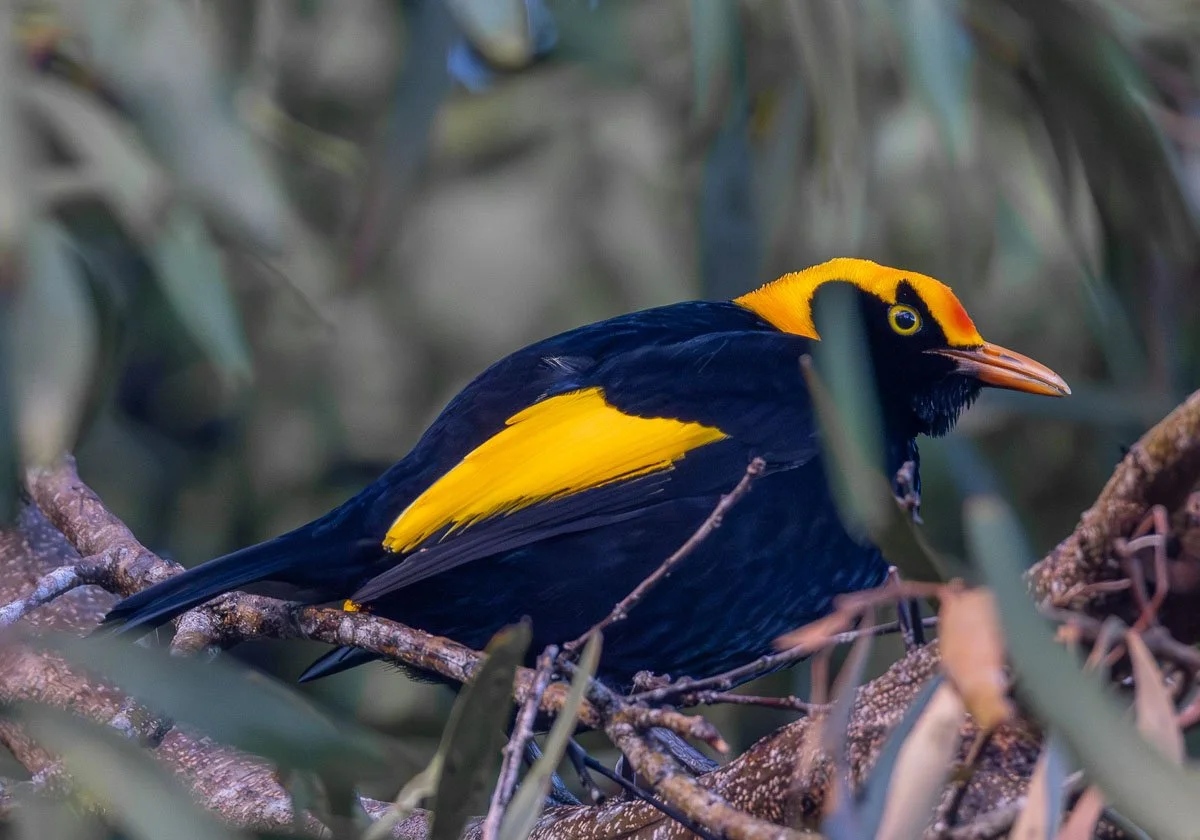
The elusive Regent Bowerbird (adult male), in Lamington National Park.
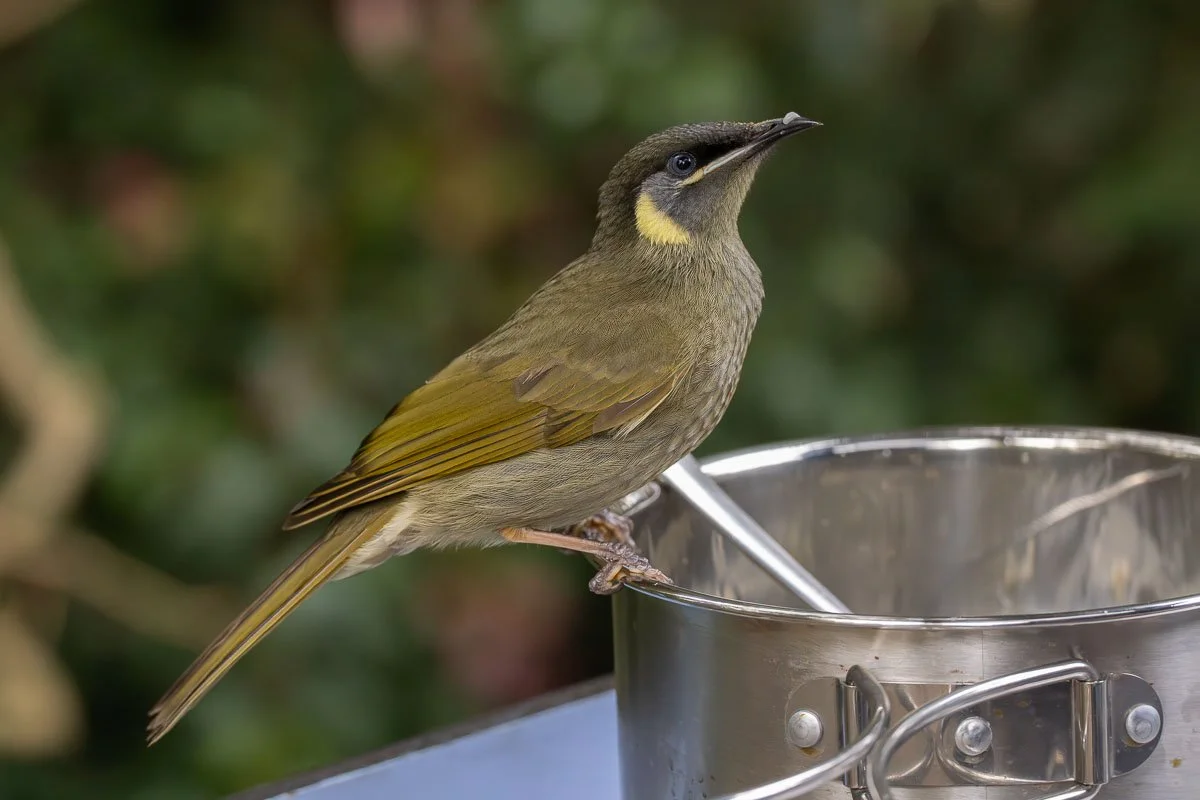
Lewins Honey-eater. This cheeky bird was used to campers, taking any opportunity to clean the pots. Lamington National Park.
I heard many Lyrebirds and Eastern Whipbirds but was only able to catch a glimpse of either. The occasional Satin Bowerbird, and flocks of several King Parrots were also present in Lamington National Park.
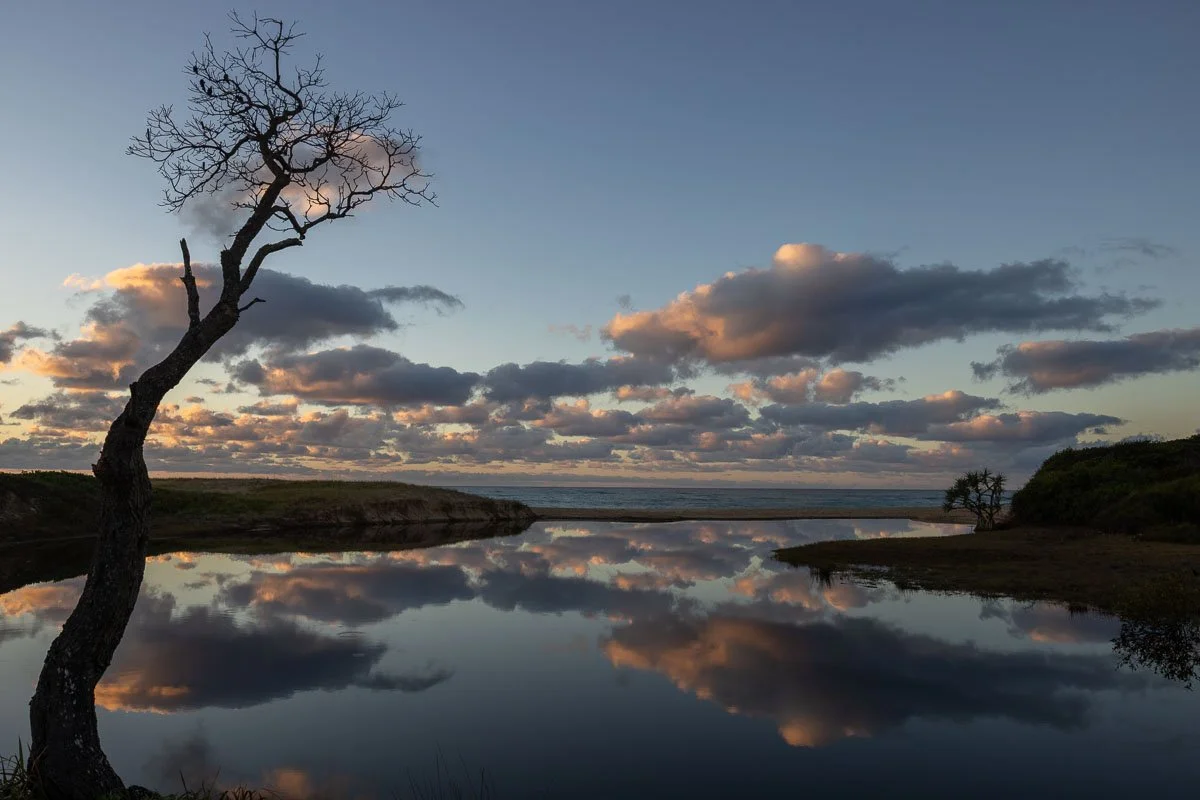
Sunrise at Corindi Beach NSW on 21st June at 6:49AM
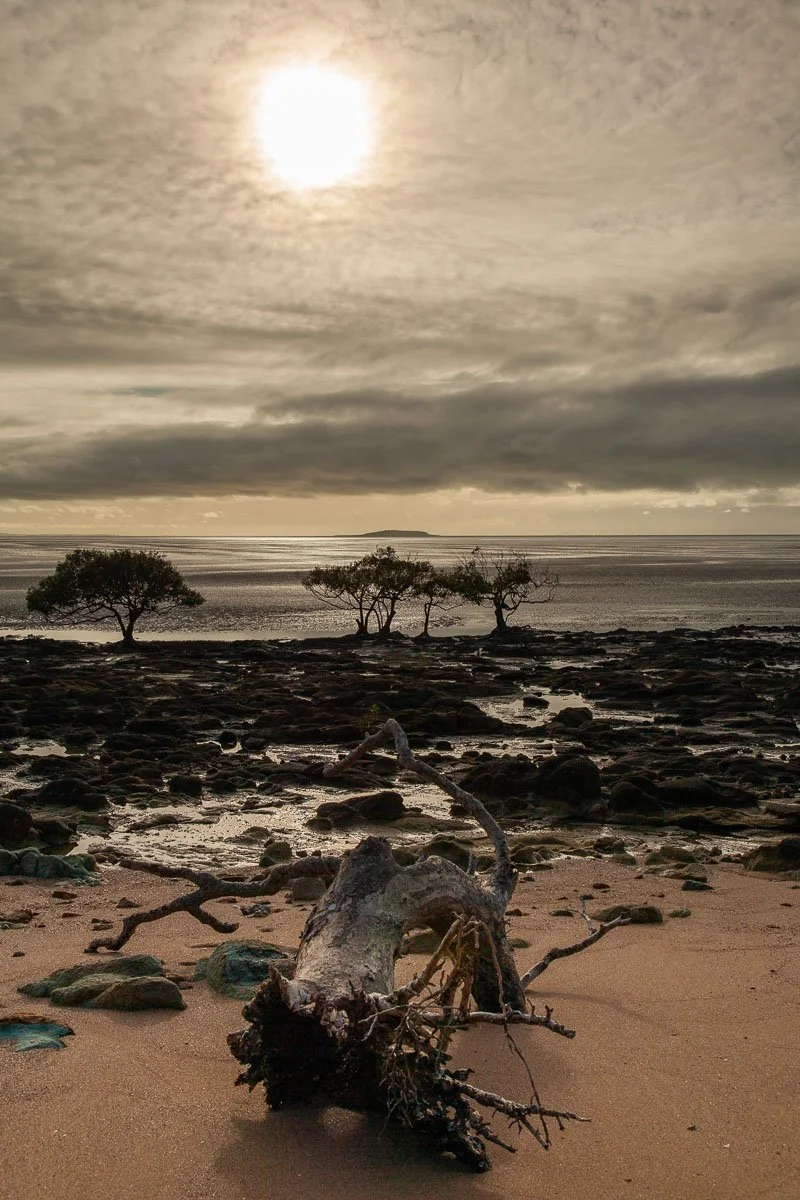
Sunrise at Carmila Beach QLD 28th June 2025
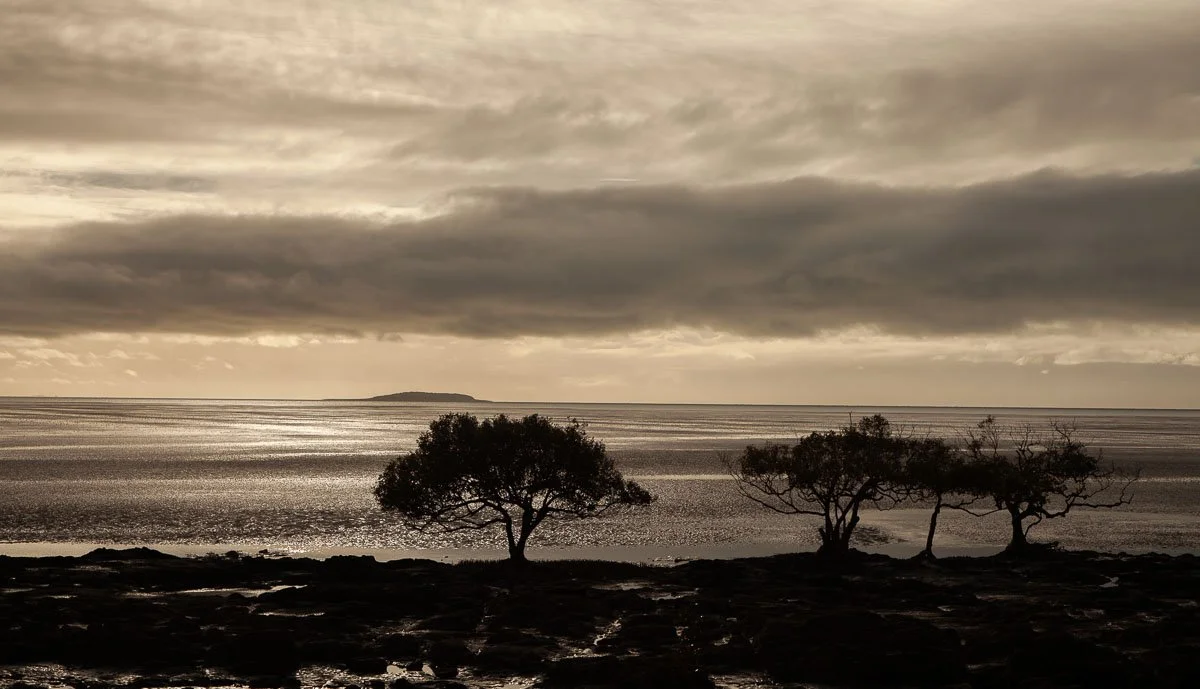
Sunrise at Carmila Beach QLD 28th June 2025
Land use South of Cairns QLD. And east of the Great Dividing Range.
Queensland agriculture revolves around cattle and sugar cane. The viable land between the coast and the Great Dividing Range is often planted with cane. In the following photos we can see several parcels given over to various uses: agriculture, urbanization, infrastructure, and conservation.

In the above example: foreground- cane fields split with an invented and usually straight boundary. Machinery that plants and harvests cane is only efficient in straight runs, so the divisions allow for this. New Urban development (lower Right), agriculture yields to urbanization, very rarely the other way around. Middle ground- existing development and urbanization through which a multi lane motor express services a growing population. Background- uncleared forest, not by intent but because the economics were not viable.
This forest is now both privately held and some is state owned conservation reserve or national park.
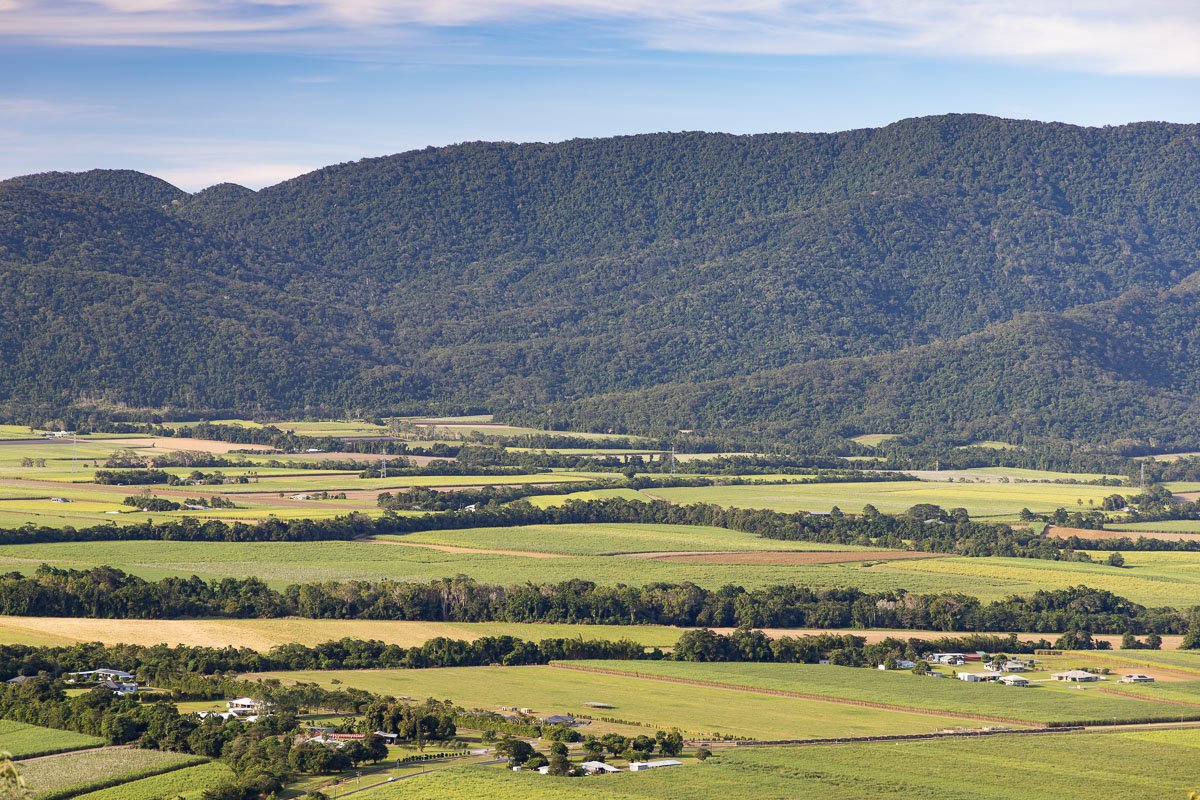
Cane fields the outer boundary shape is defined by natural feature, while the invented internal holdings are straight lines, intersected by water courses. Read my blog page on land use classification to understand what these photos are about.
Wongi Waterholes Queensland.
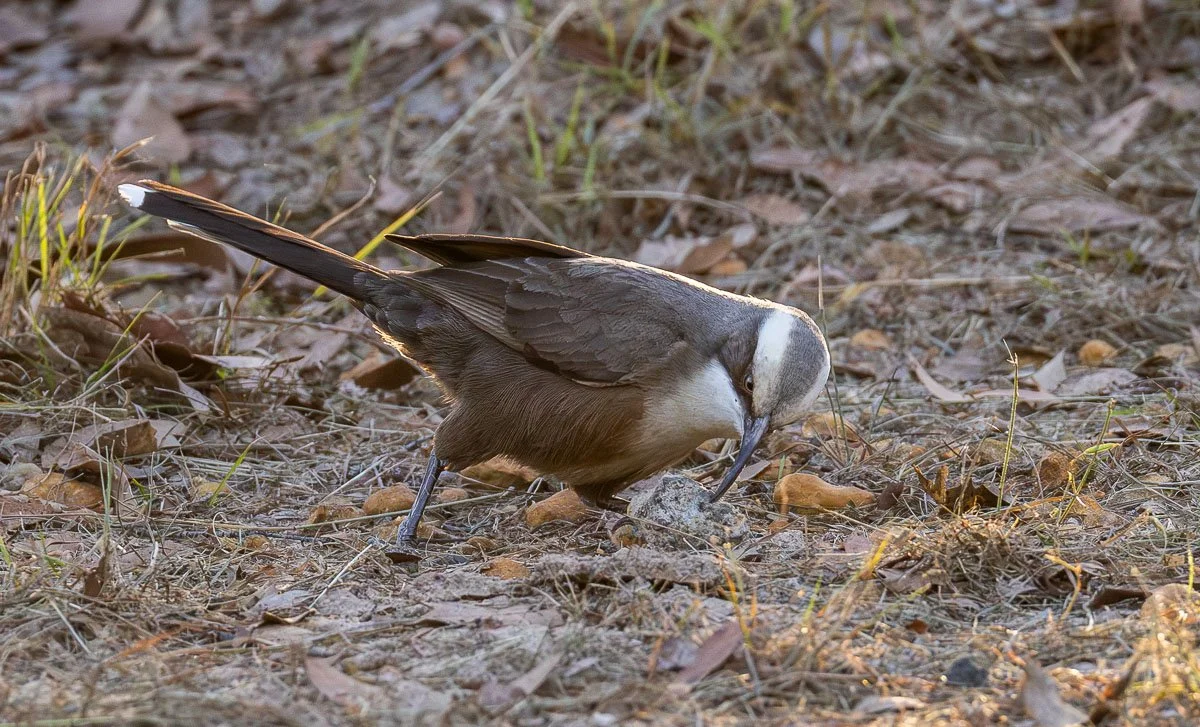
Grey Crowned Babbler at Wongi Waterholes QLD. A member of a flock of about 10 birds.
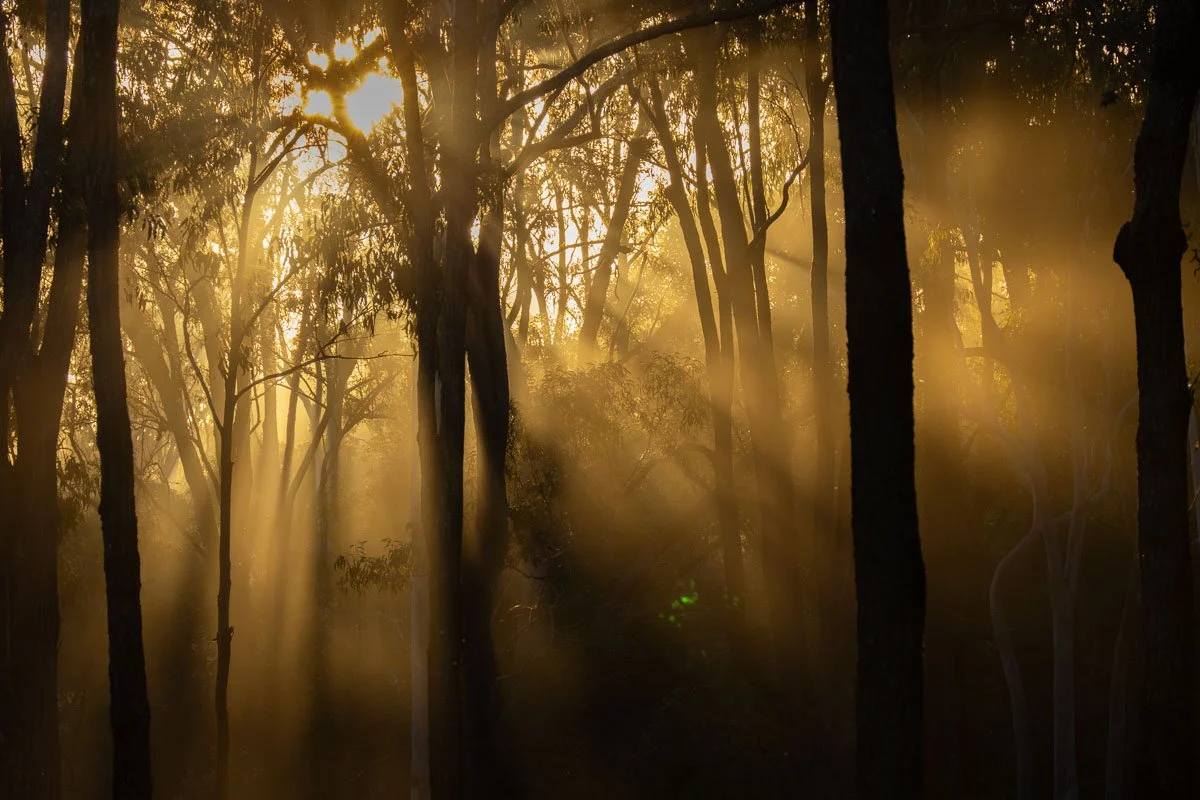
Bush sunset. Wongi waterholes. QLD. 25th June 2025 at 4:45pm. An off the beaten track, understated place to camp. Very peaceful.
Finch Hatton Gorge area Queensland.
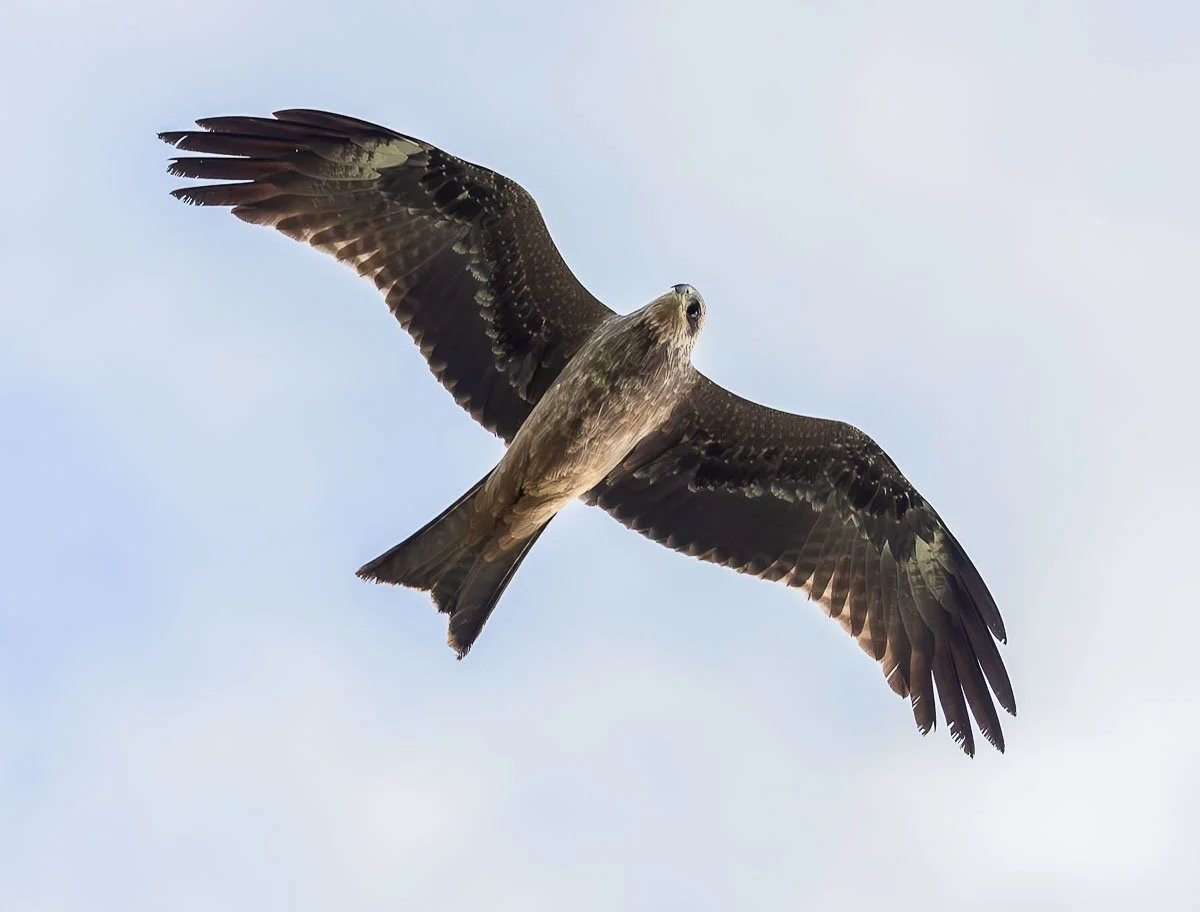
Black Kite. Finch Hatton Gorge QLD
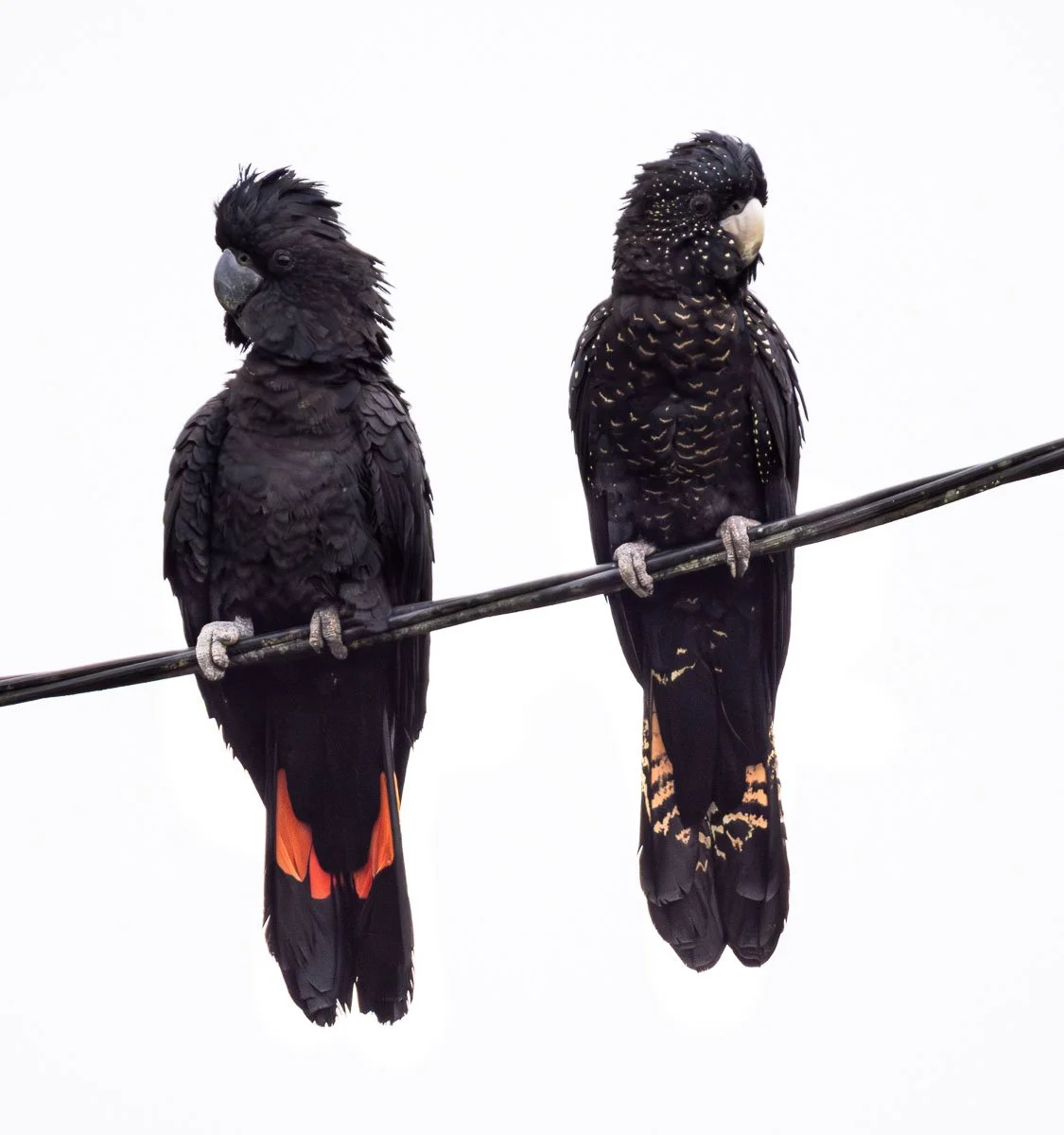
Red-tailed Black cockatoos. (M) and (F) A pair from a large flock seen at Pinnacle in Queensland. These birds enjoying the open cane fields, and they don’t mind perching on the human infrastructure provided. I spent some time photographing these two from the comfort of my driver’s seat. There were many in this flock that flew away as suddenly as they appeared.
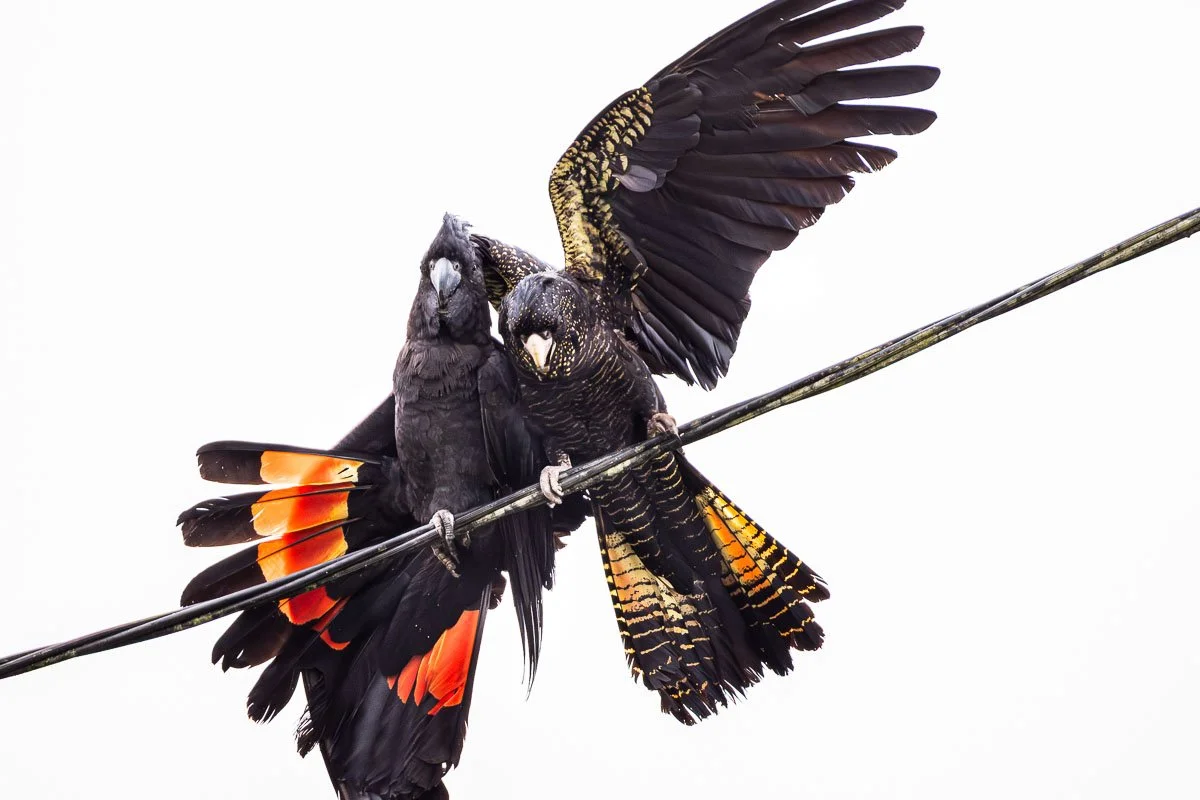
Shake those tail feathers.
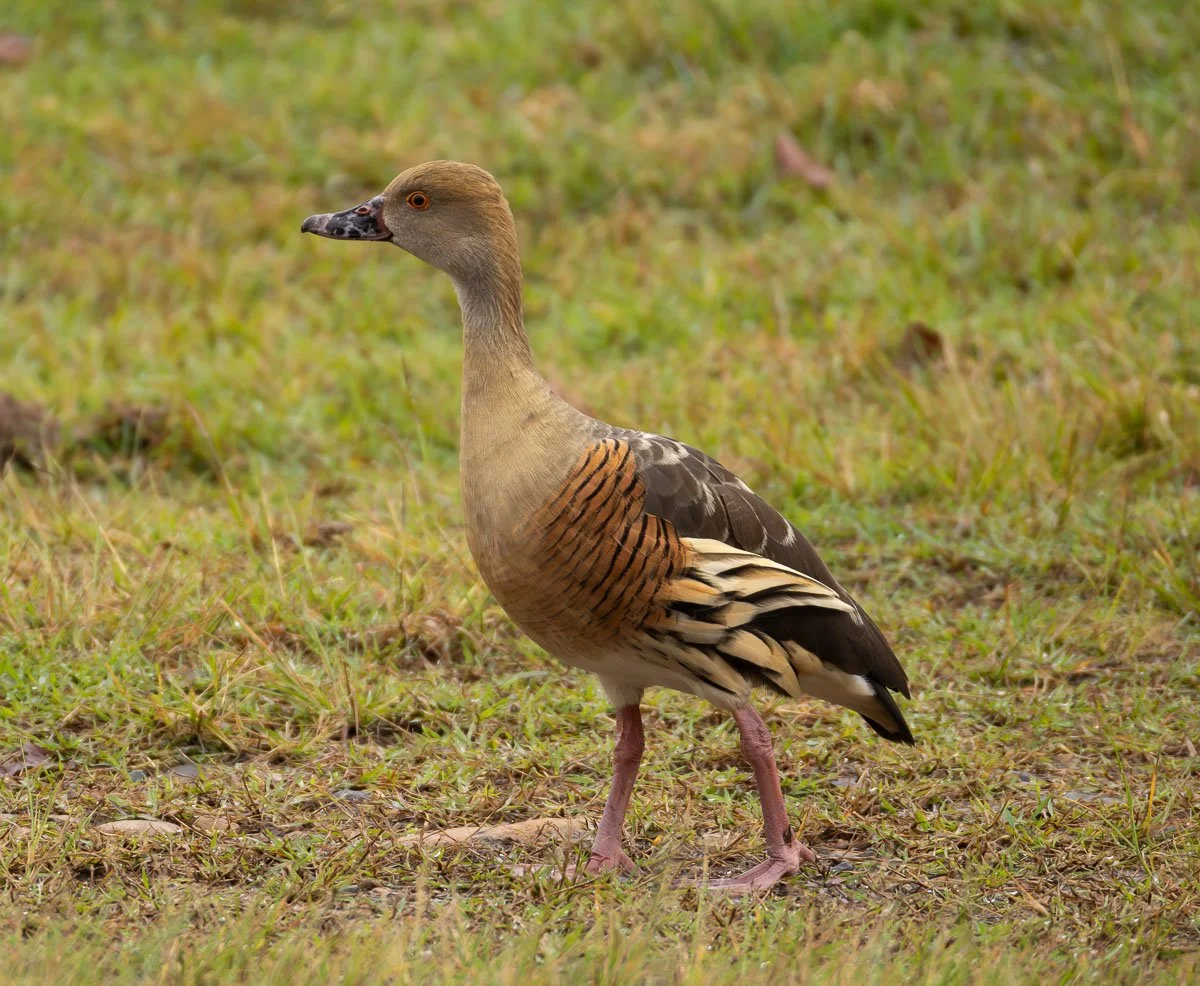
Plumed Whistling-Duck. Directly underneath the Black Cockatoos at Pinnacle.
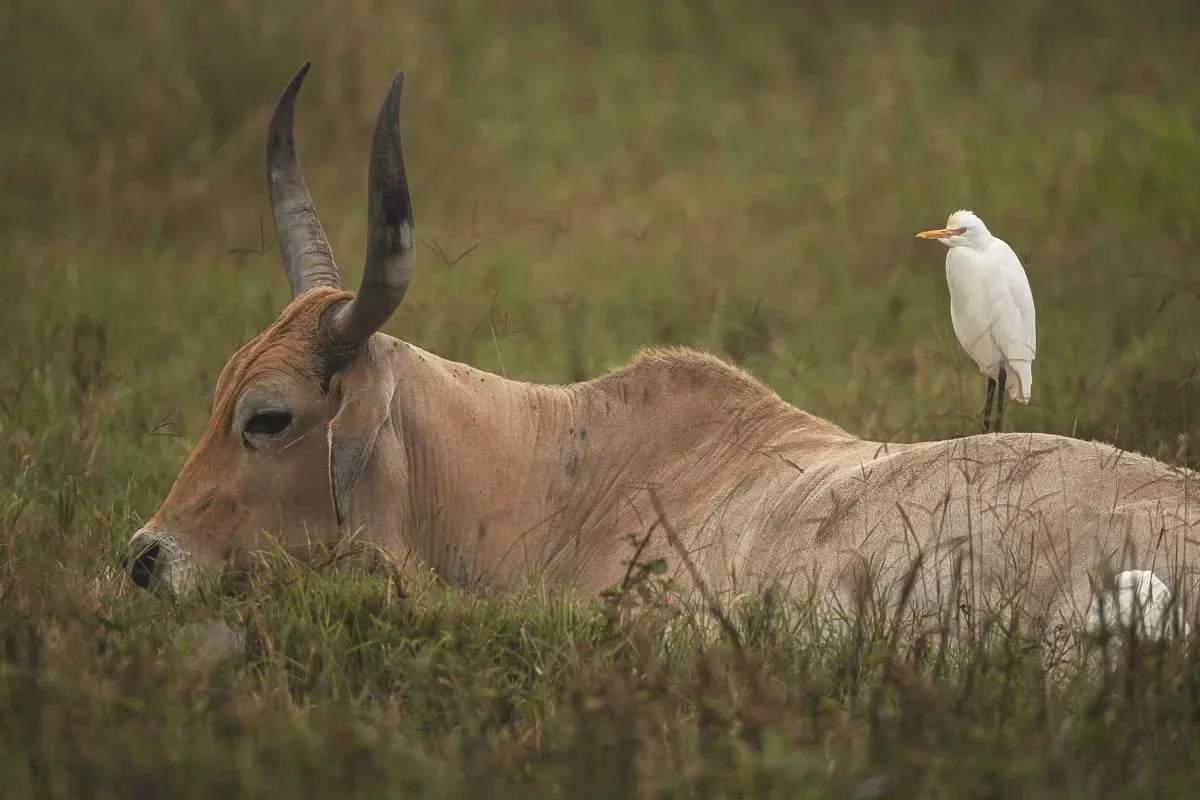
On the outskirts of Pinnacle this Eastern Cattle-Egret living up to its name.
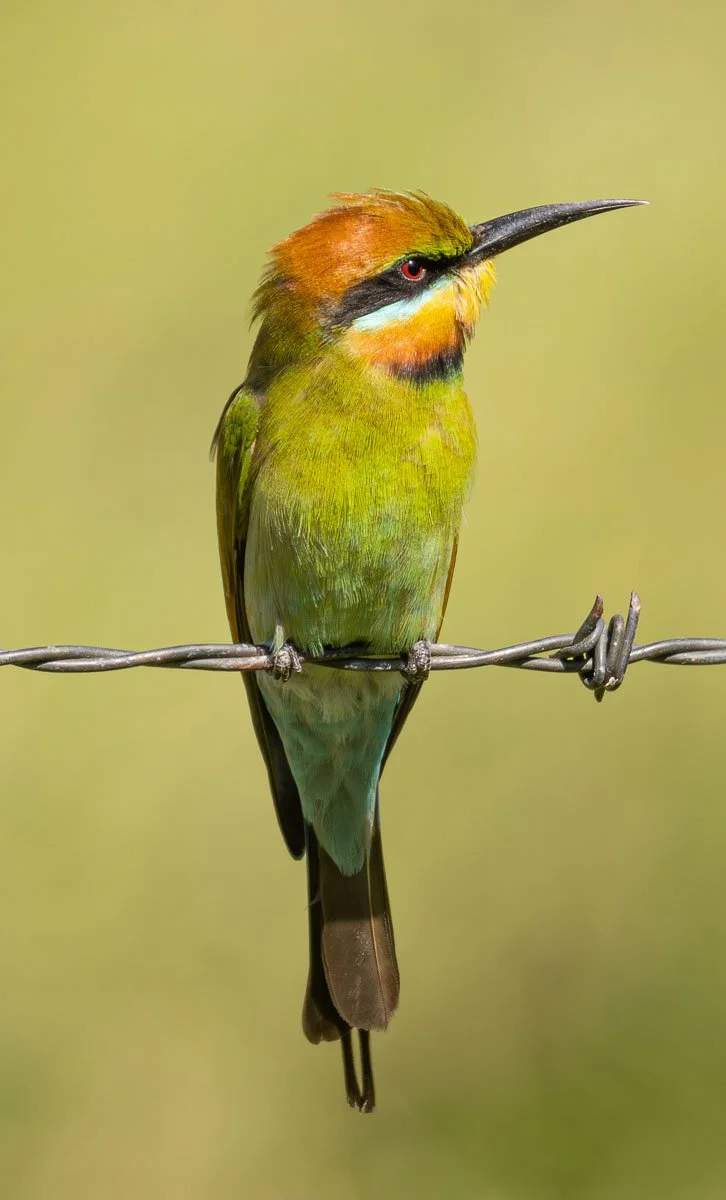
Rainbow Bee-eater. Quite common up these parts, also found down south. It was one of these that first made me appreciate how beautiful birds are. Taken through the car window on side of the road. You can often get closer in a vehicle.
Eurimbula National Park QLD.
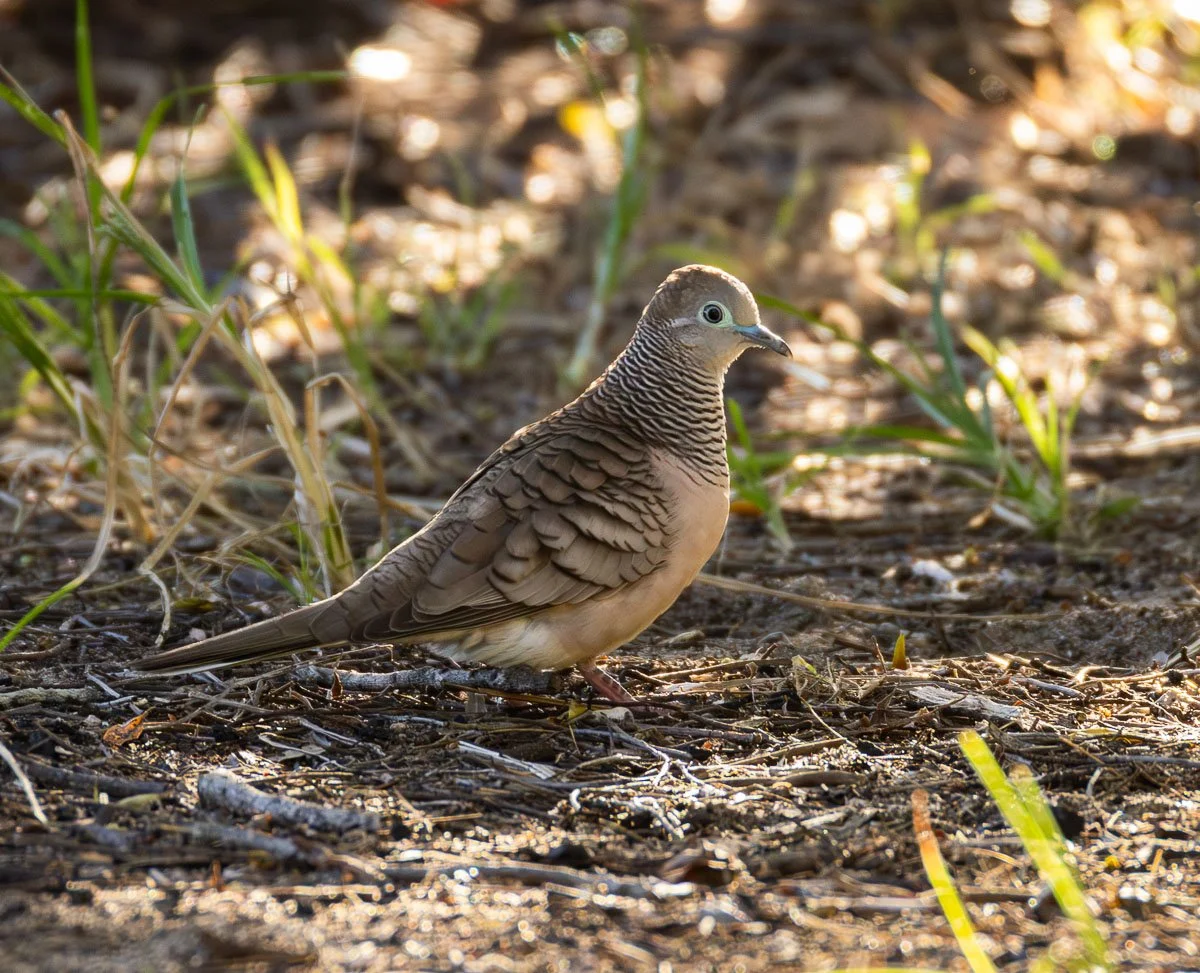
Peaceful Dove. Eurimbula National Park QLD. The first of many sightings.
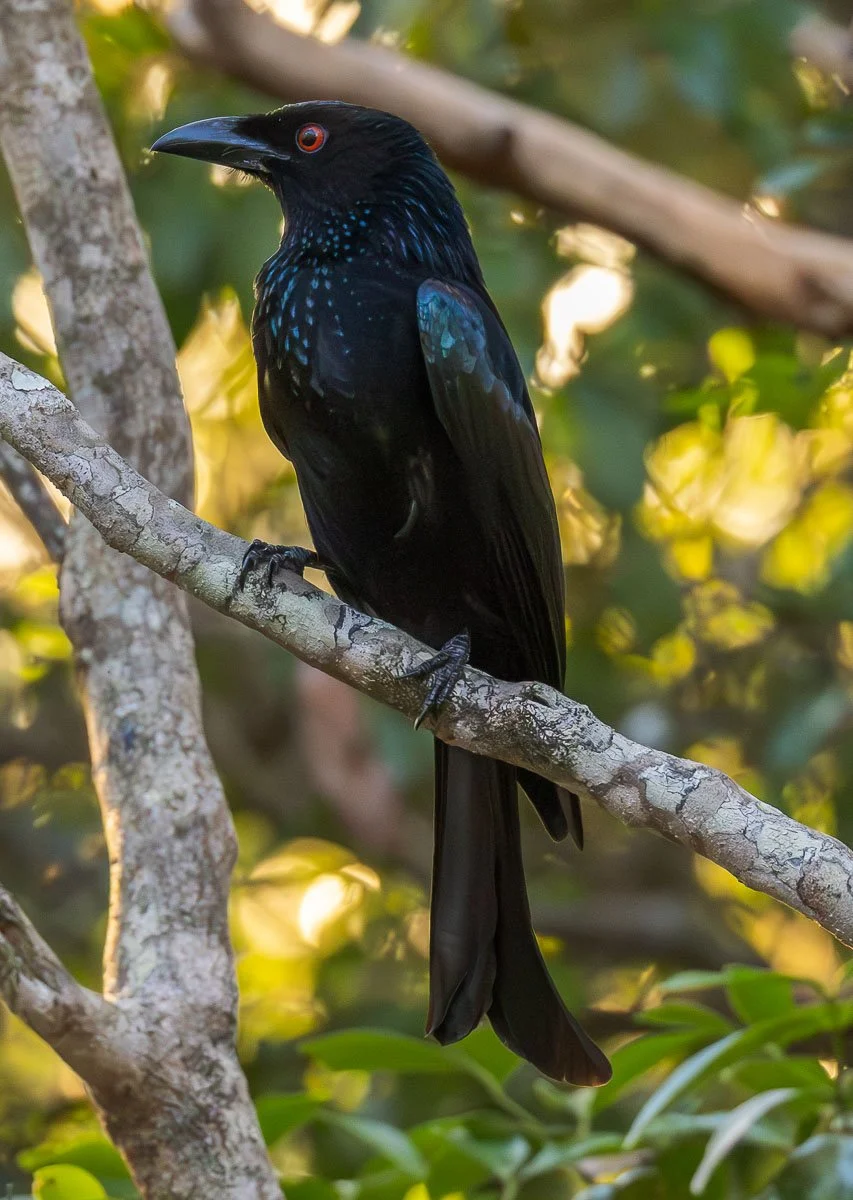
Spangled Drongo. Eurimbula National Park QLD.
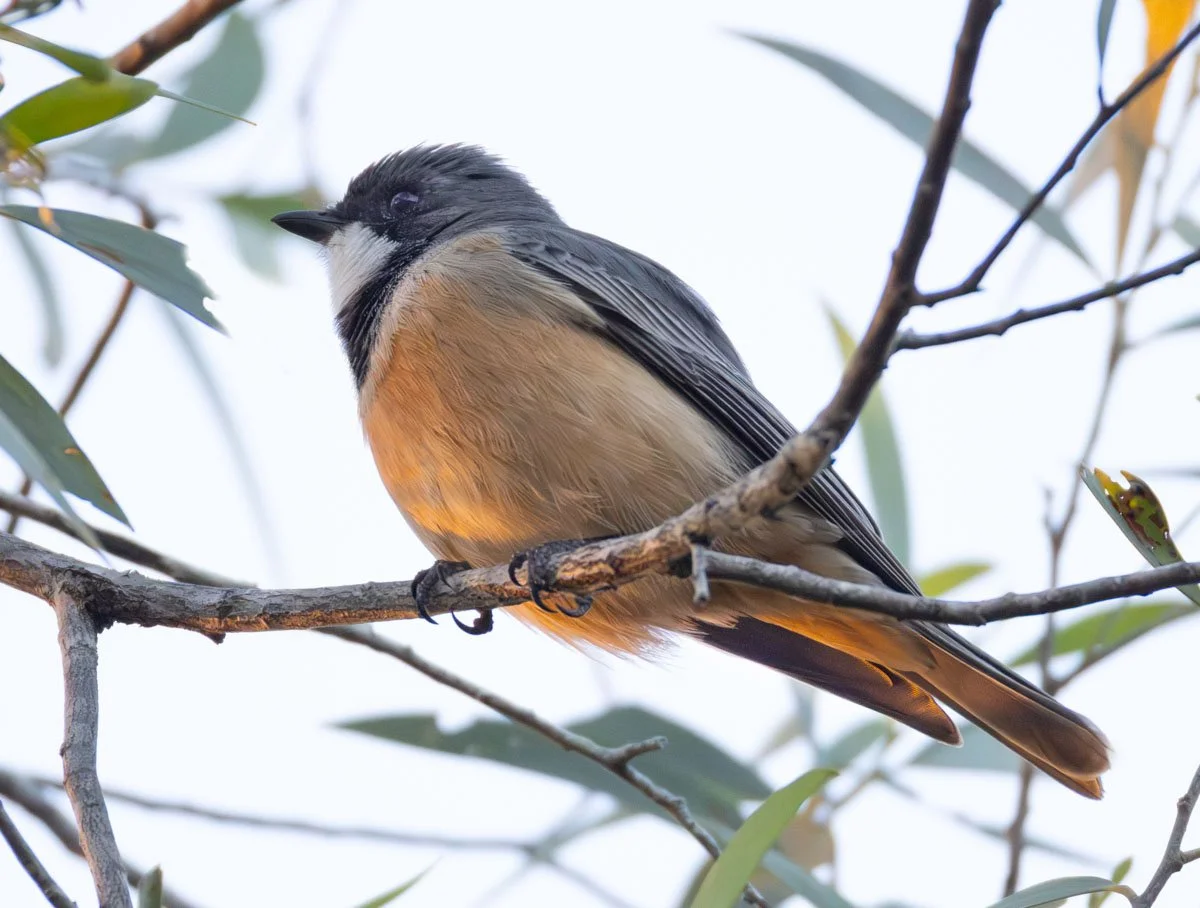
Rufous Whistler (M)
Next stop was the coastal swamps of Barratta Creek. This was more open country so much better for bird photography. Along with that came mosquitoes, the worst of the trip.
This is an under visited park with no facilities (the way I like it) but recent rain made the roads treacherous. They looked fine but driving on them was like ice. For several reasons, including being a solo vehicle, and not wanting to tear up the track I decided to set camp on the access track. Any overnight rain meant getting out would be difficult even in 4wd. It was worth a stay because I saw a few ‘lifers’ which is twitcher speak for a never seen before bird species.
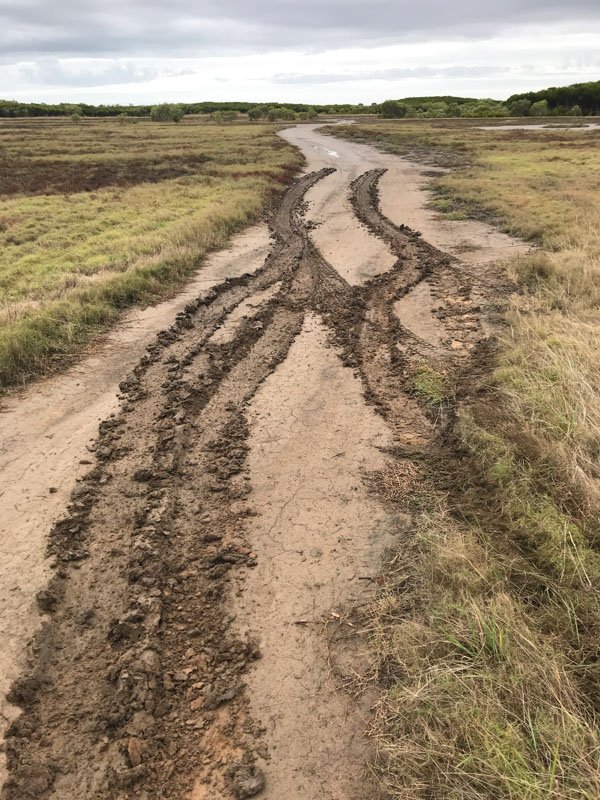
Second thoughts, with a few kilometers yet to go.
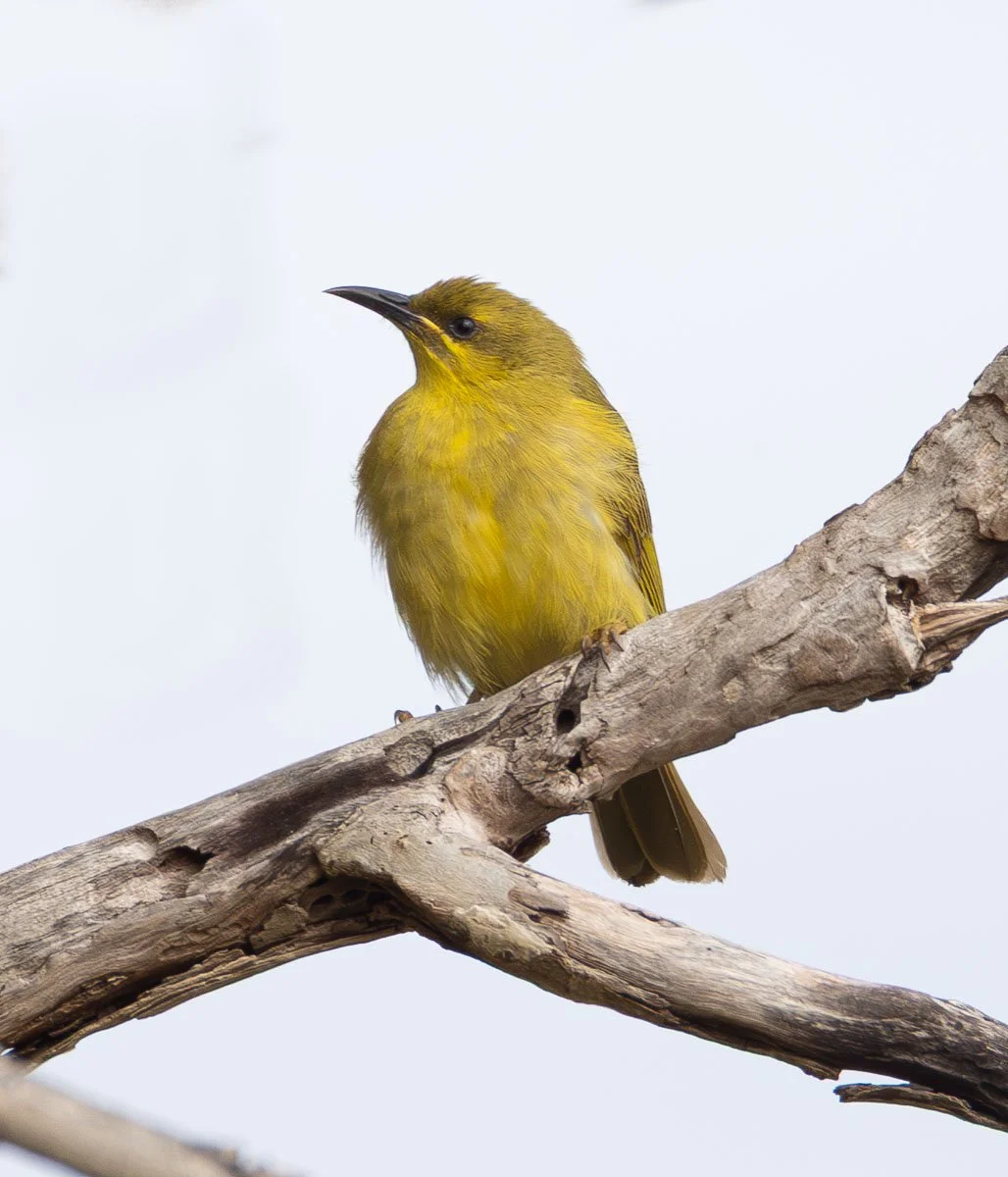
Yellow Honeyeater. I had not seen these before.
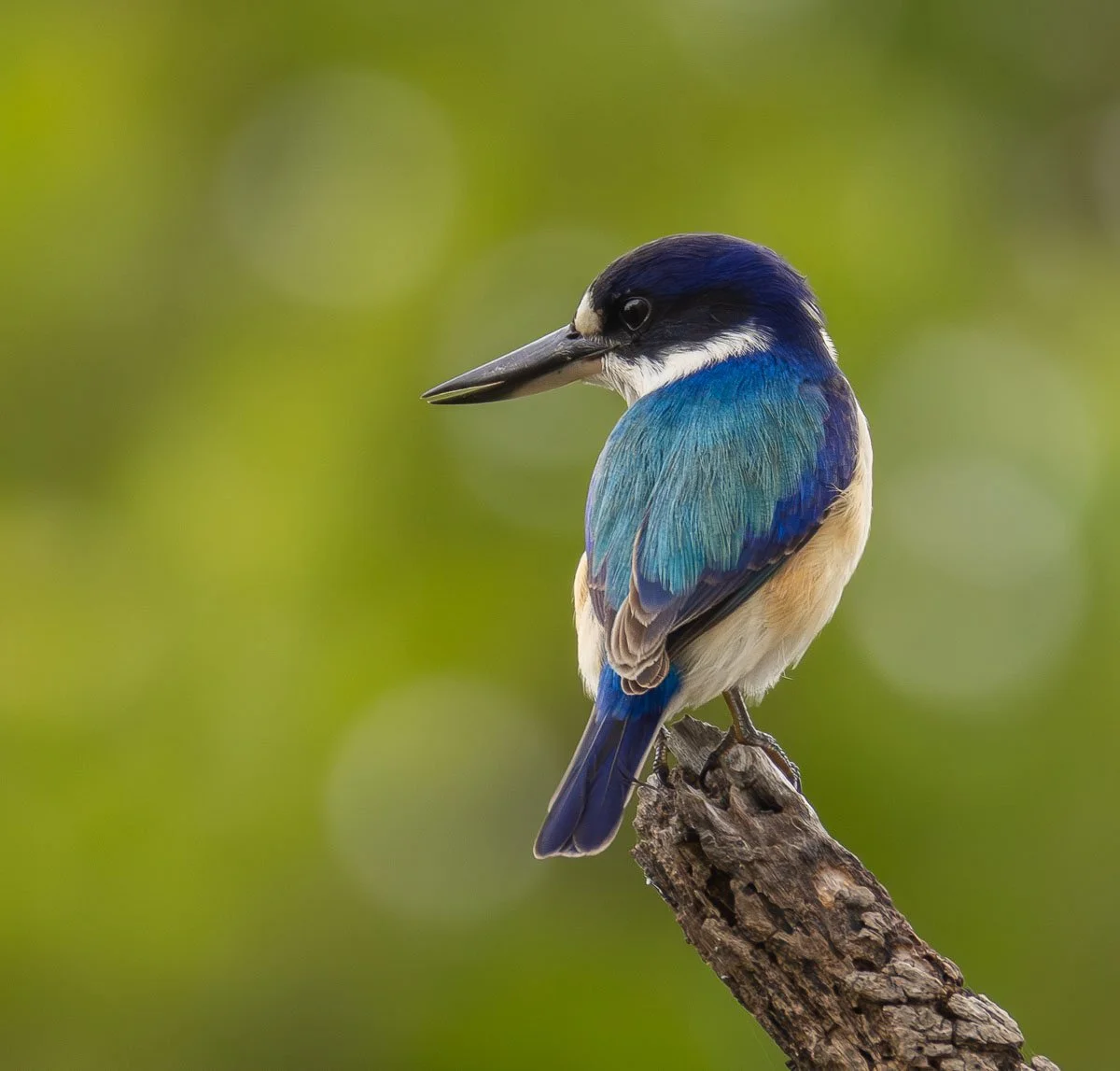
Forest Kingfisher. I followed this guy carefully on foot for about 10 minutes. Finally landed on a good perch.
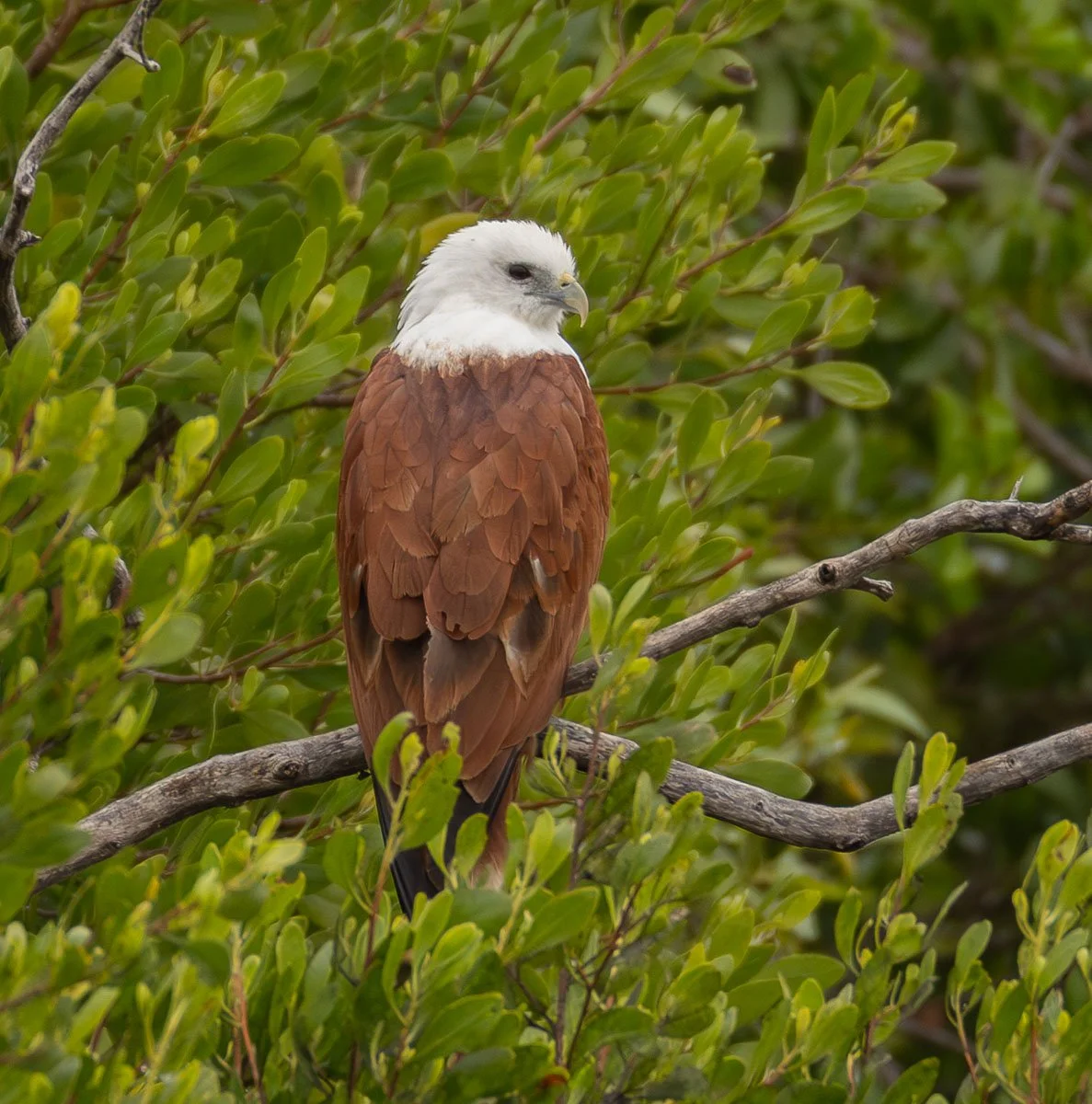
Brahminy Kite. Spotted some distance off but I had never seen one before. A much better opportunity happens north of Cooktown. (Keep reading).
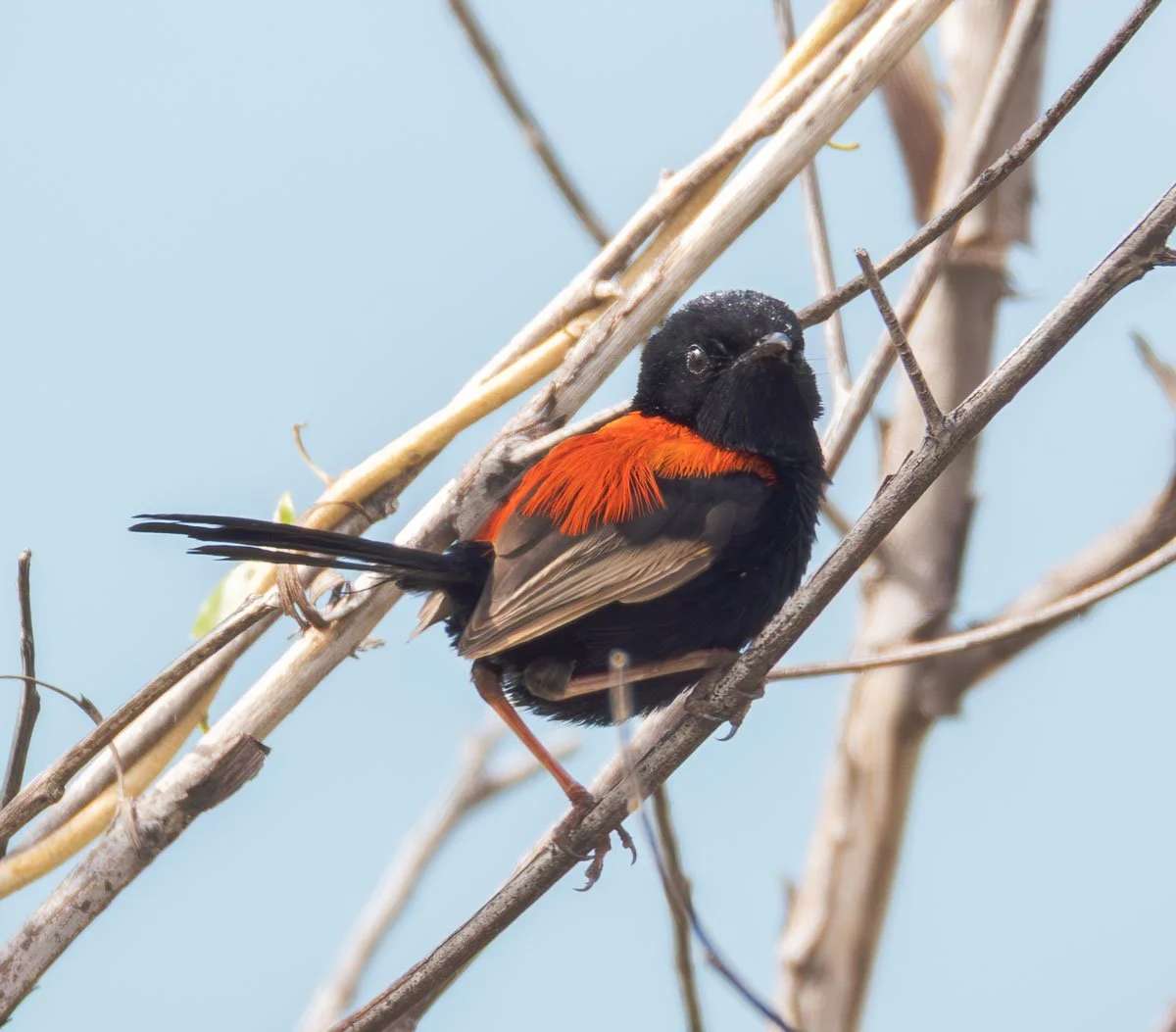
Red-backed Fairy Wren. (M)
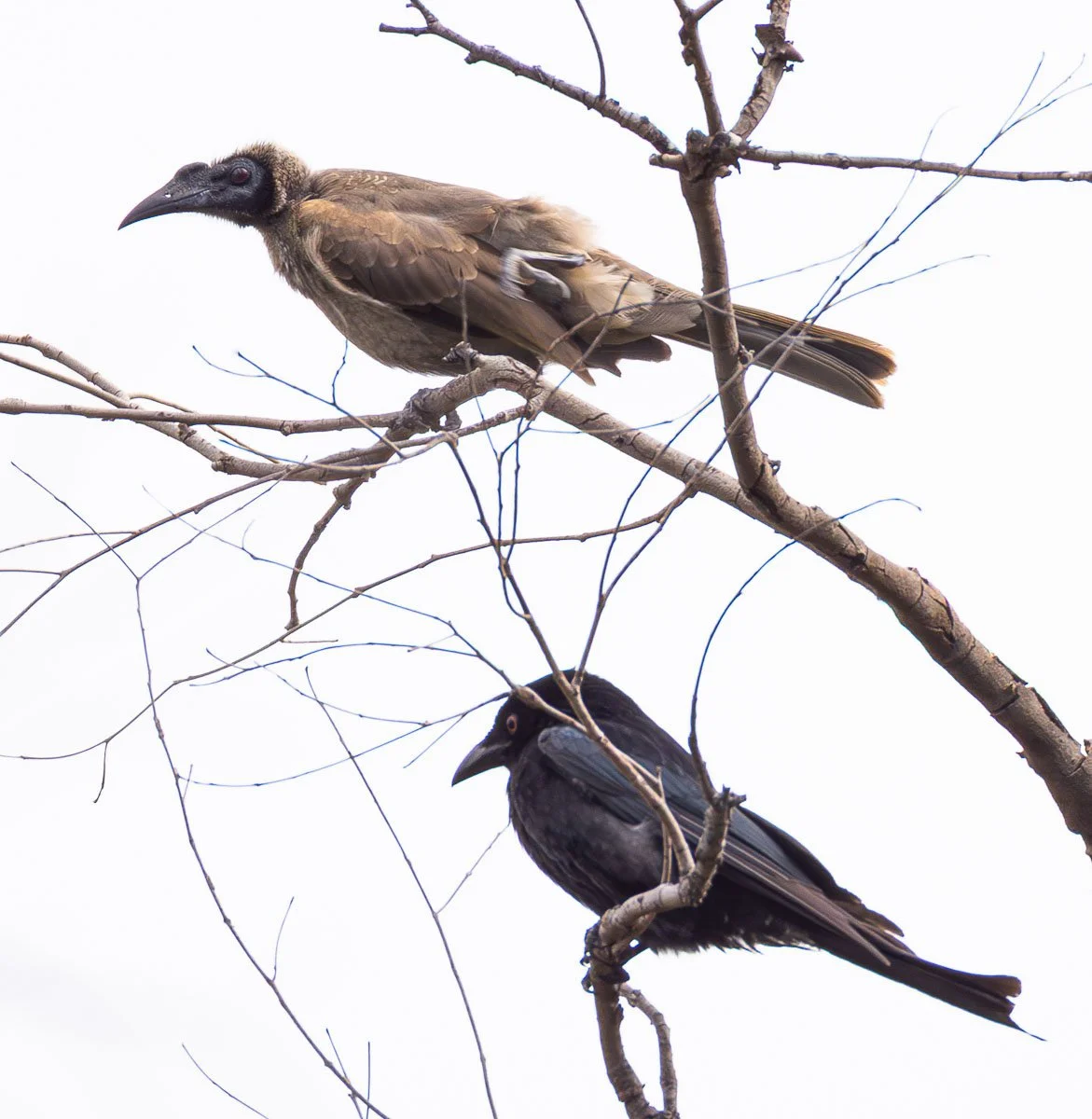
A Helmeted Friarbird, and a Spangled Drongo share the same perch.
Right in the township of Ingham sits Tyto Wetlands, a somewhat manicured nature remnant that is visited by bird watchers and those seeking crocodiles. I didn’t have time for much other than a quick walk.
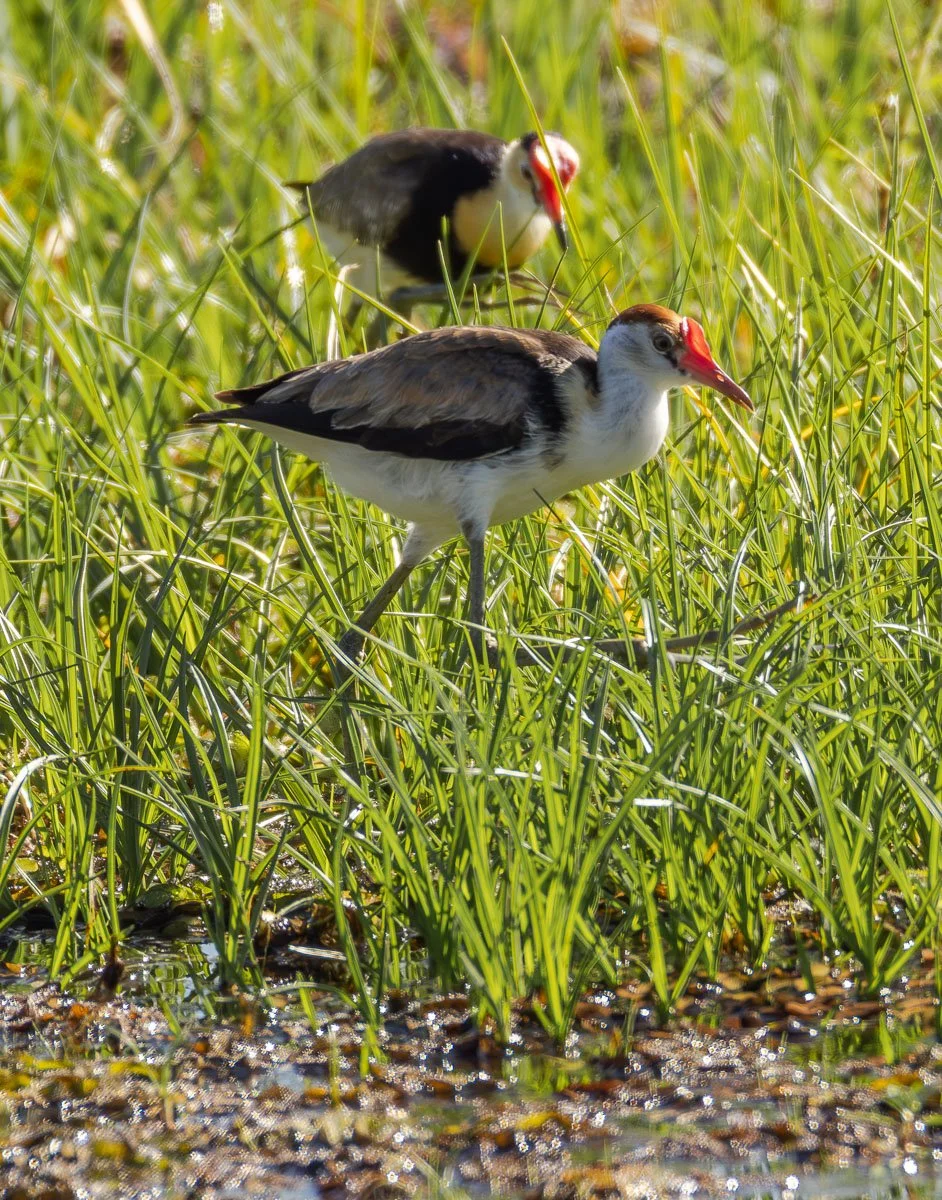
Comb-crested Jacana. Look at the length of its toes. Made for spreading its weight over a few lilypads.
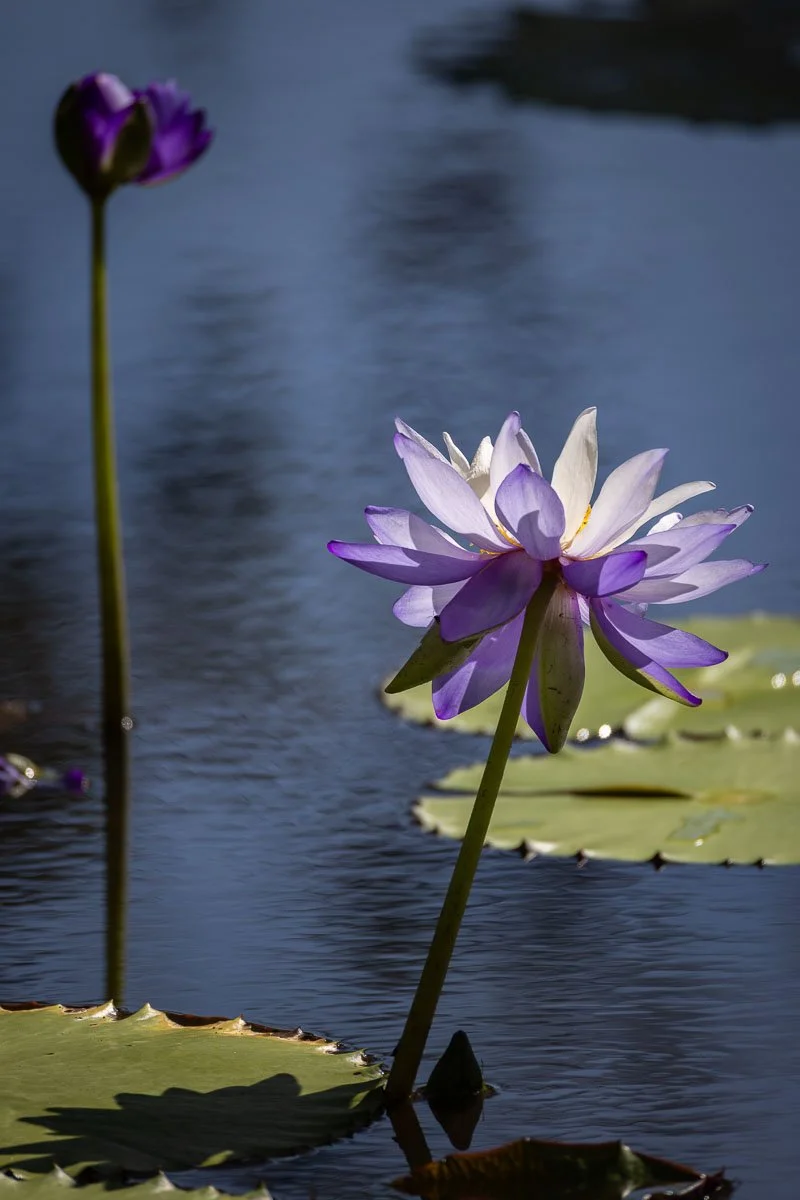
Giant Waterlily, (Nymphaea gigantea) a common sight in Queensland.
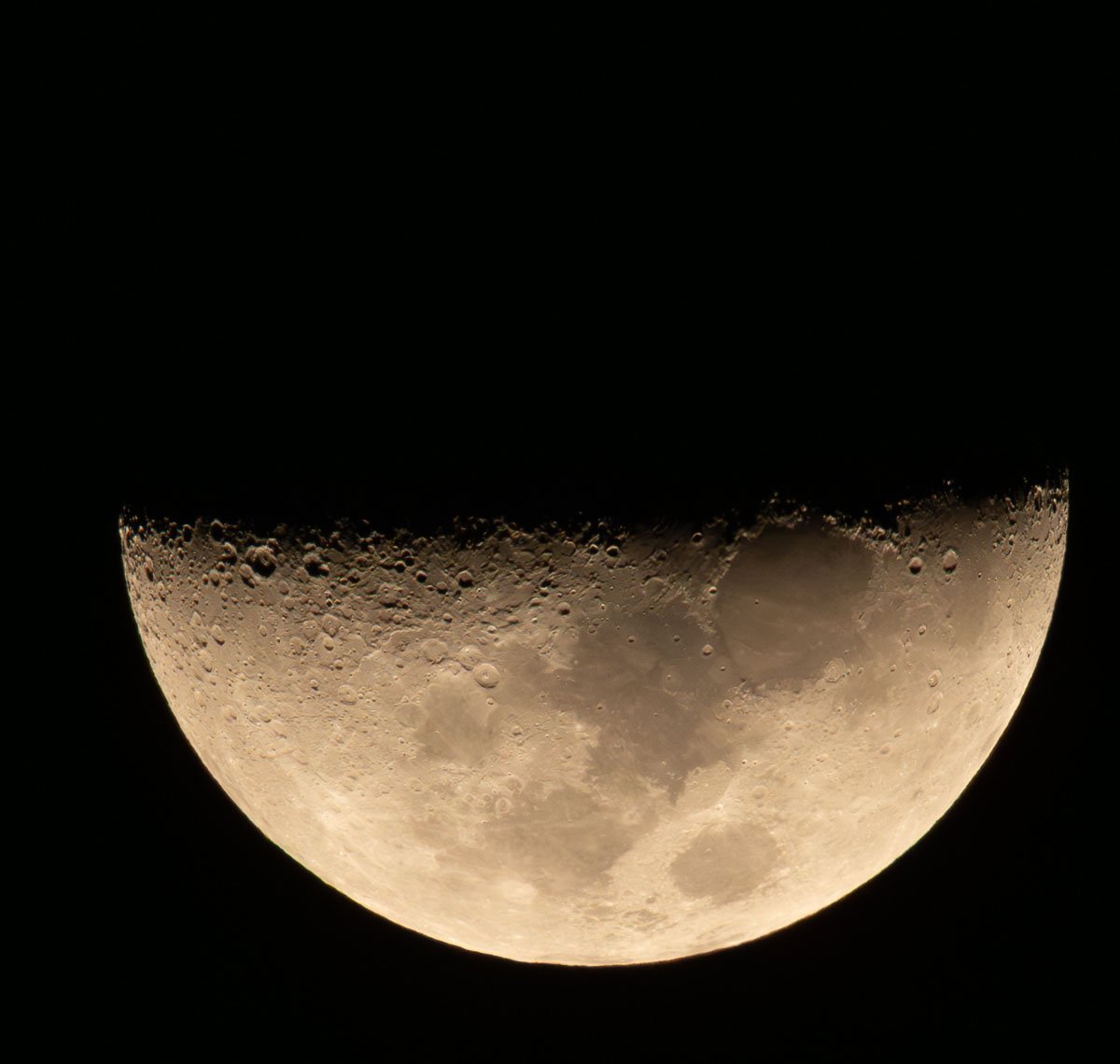
Lunar Terminator. . I was staying in a busy caravan park. I had to do something so I pointed my camera at the moon. Rested the camera against the car. I knew the exposure on the bright moon would be fast enough so no tripod required. 2nd July 2025
Cairns stop over.
We did a tourist thing and went on Skyrail. This is an old railway that ascends the hills to Kuranda. Built from 1886 through to 1891 its quite a feat when a pick and shovel are considered, and some workers lost their lives in accidents. There are 15 tunnels and 37 bridges. The old passenger cars a hauled by vintage diesel locomotives, but originally it was steam powered which brought a whole set of logistical challenges. The tight track limited the locomotive size so coal and water had to be stored along the track. Its 37km long and was built to service a gold mine.
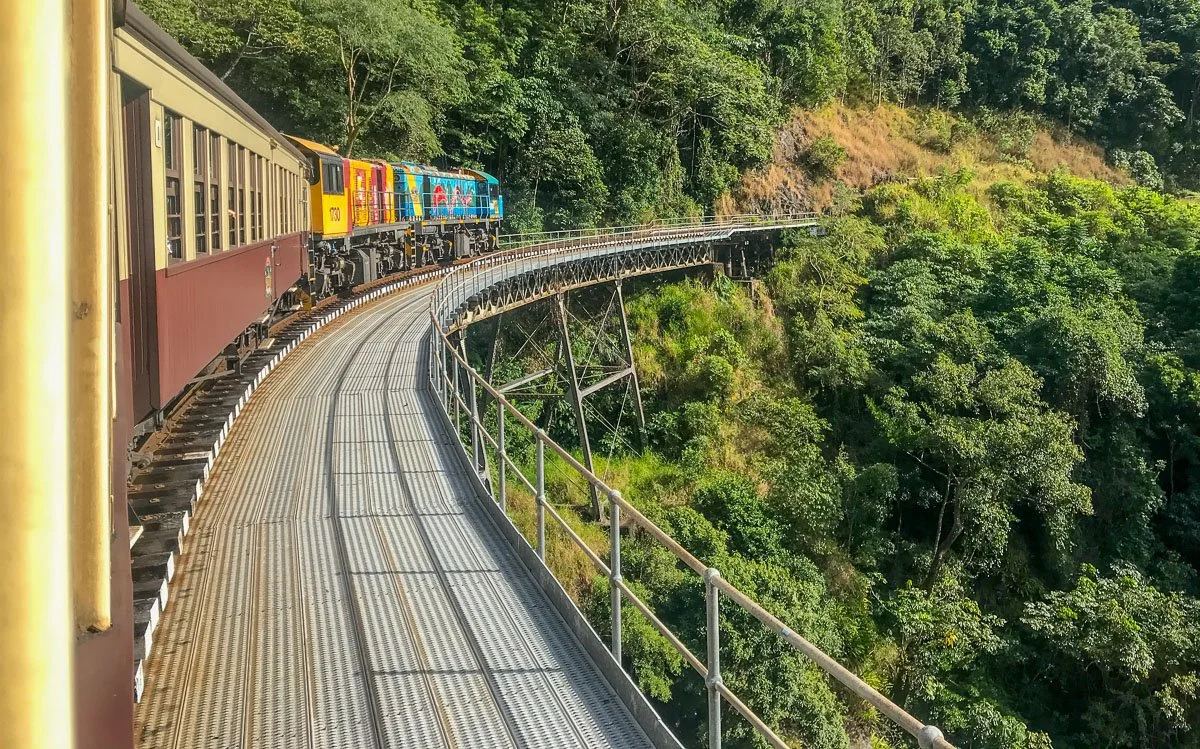
The track including this bridge were rebuilt to allow passage of tourist trains.
While in Kuranda we visited the butterfly house (‘cause that’s what ya do) here are some photos taken within.
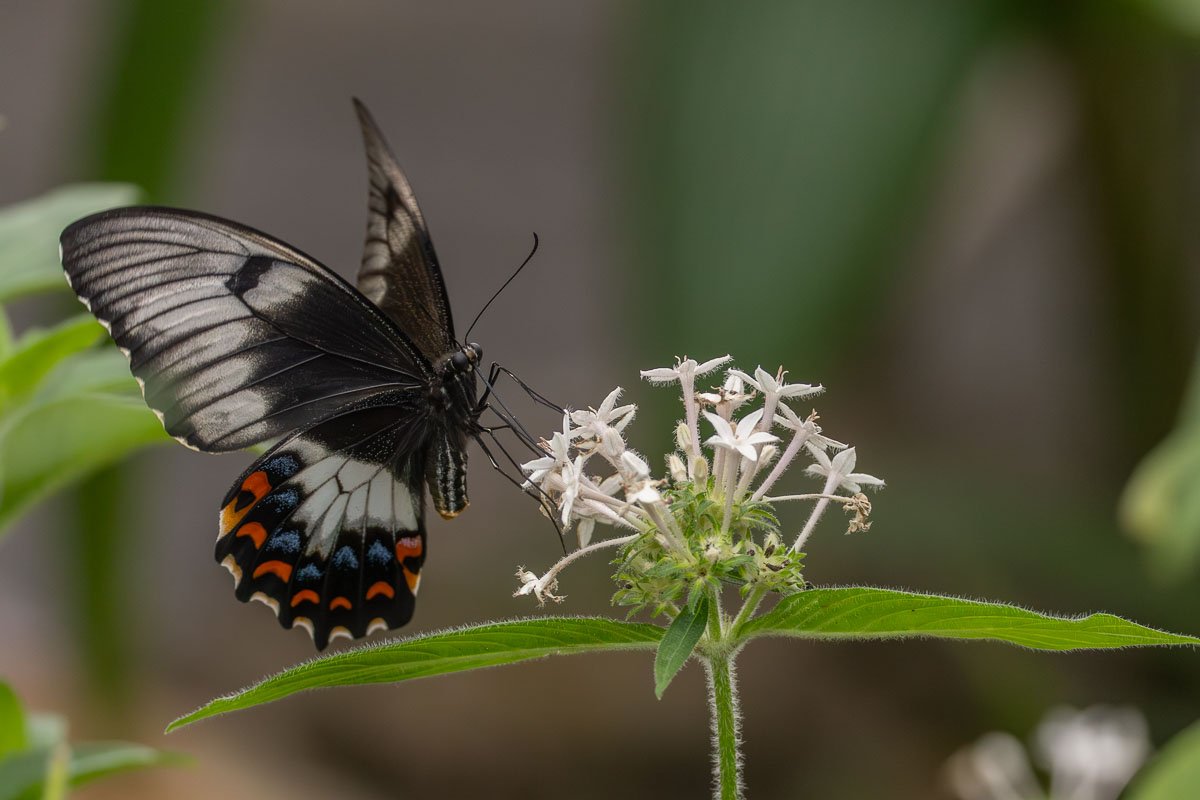
Orchard Swallowtail, or Papilio aegeus
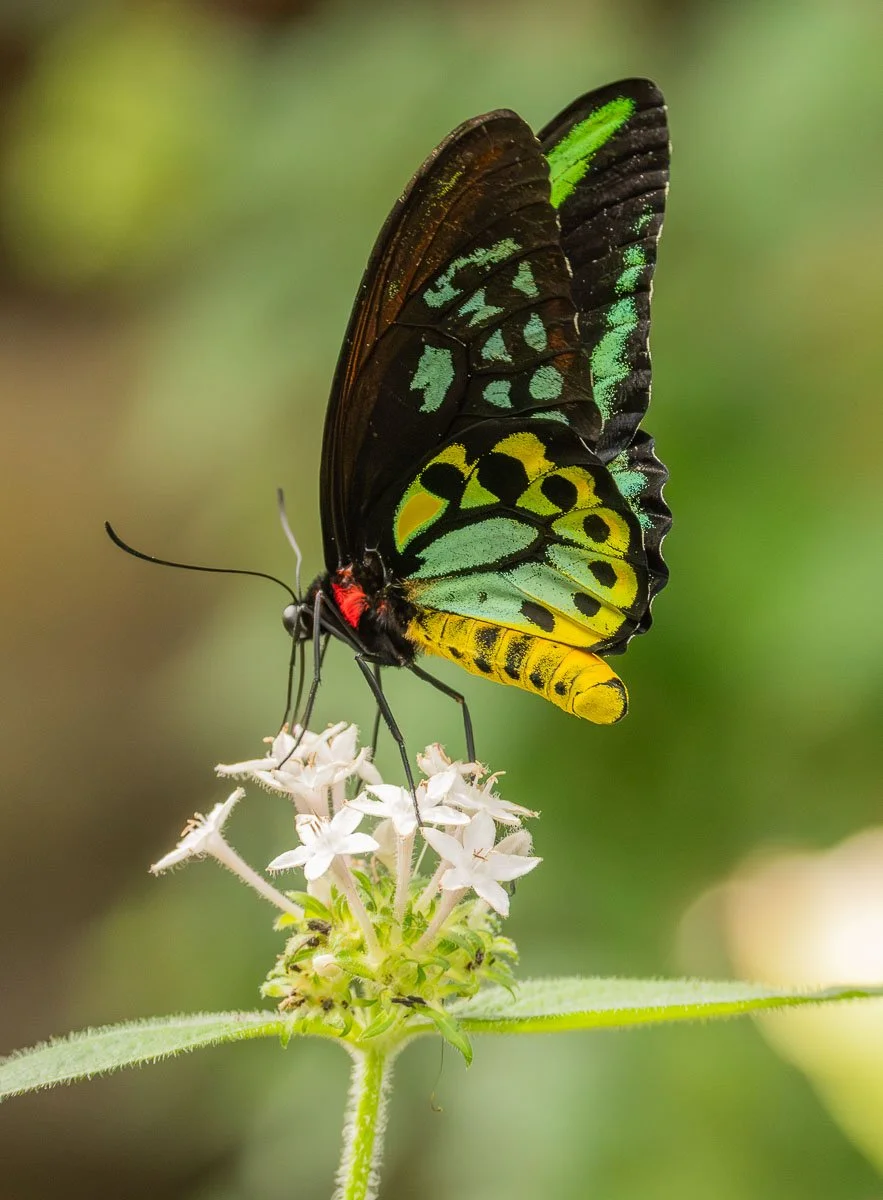
Ornithoptera euphorion or Cairns Birdwing.
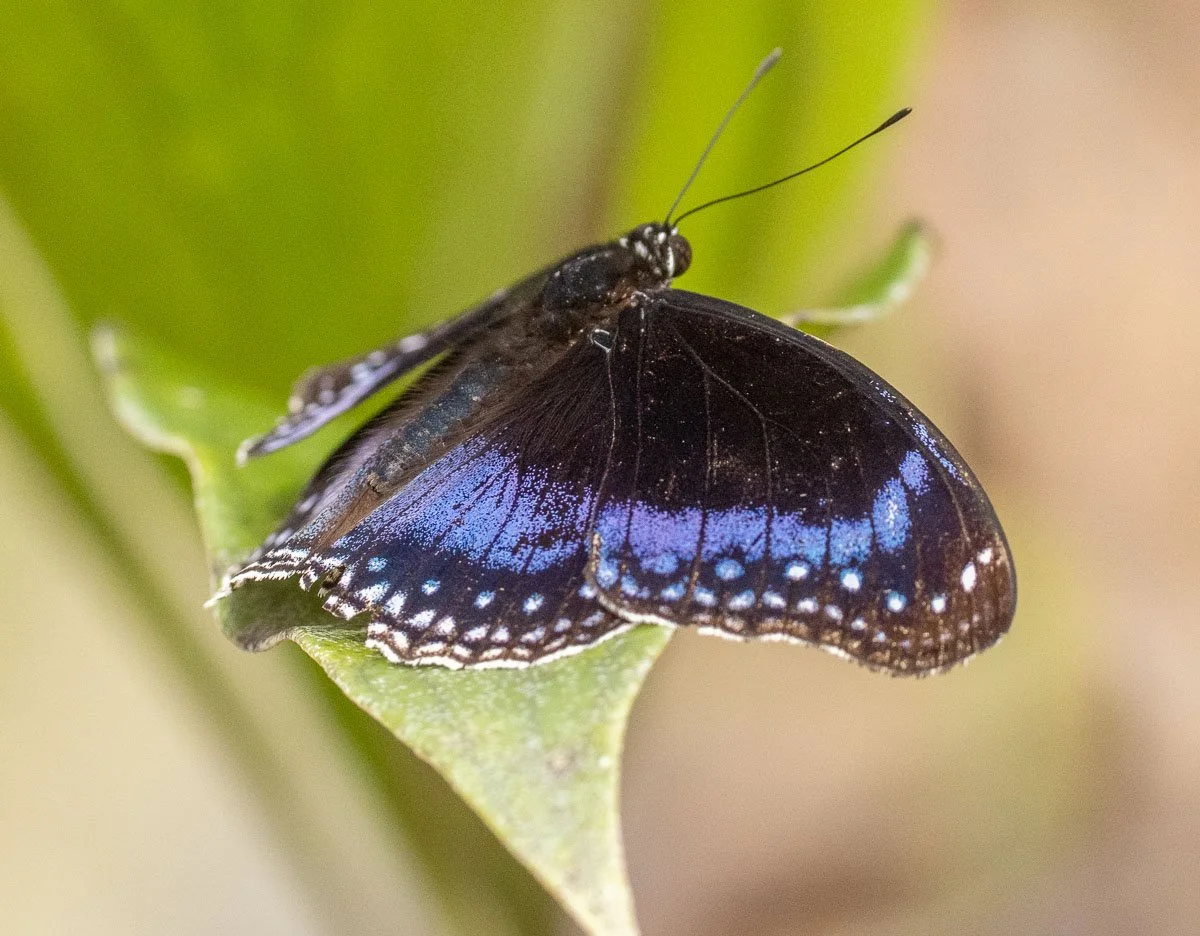
Blue Banded Eggfly. Hypolimnas alimena
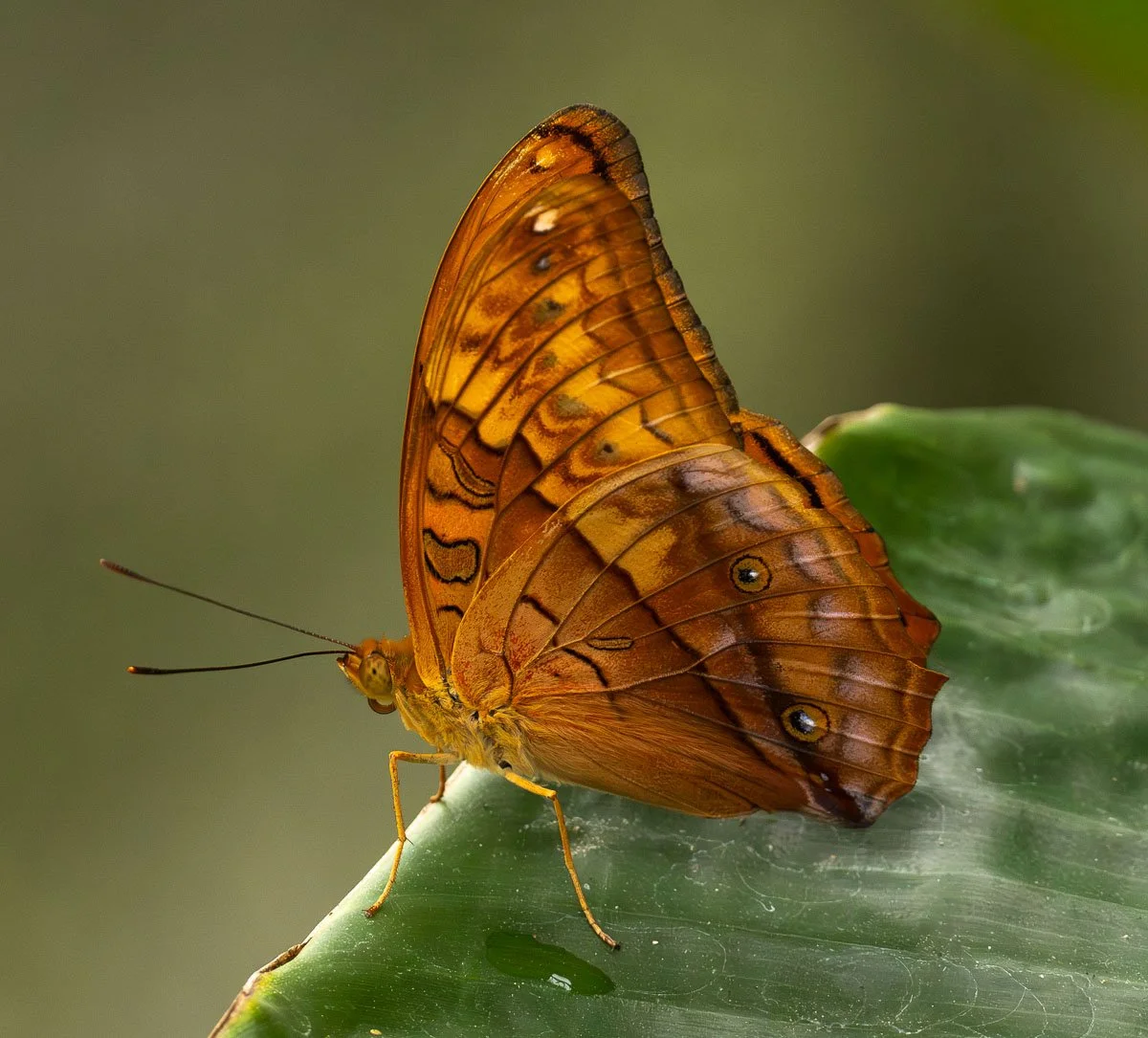
Cruiser or Vindula

Red Lacewing or Cethosia biblis
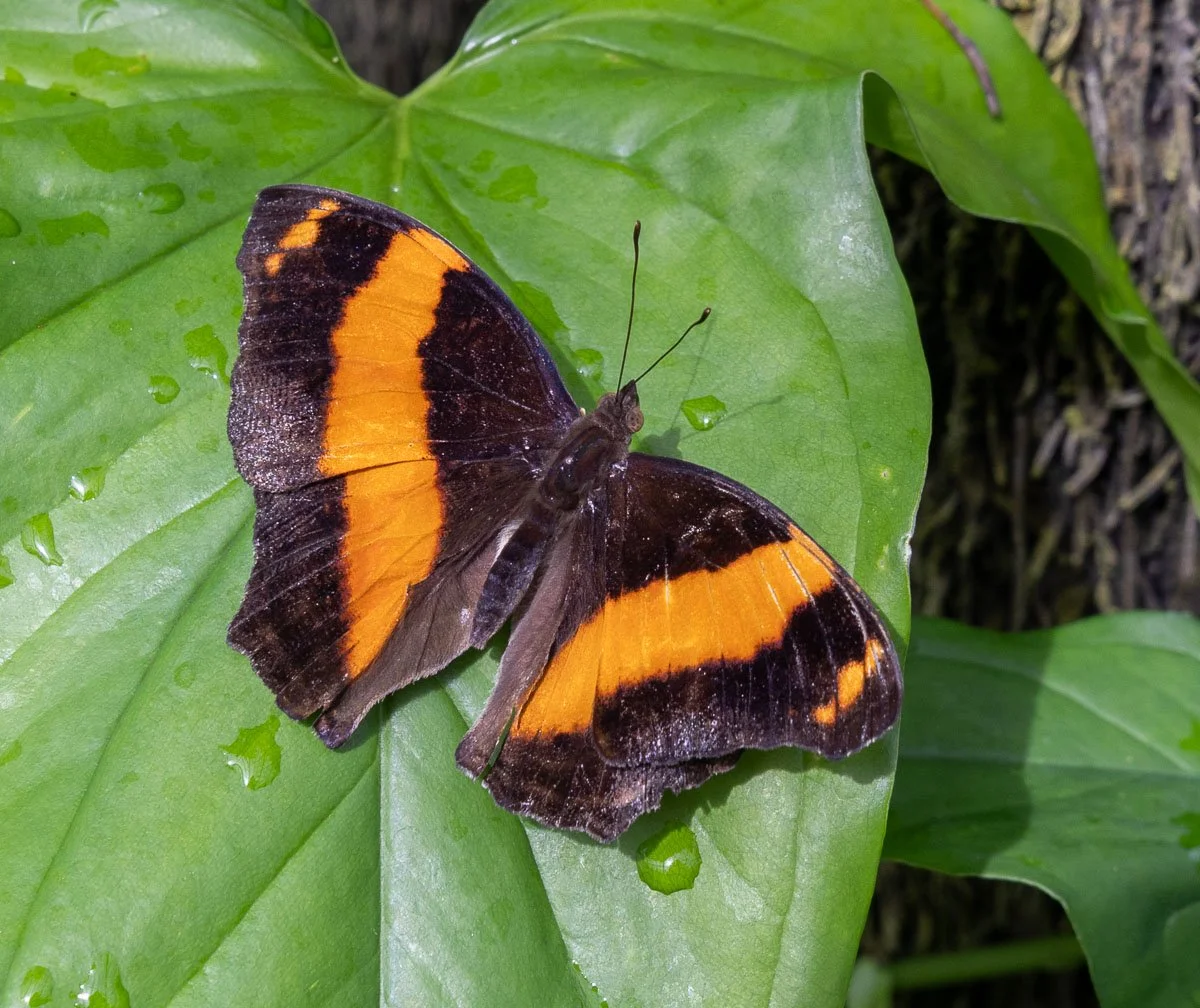
Australian Lurcher or Yoma sabina
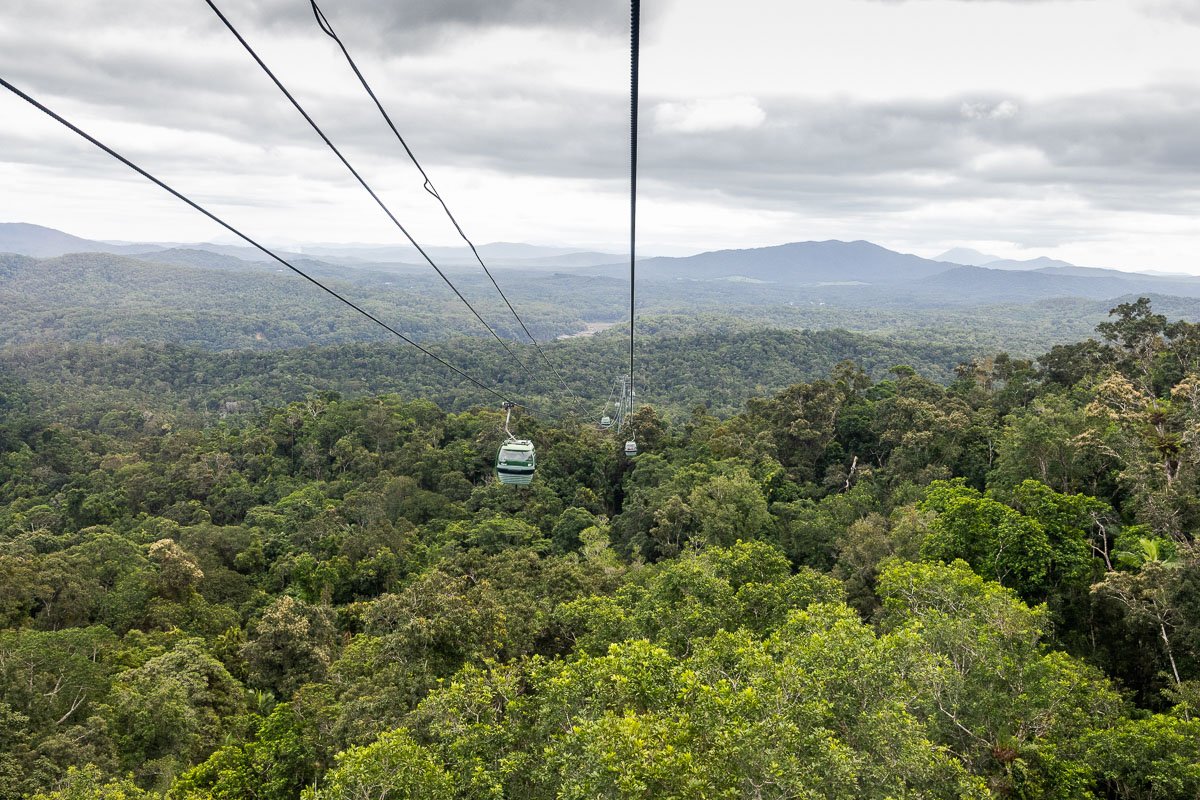
The return journey is by a cable car system all the way back down the mountain. You ride above the rain forest and might even think you’re a bird looking for your tree. Now which one was it?
Cairns foreshore is renown for its birds right in the party centre of Cairns. So, there you are, clearly identifiable as a birder with a big camera pointing it at birds while others constantly stroll past eating ice-cream or pizza slices.

Gull-billed Tern. Non breading in foreground.

This Australian Figbird was not going to cooperate and stayed hidden in the foliage overhead despite my patience, and neck strain.
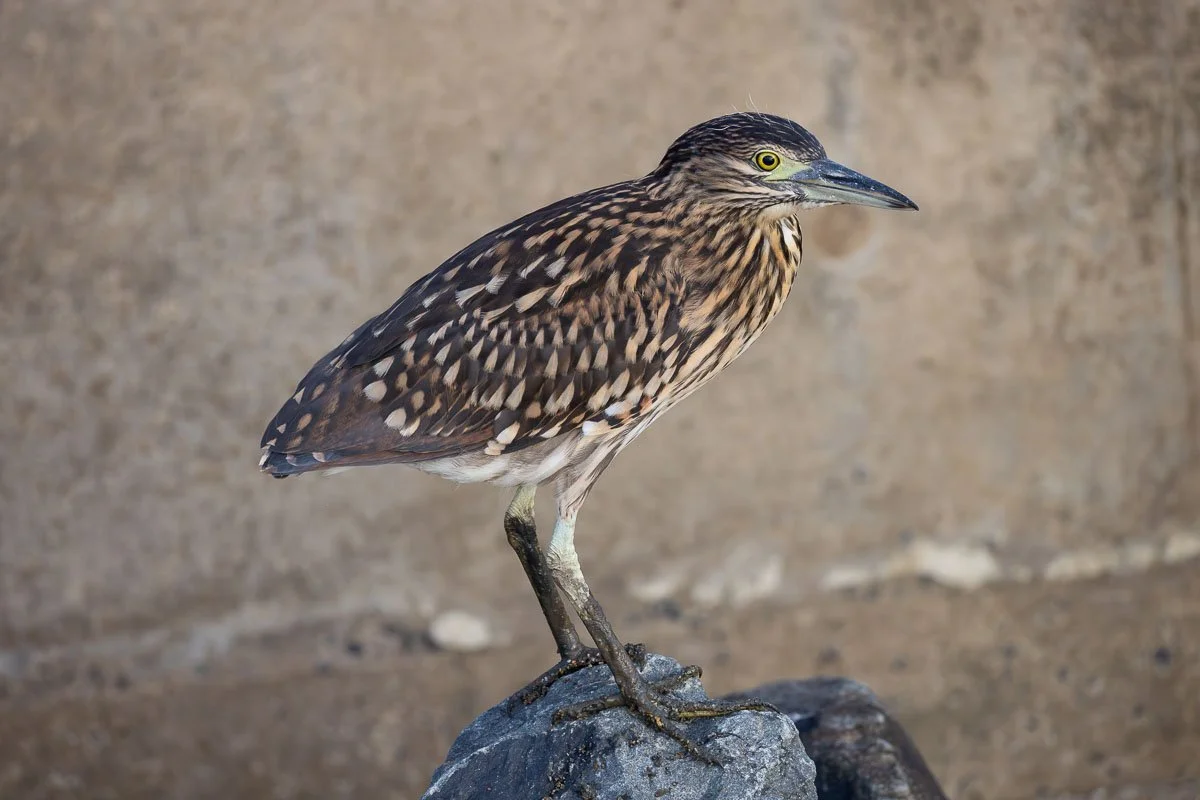
Meanwhile a juvenile Nankeen Night Heron poses nicely on a rock.
Next day came one of the best wildlife photo encounters, right in Cairns itself. Bush Stone Curlews in the cemetery. Those of you familiar with my interests will know the interaction of nature with humans is central to my story telling and what better than wildlife doing its thing without care in a sacrosanct place for humans.
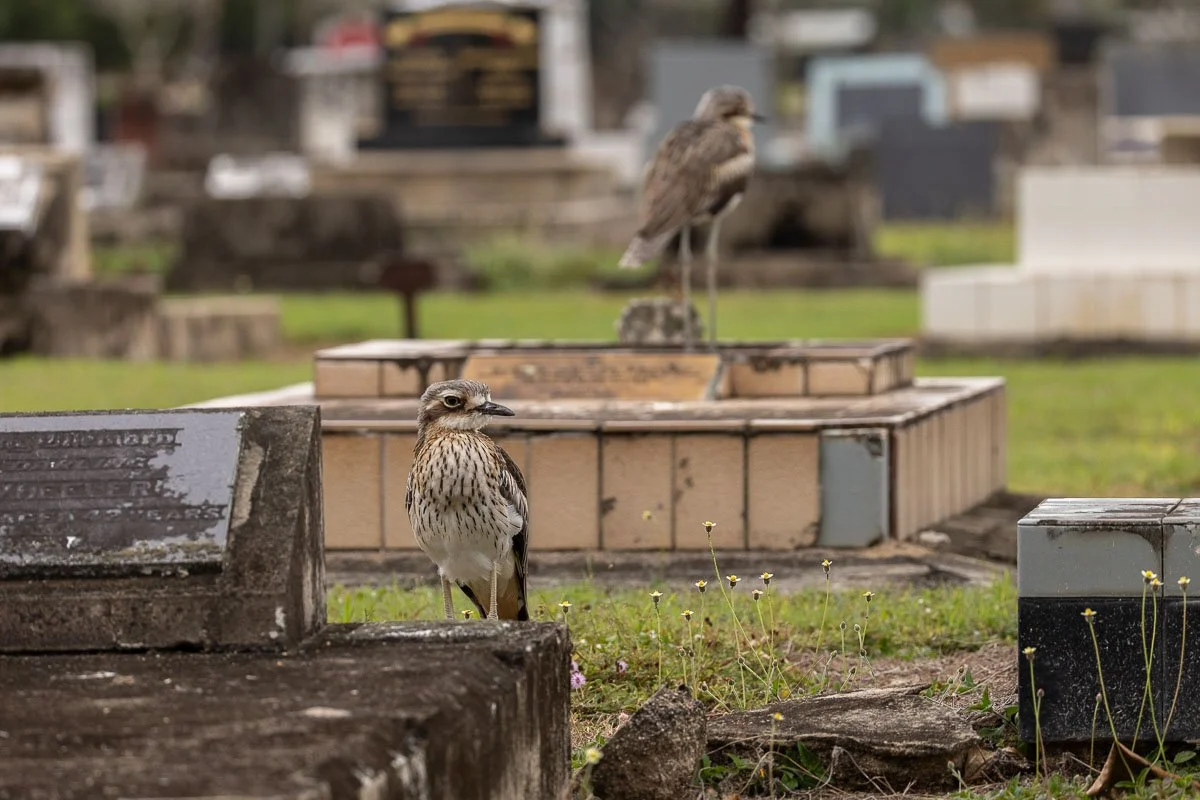
Bush Stone Curlews
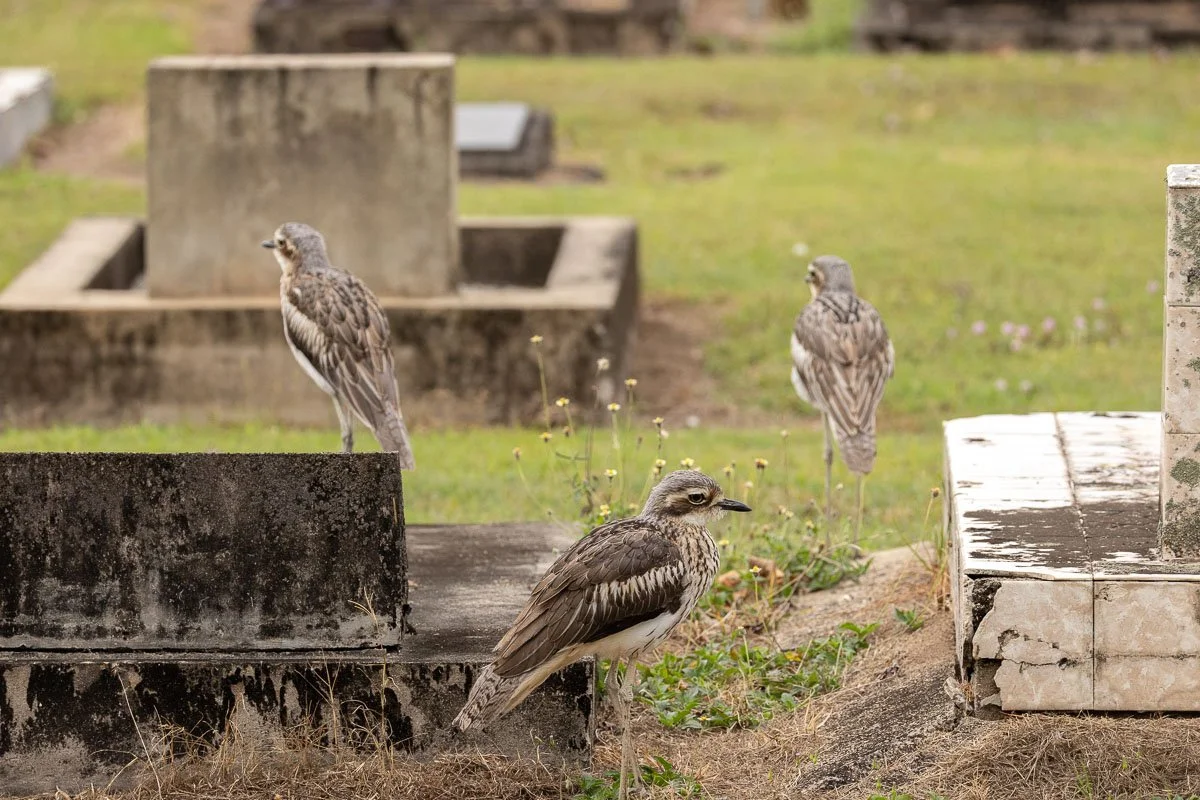
Bush Stone Curlews
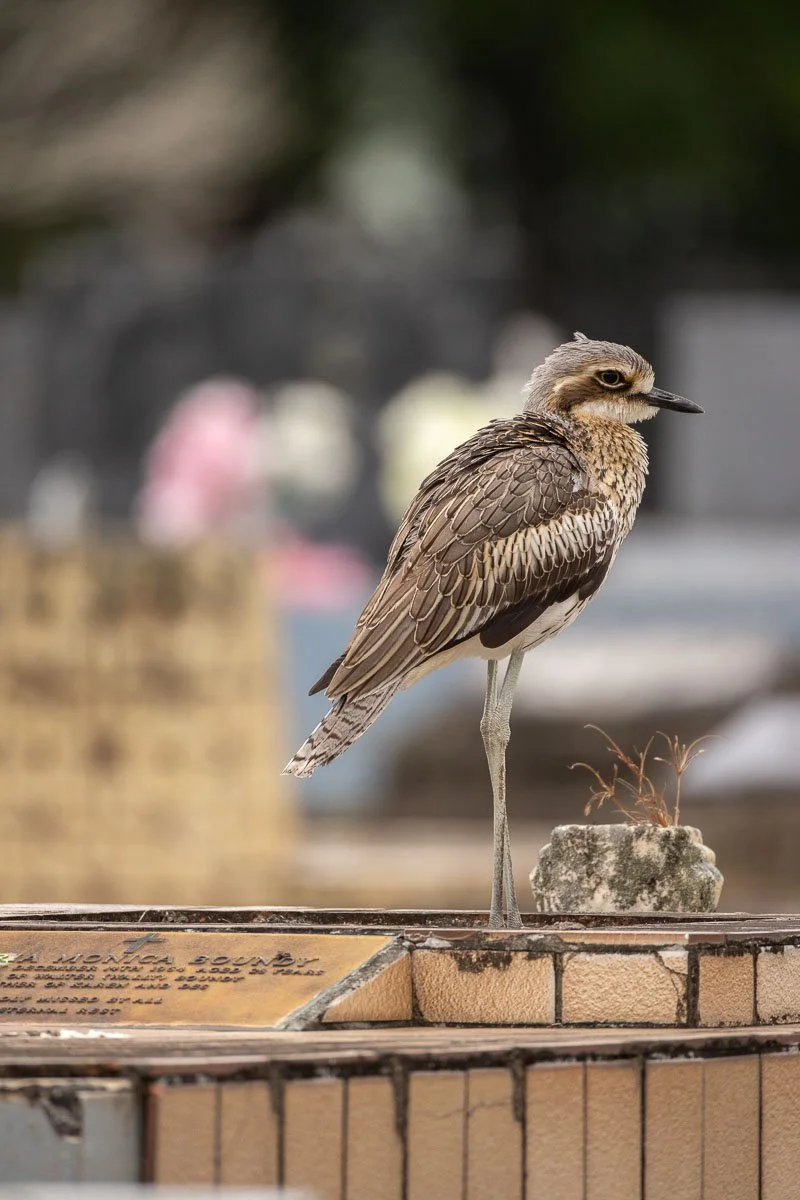
Bush Stone Curlews

Bush Stone Curlews
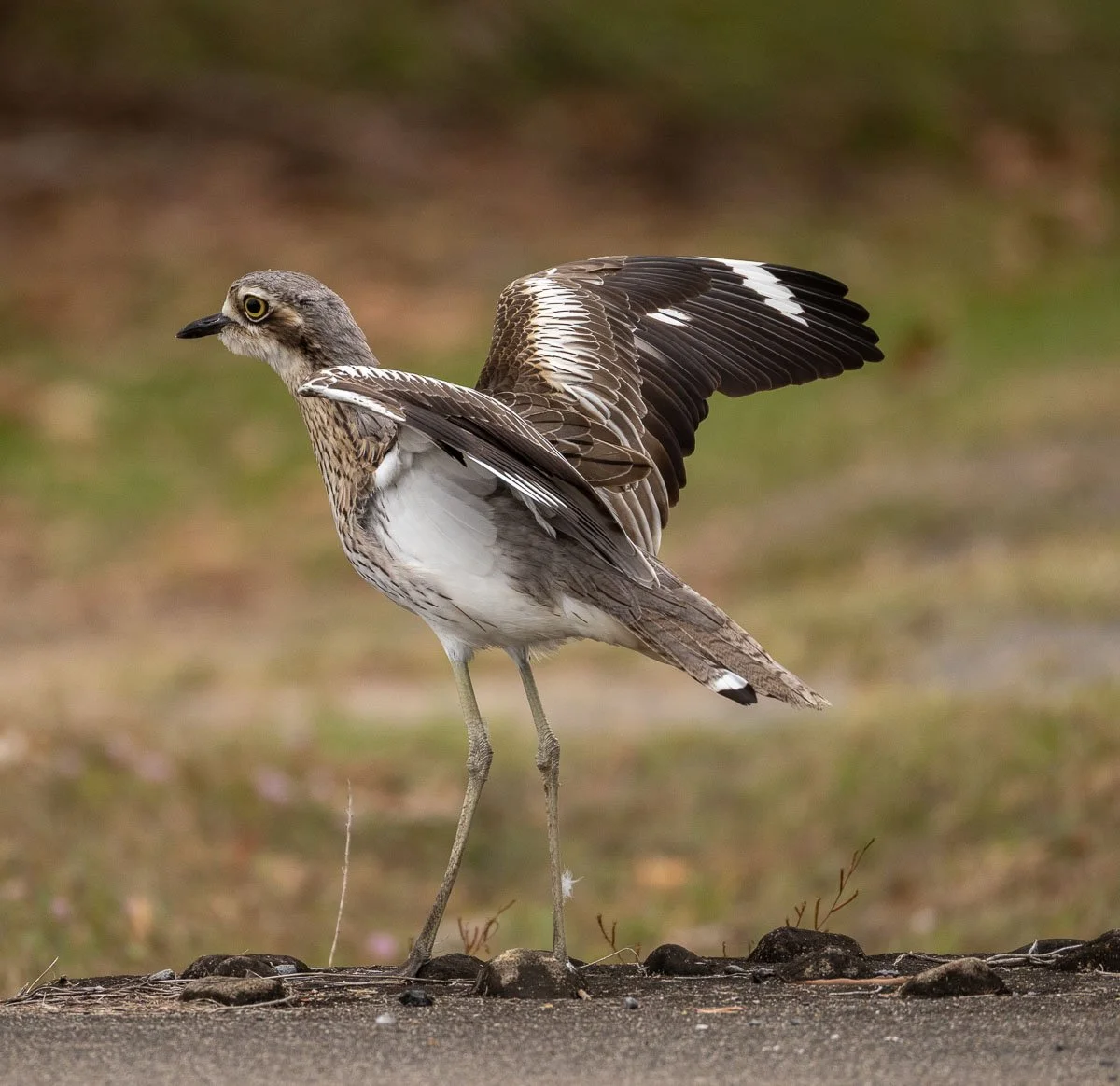
Bush Stone Curlews
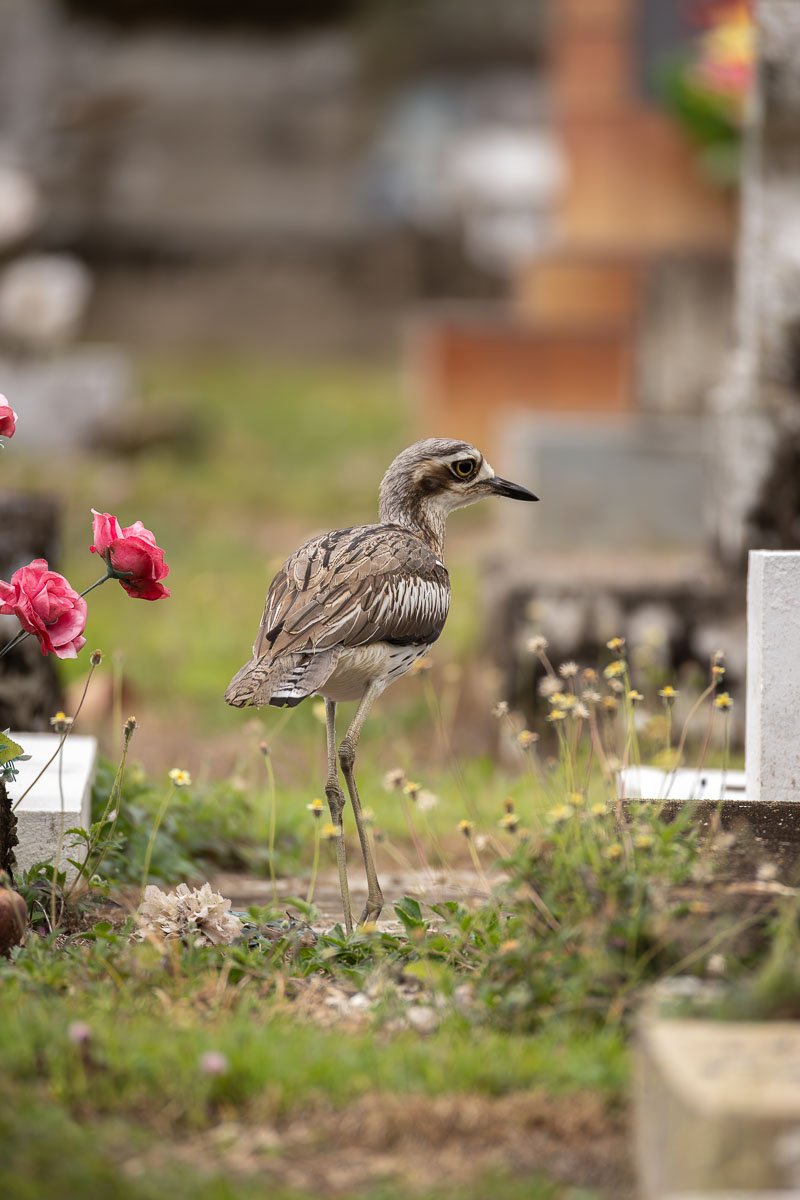
Bush Stone Curlews, they blend so perfectly into the colours of the masonry, pretending to be fixtures, except they move.
Photos from a visit to Cairns Botanical Gardens, one of the key attractions in the area.
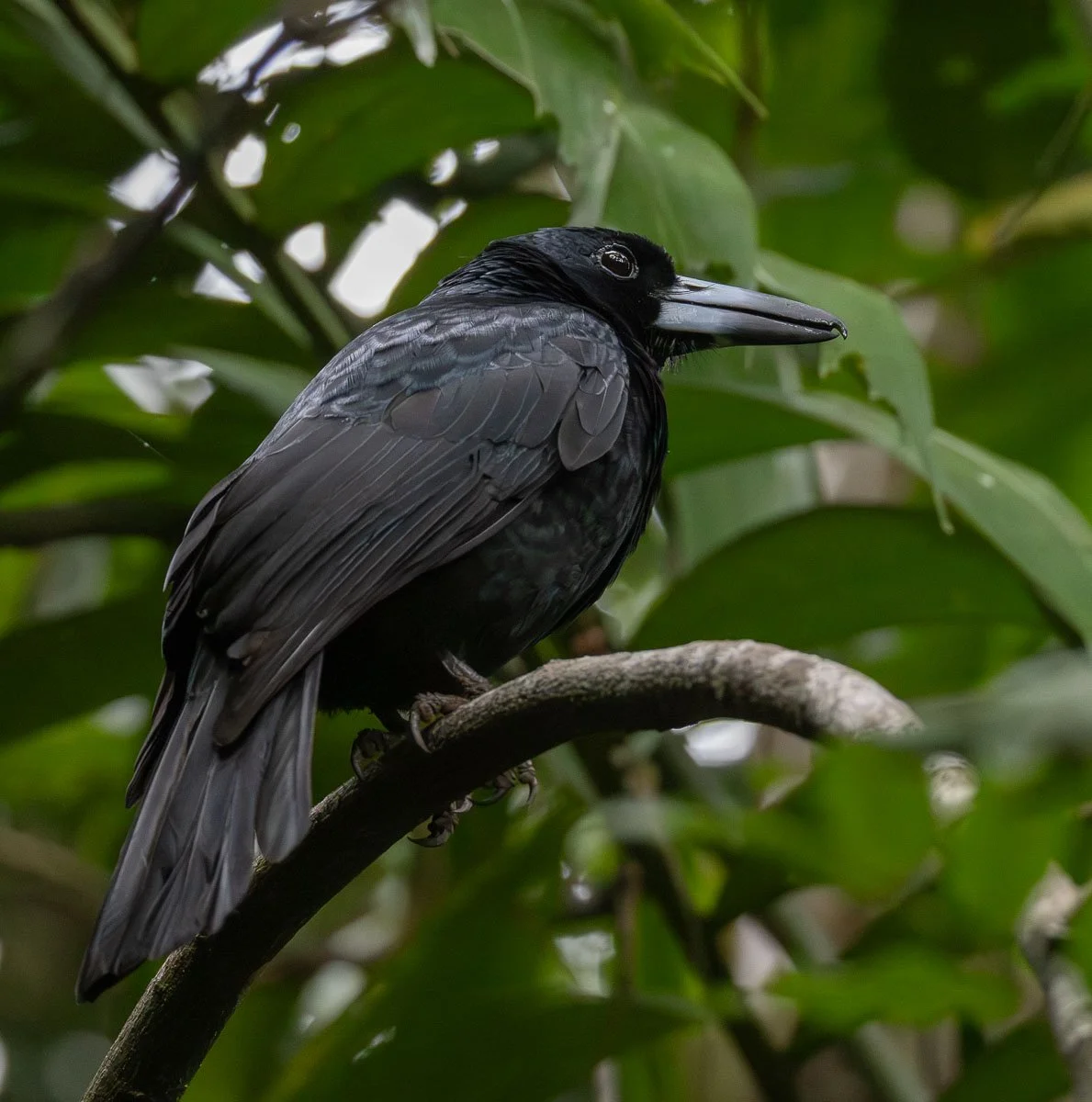
Black Butcherbird. Black in the dark rainforest. Hard to photograph. ISO 12500.
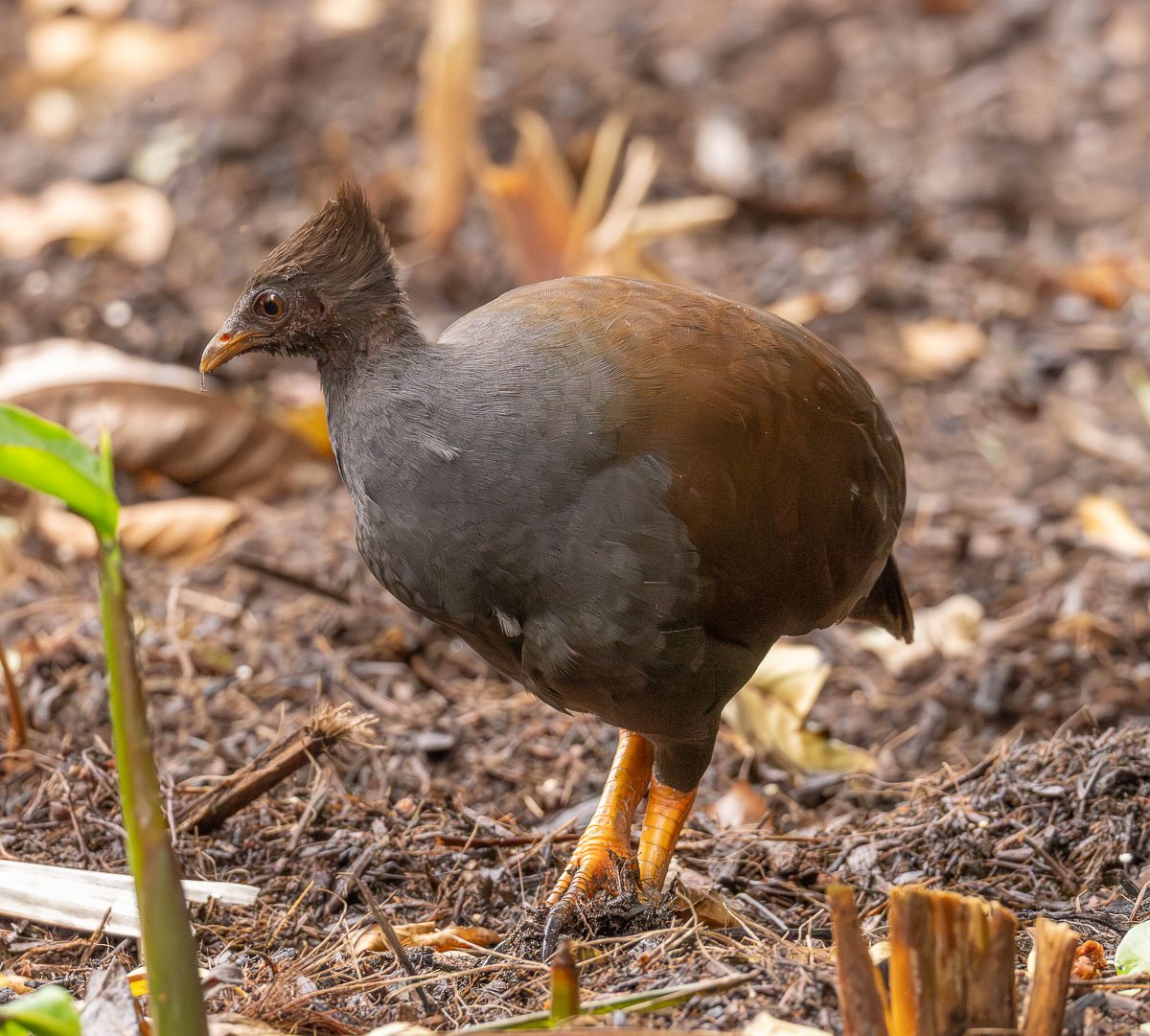
Orange-footed Scrubfowl. (Jarraga) A forest floor dweller digging up large tracts in the search for underground food. You know they are about when you see their diggings or their enormous mounds, which can be as tall as a standing human.
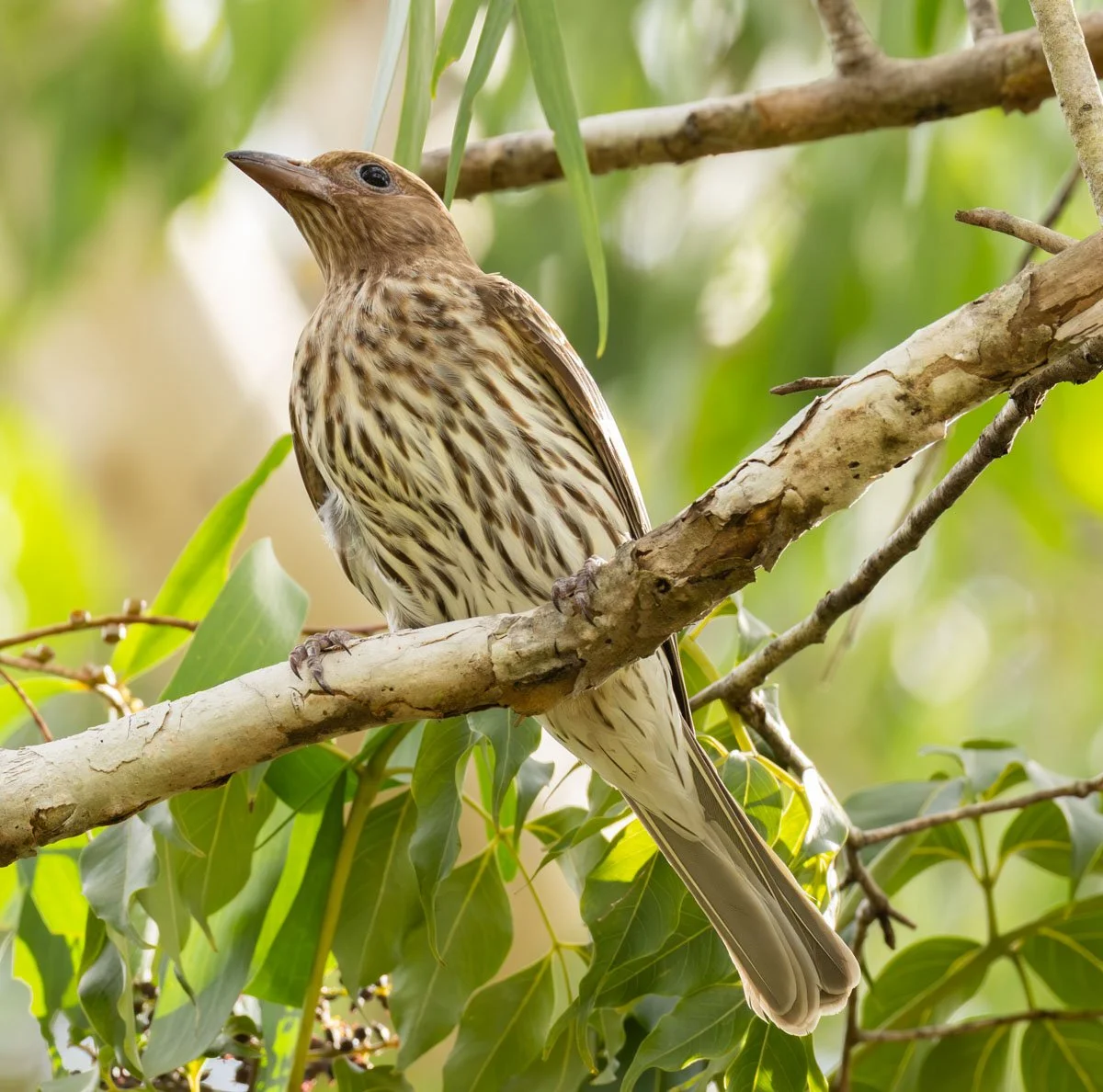
Australasian FigBird. juvenile. Very similar to a juvenile Olive-backed Oriel. Key difference is around the eyes.
Just when you start thinking there isn’t much more happening, they arrive. Female Australian Sunbird followed by the male.
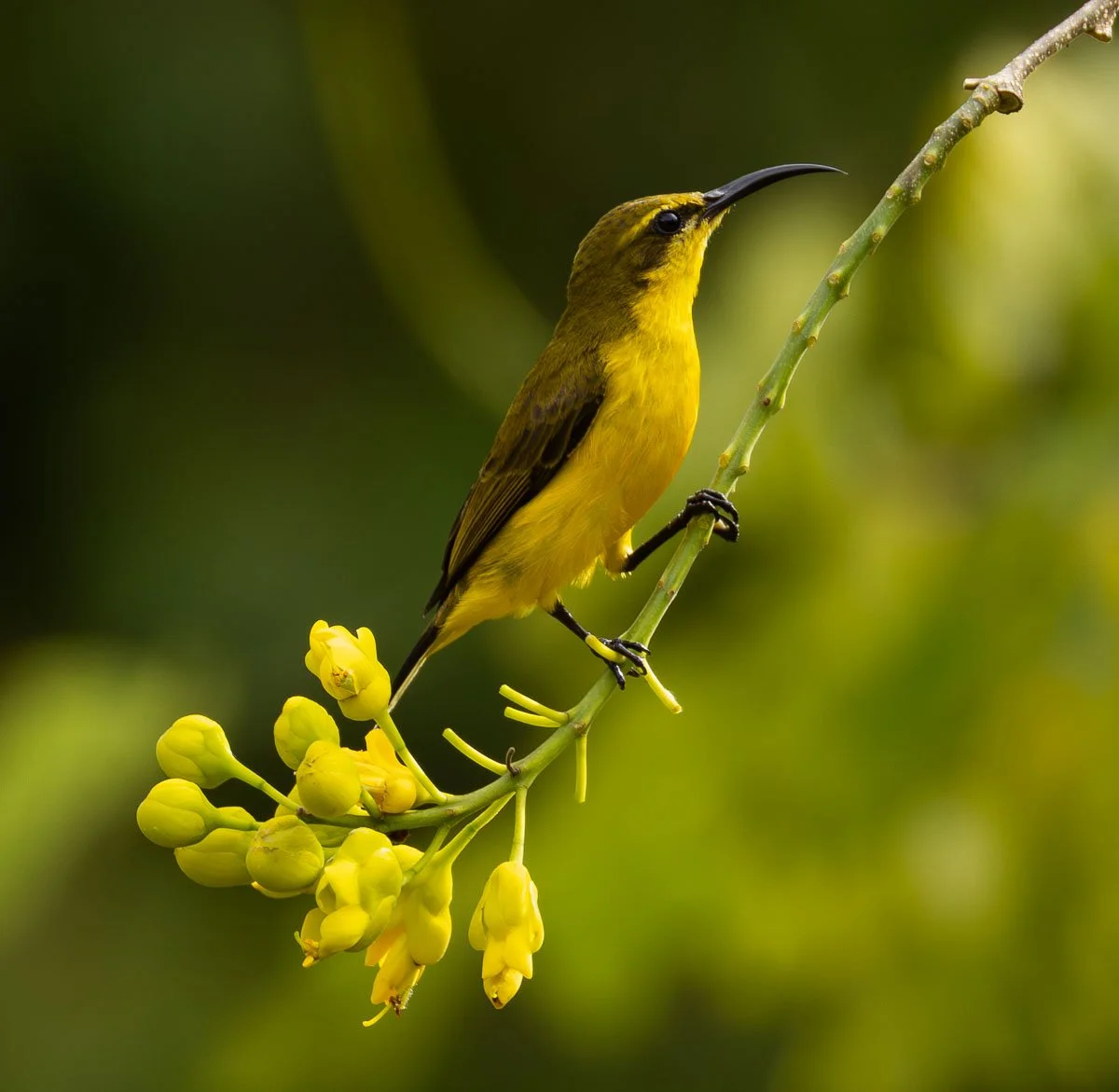
Female Olive-backed Sunbird
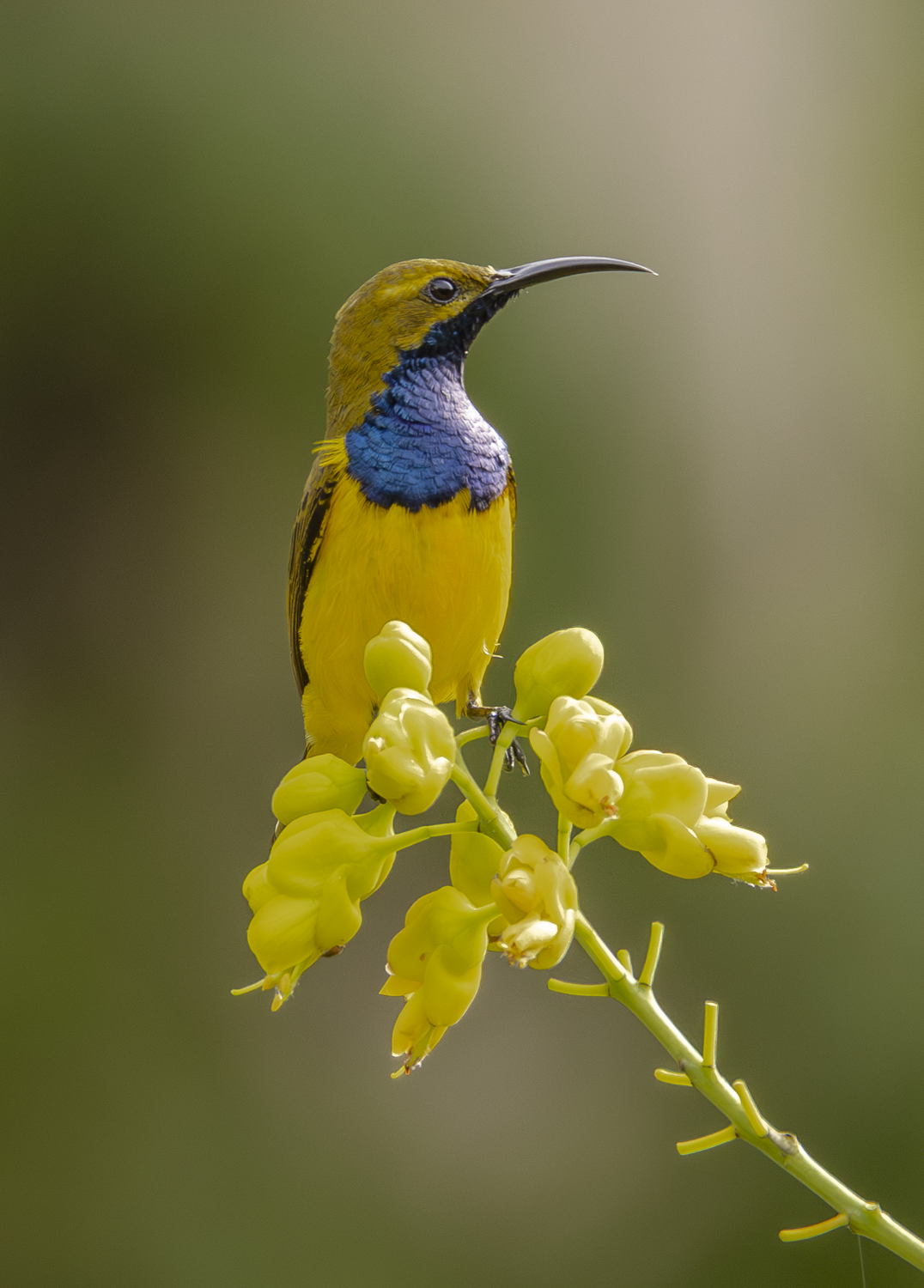
Male Olive-backed Sunbird
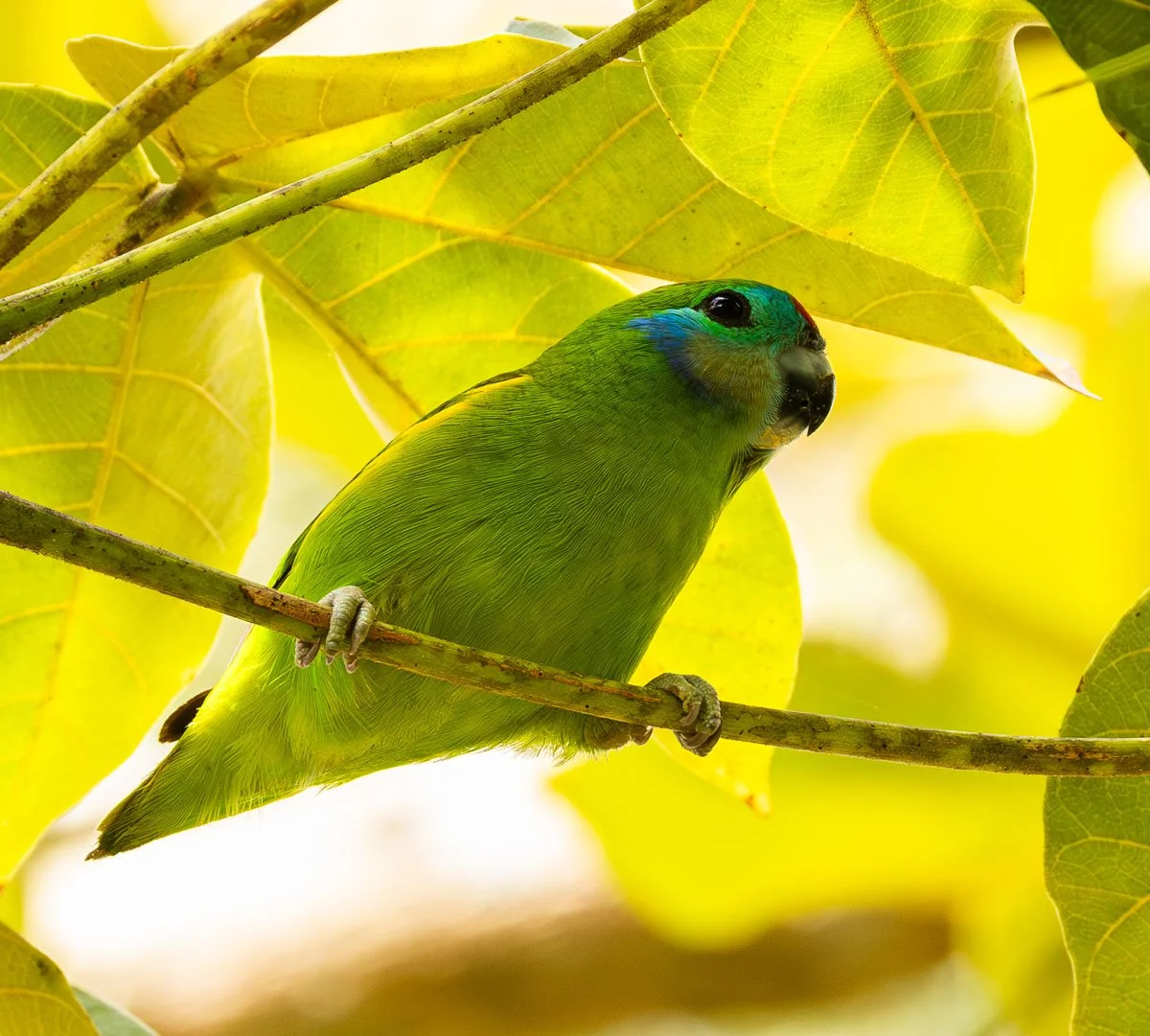
Double-eyed Fig-Parrot (Macleayana)
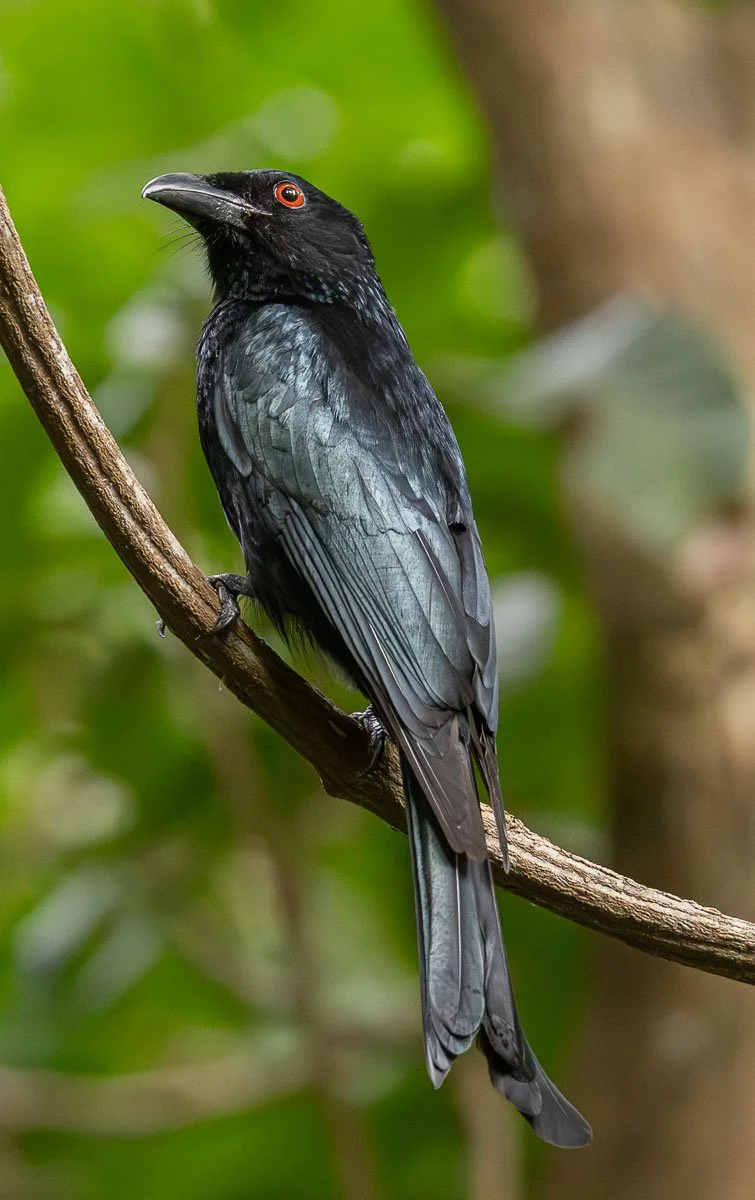
Another look at a Spangled Drongo
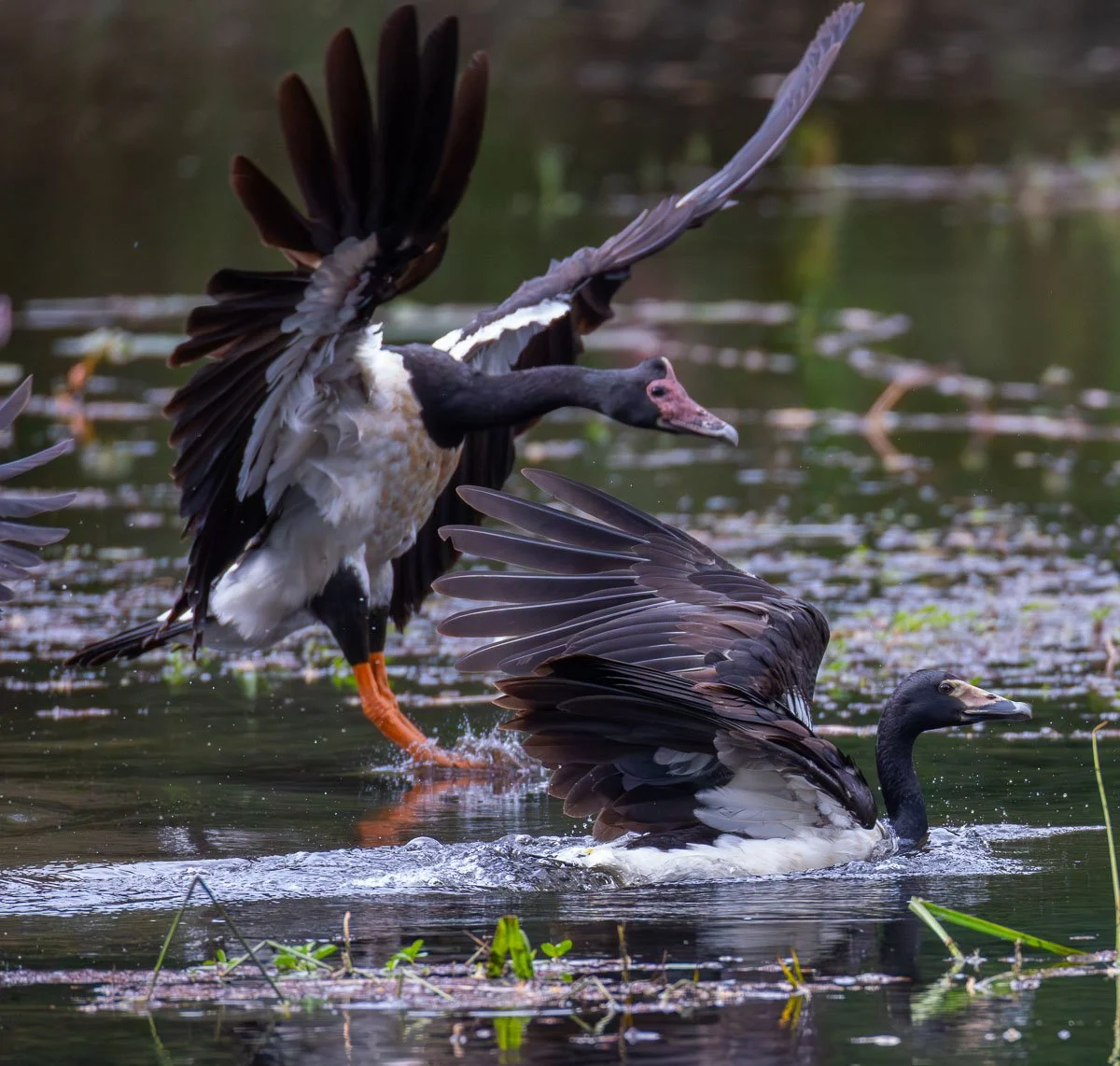
Magpie Geese
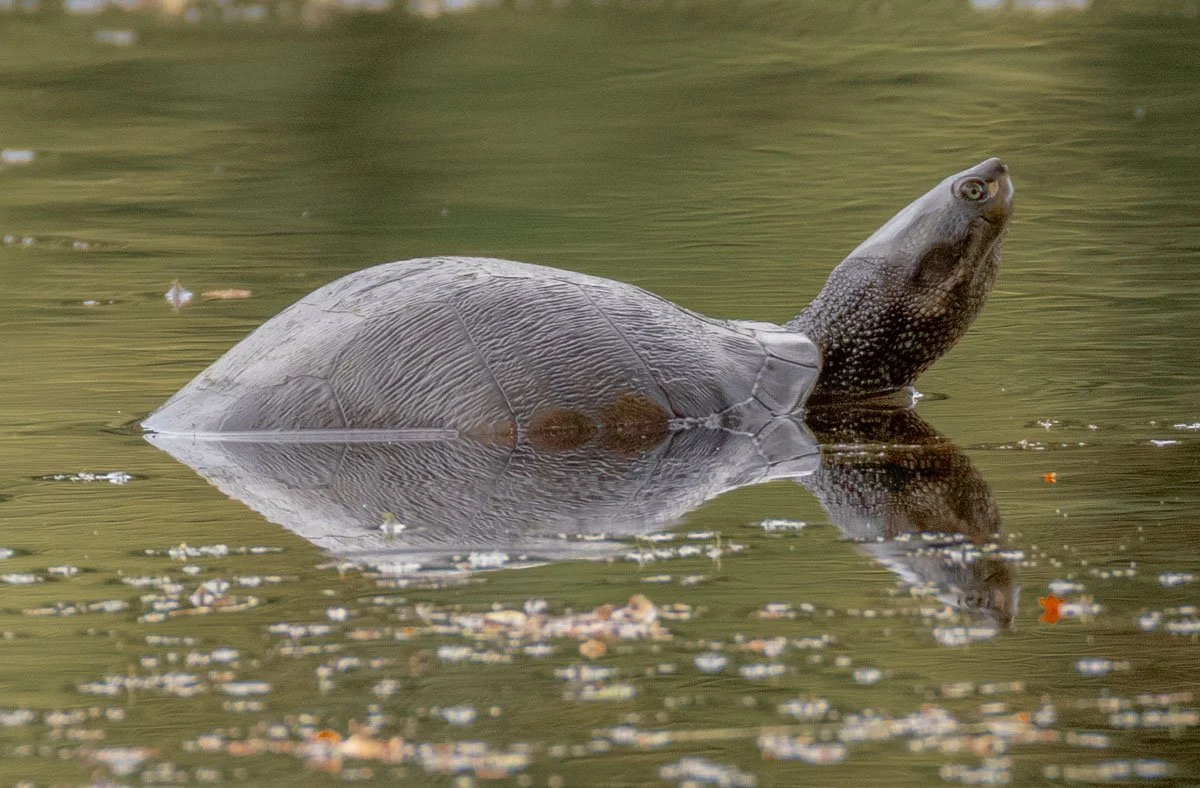
Eastern Short-necked Turtle.
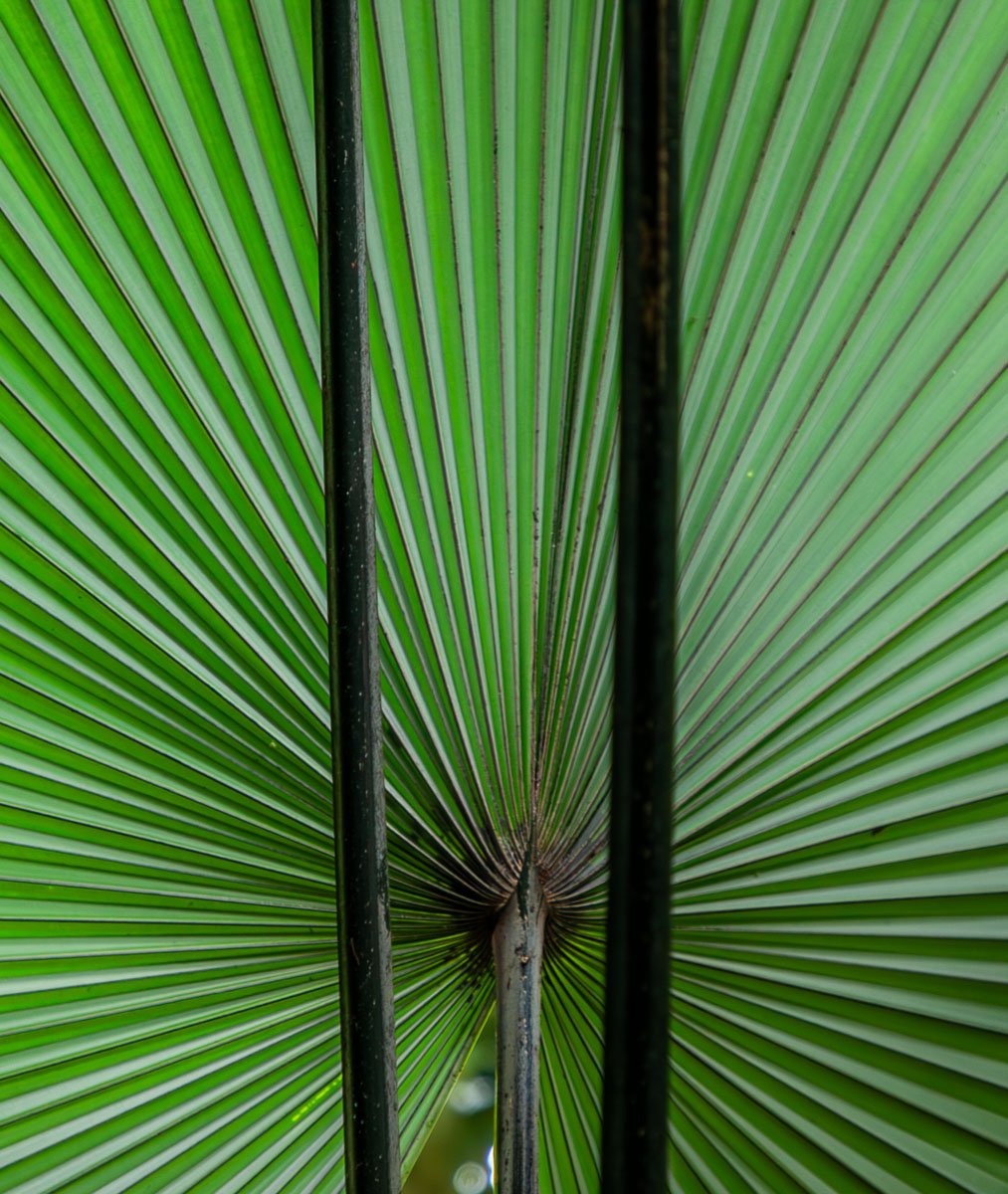
Abstract detail of the vegetation.
North of Cairns in Mossman and Daintree areas.
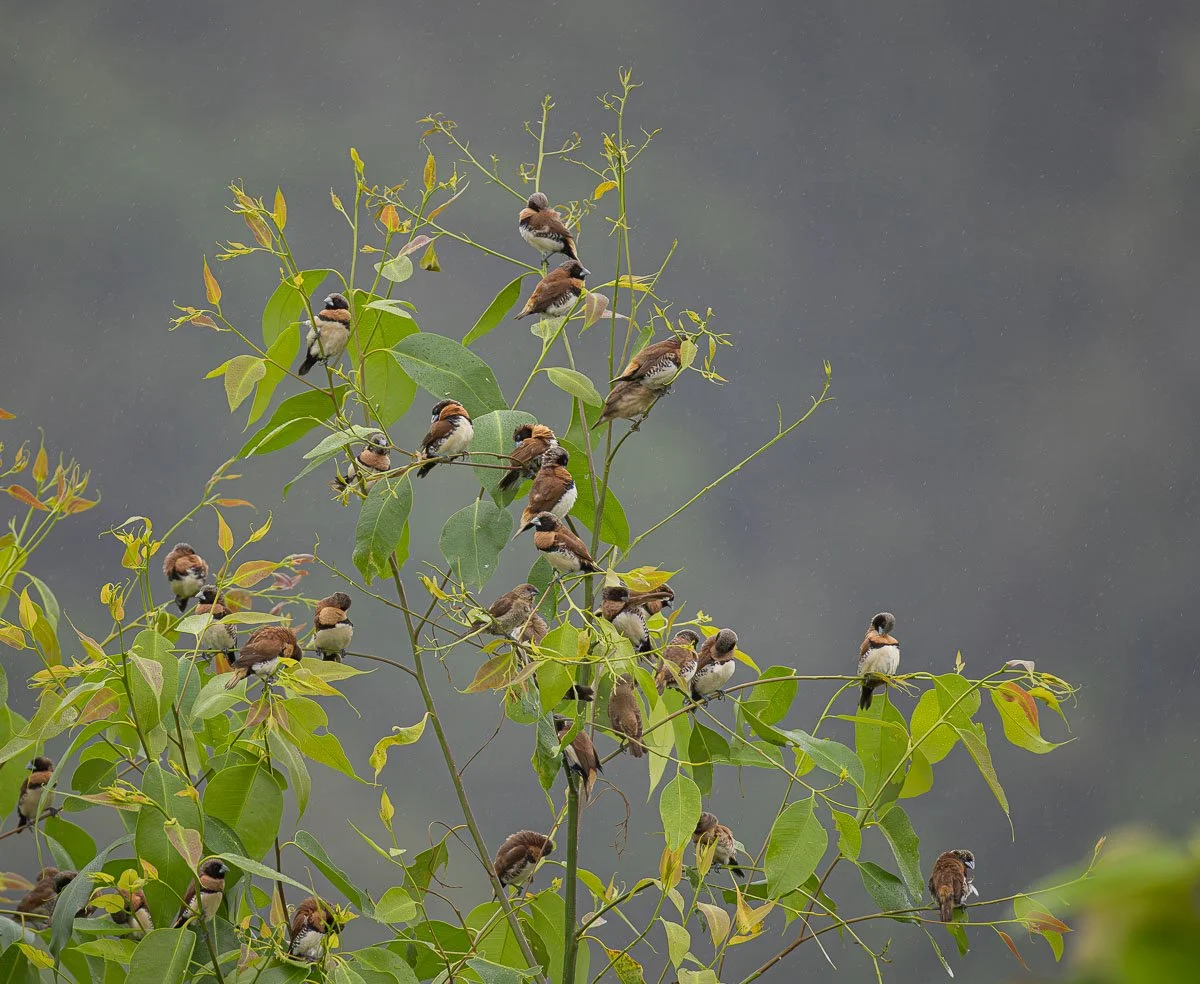
A large flock of Chestnut-breasted Mannikin, preen during a brief shower, in the hills inland of Mossman Gorge.
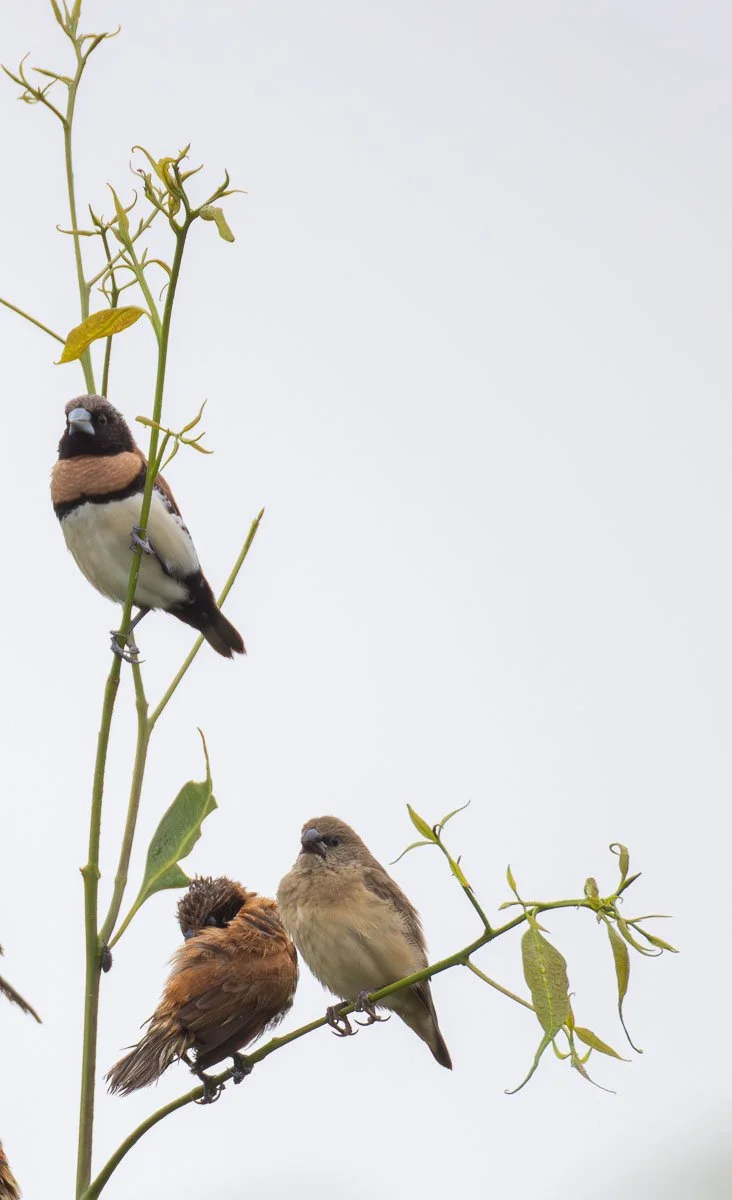
Chestnut-breasted Mannikin. A detail extracted from a group photo.
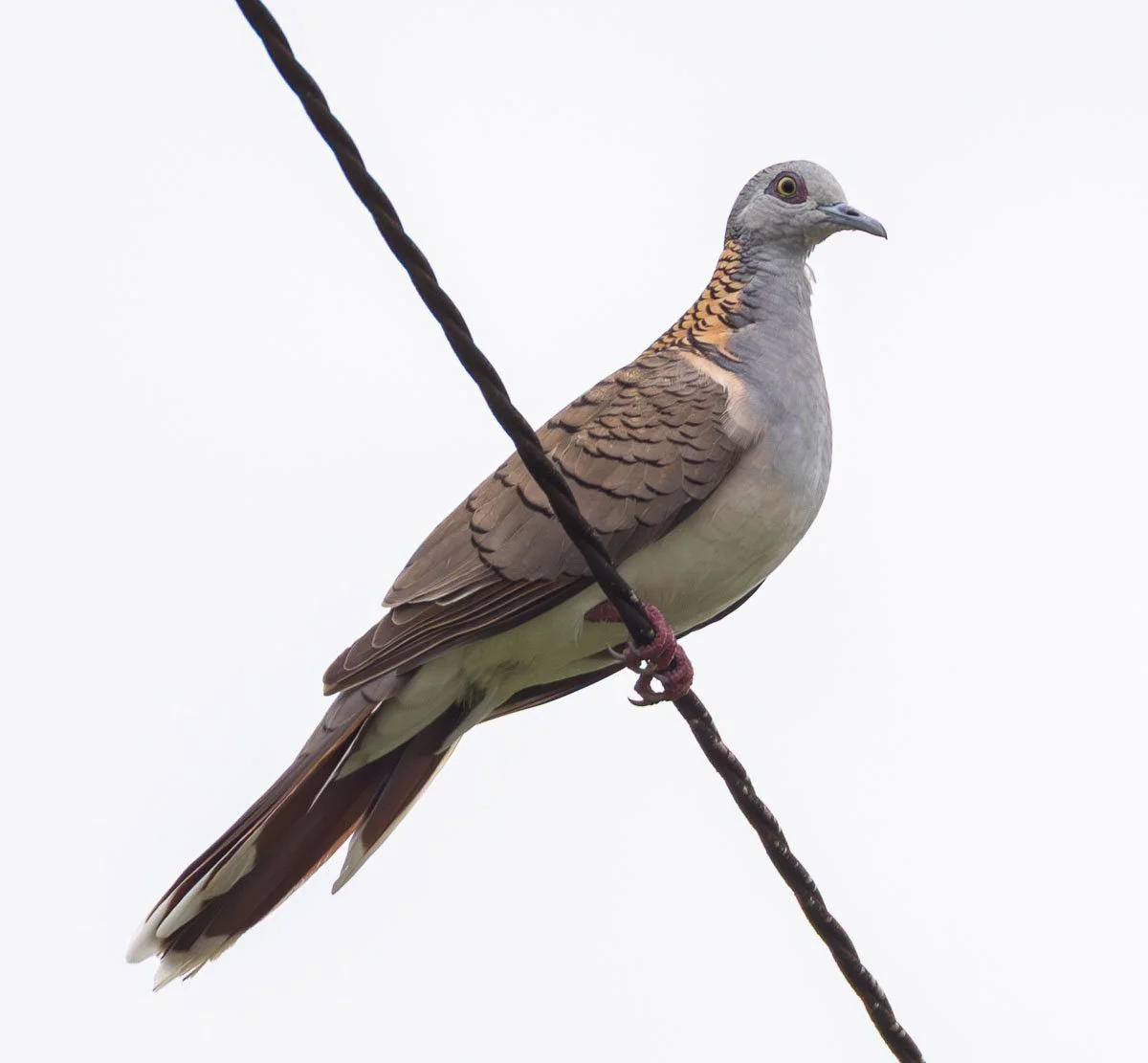
Bar-shouldered Dove.
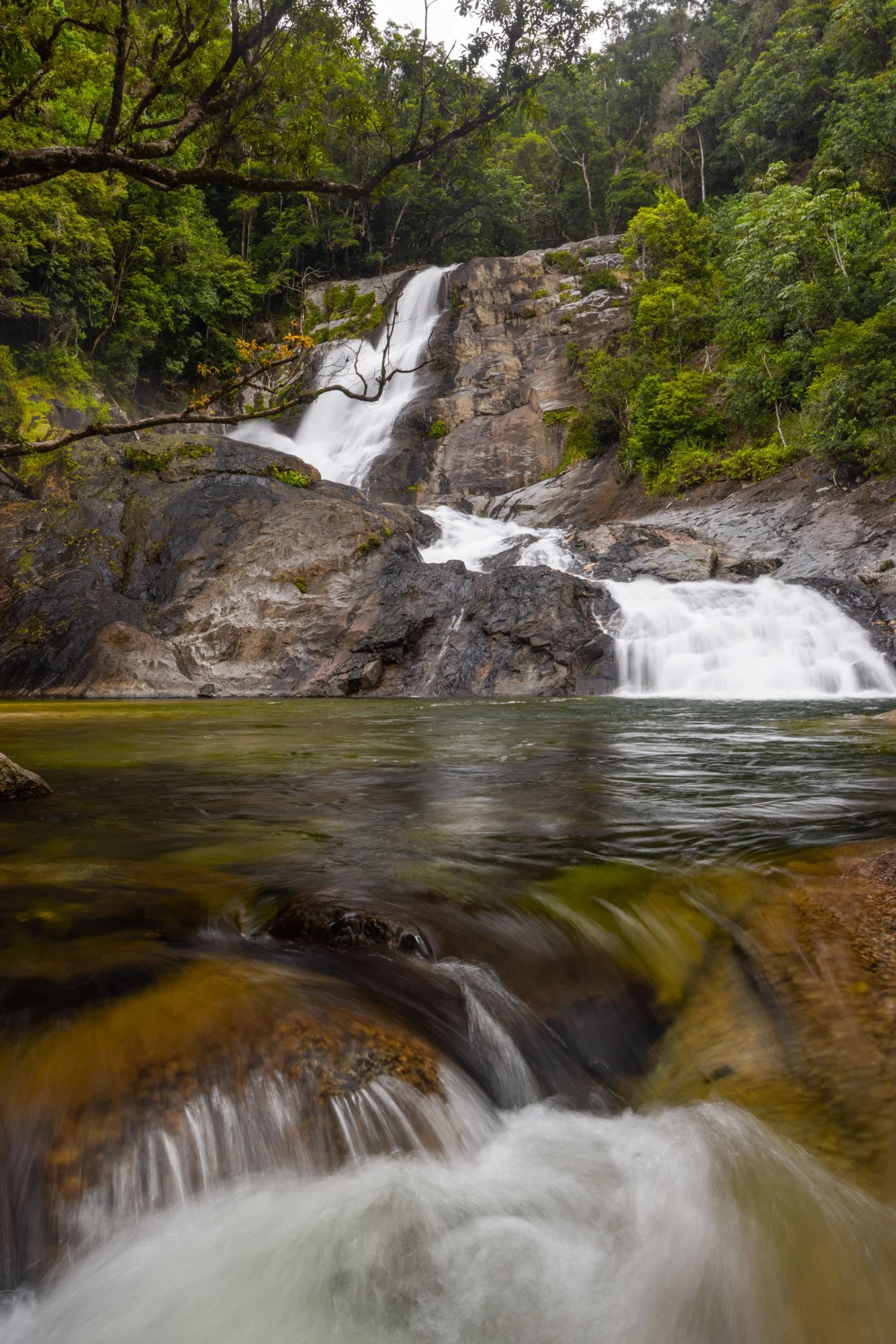
Un-named falls on a private walk from a farm stay campsite. Getting to these falls involved a challenging walk including crossing the river on slippery rocks. To get this perspective required the same dexterity. Camera enters water; not a good outcome.
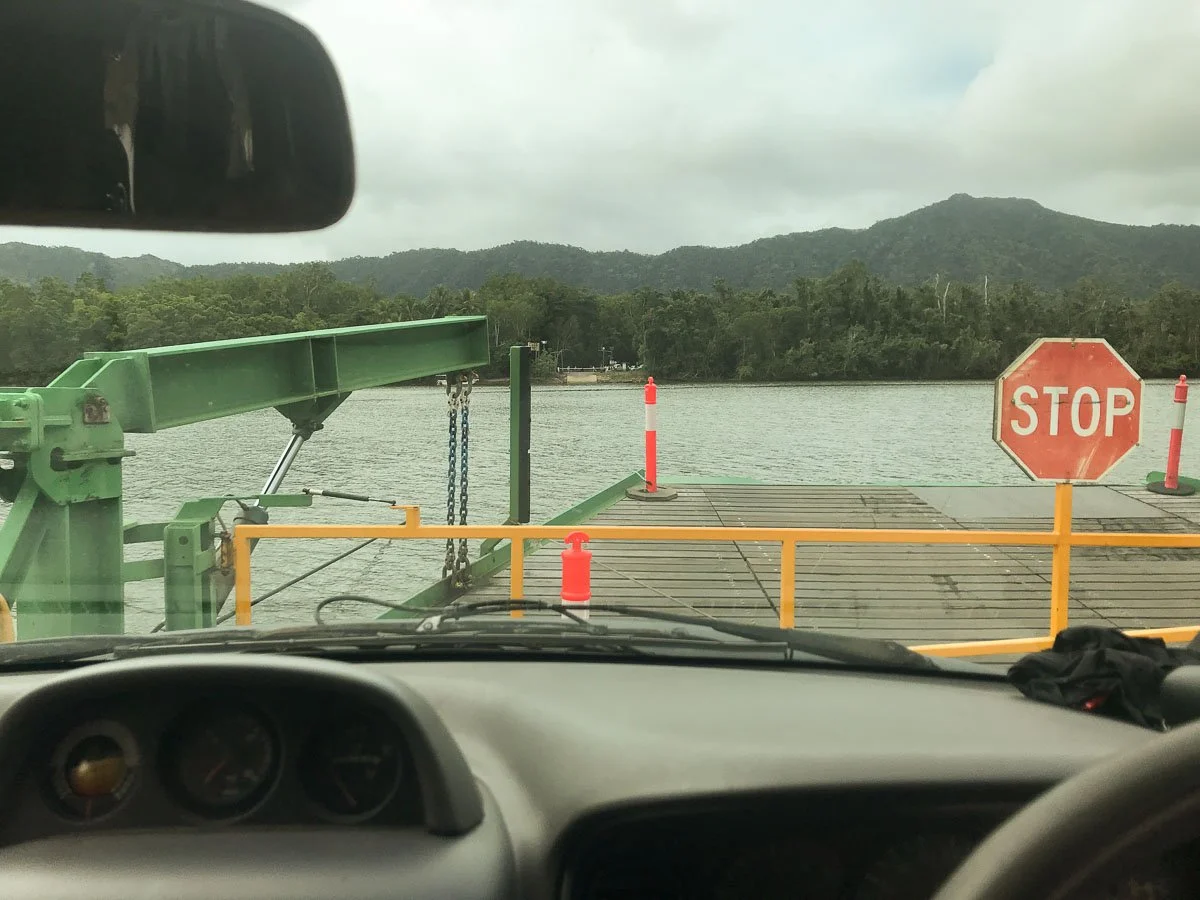
To enter the Daintree Forest one must first pay $30 to cross the Daintree River on a ferry. We did it three times that’s $90.
Daintree to Cooktown
Deeper into the Daintree Forest there is one large bird that attracts tourism like no other. In fact non-birders seek out a glimpse of this species. Its Australia’s heaviest bird and rivals Emu for size.
We are talking about Cassowary of course, and if you’re lucky, you get a good view of one. We got just that at a road works where the traffic was stopped. The adult and chick were happy to eat off the road. Easy pickings.
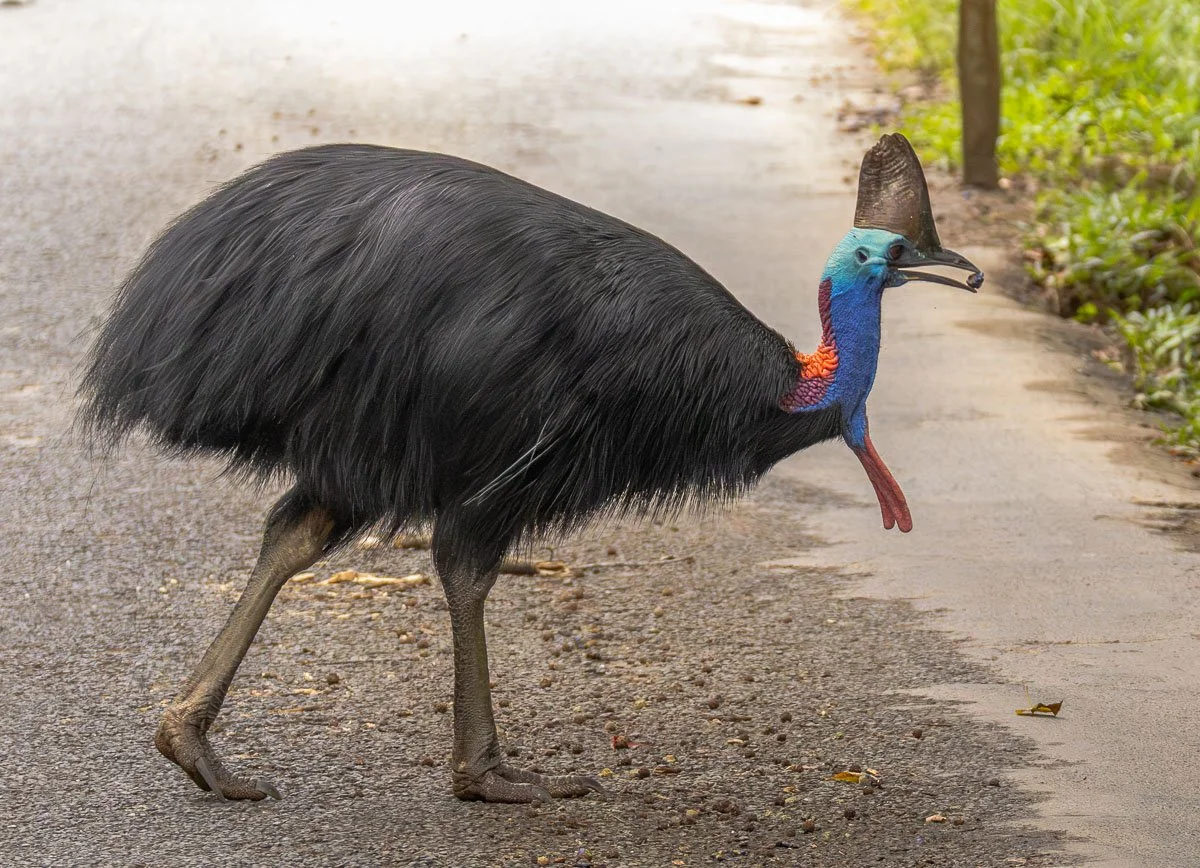
Cassowary Adult. Male and Female very similar.
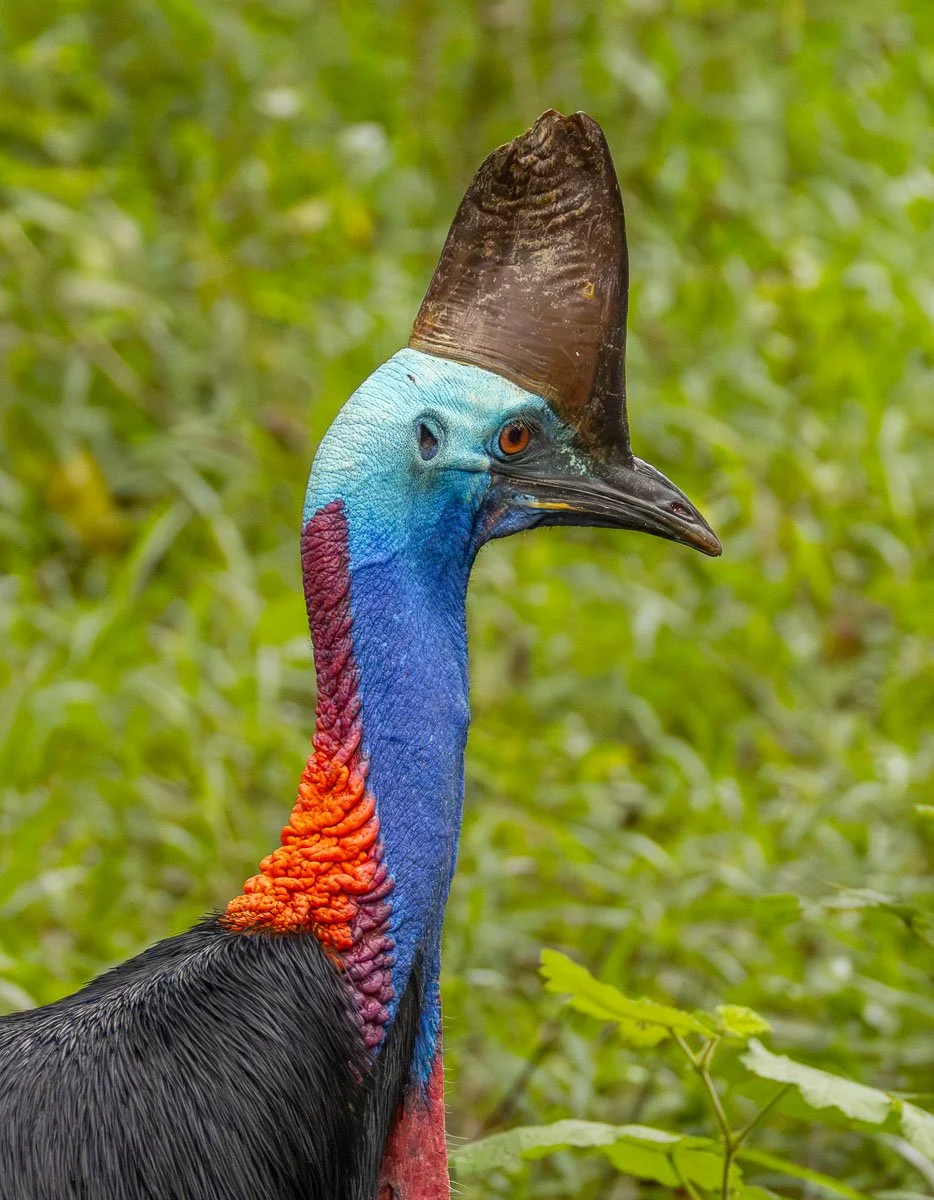
Cassowary Adult.
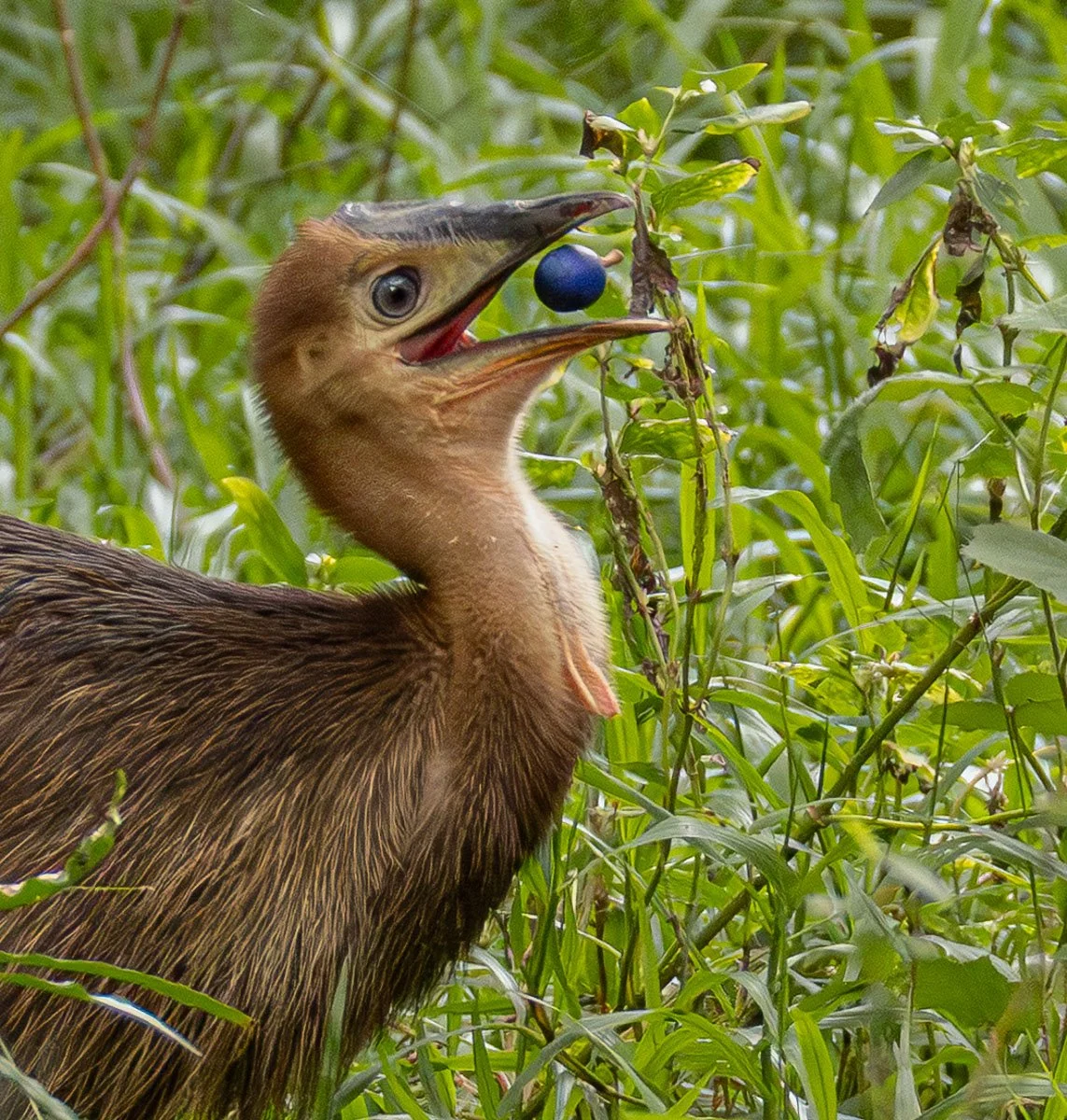
Cassowary chick finds some fruit. They delicately pick the fruit with the tips of their beak then throw their head back to send the fruit down their gullet.
An eco-tour on the Daintree River at 7am provided some more wildlife shots. Our guide Murray was extremely knowledged offering informed descriptions.
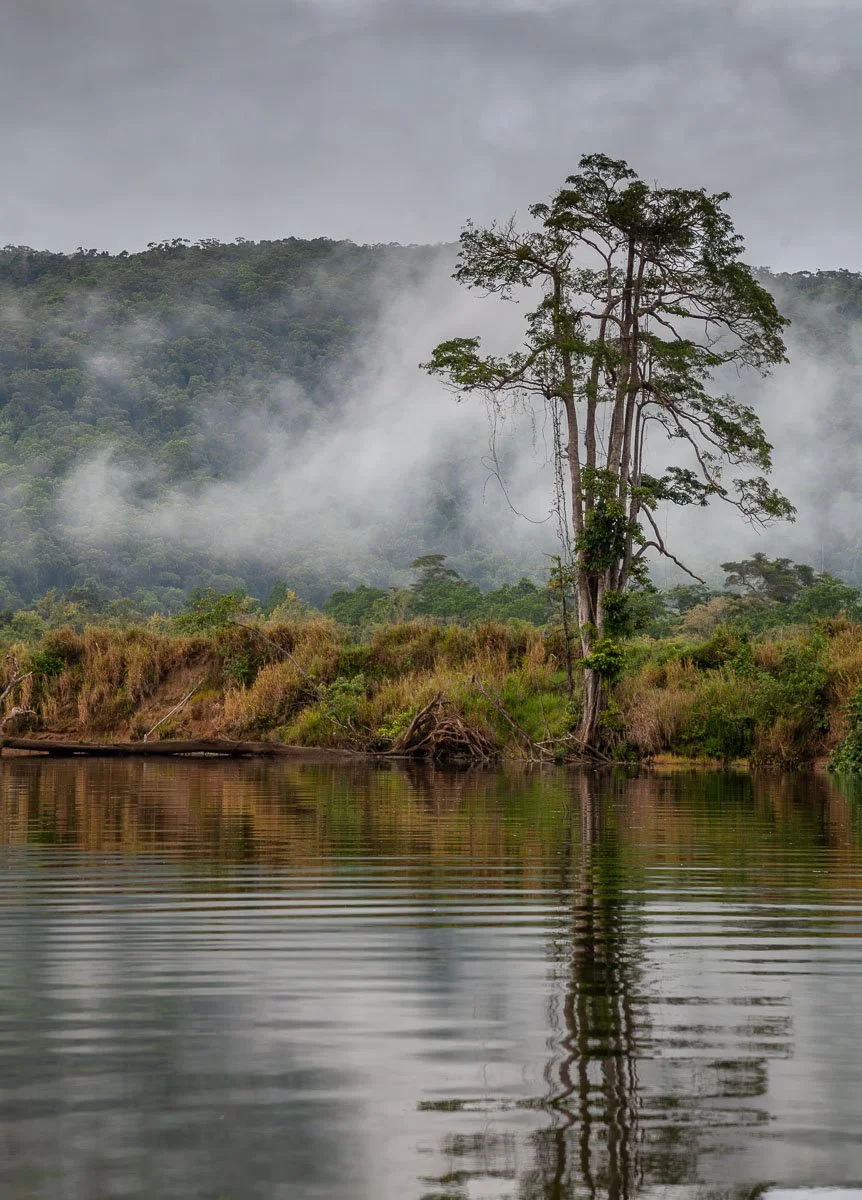
Views down river early in the morning of Wednesday 9th July. 2025 Daintree River QLD
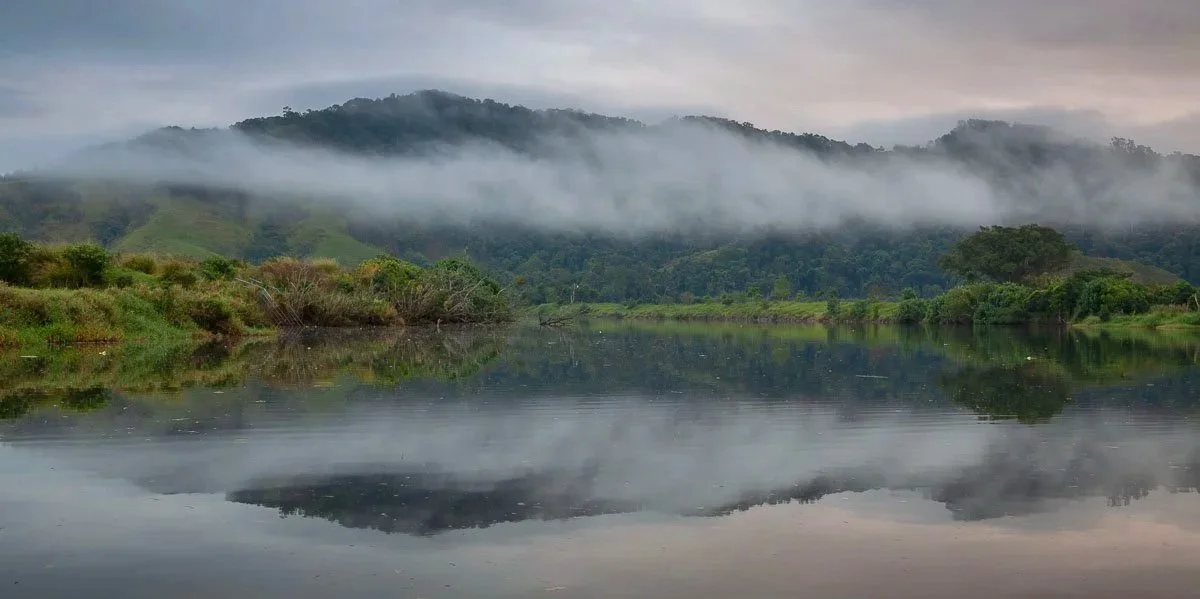
Views down river early in the morning of Wednesday 9th July. 2025 Daintree River QLD
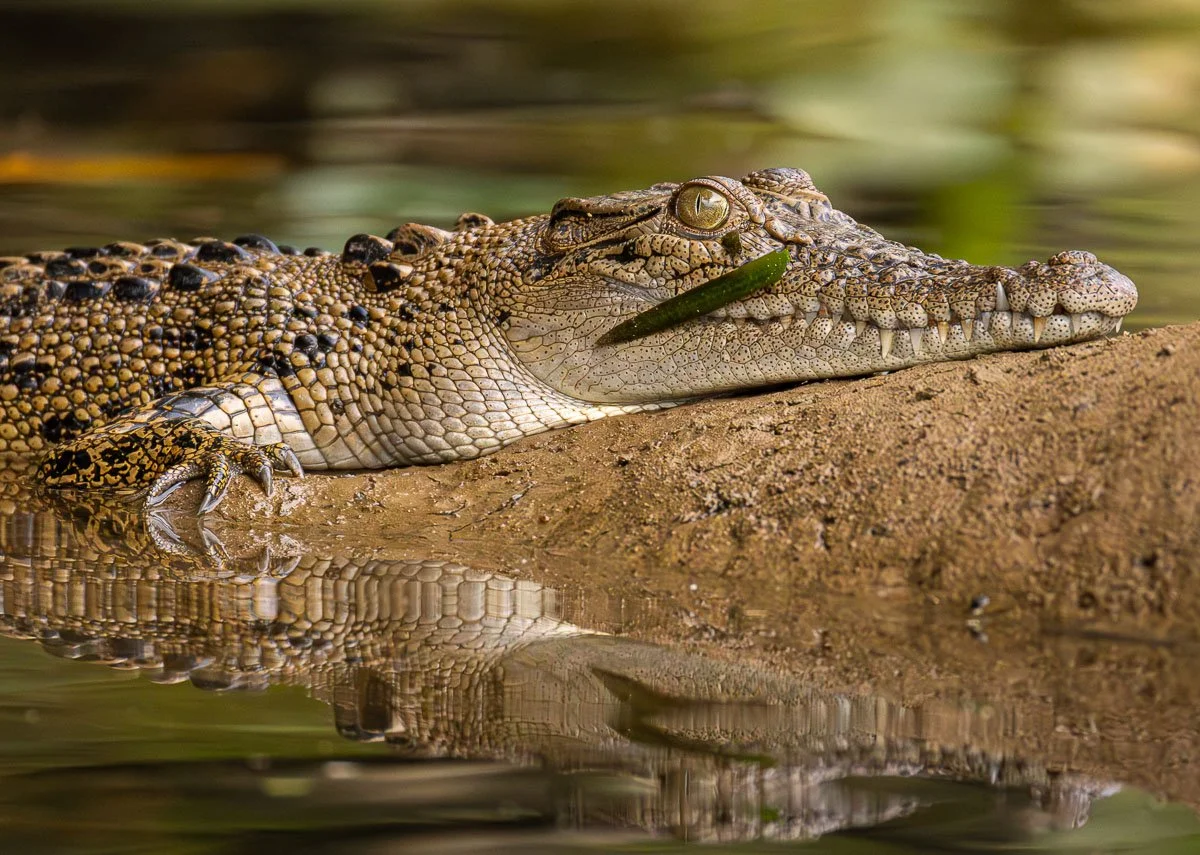
Young Crocodile, only about a meter long. They climb out of the water once the air temperature is greater than that of the water.
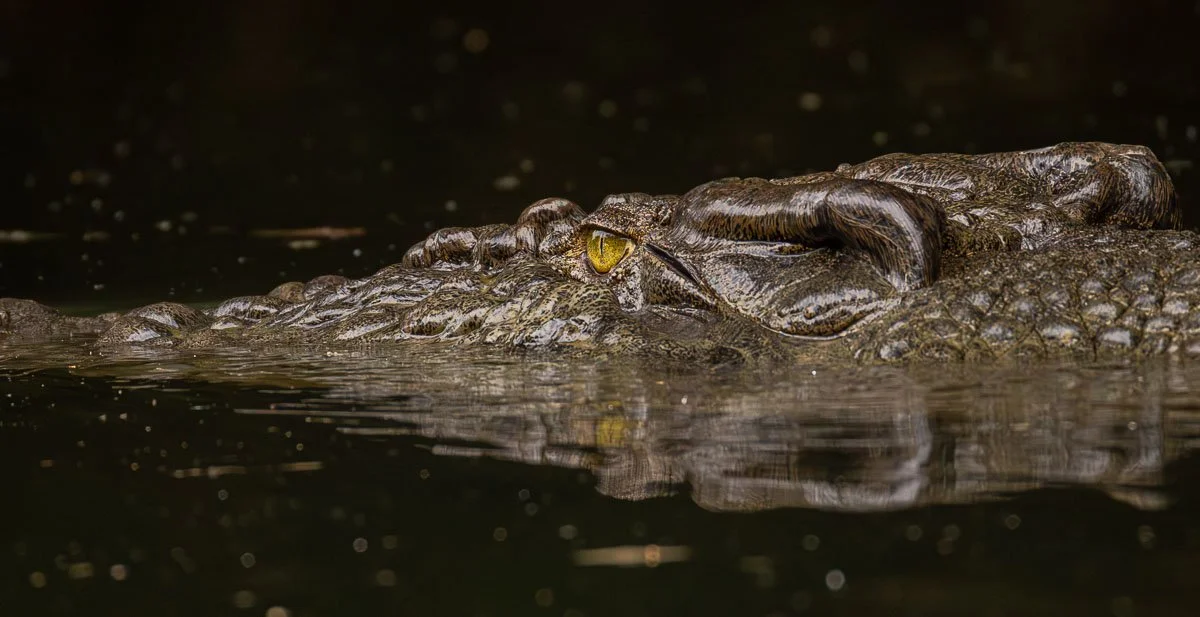
Head of a 4-metre dominant male as he patrols the 2 to 3 Kilometers of his territory.
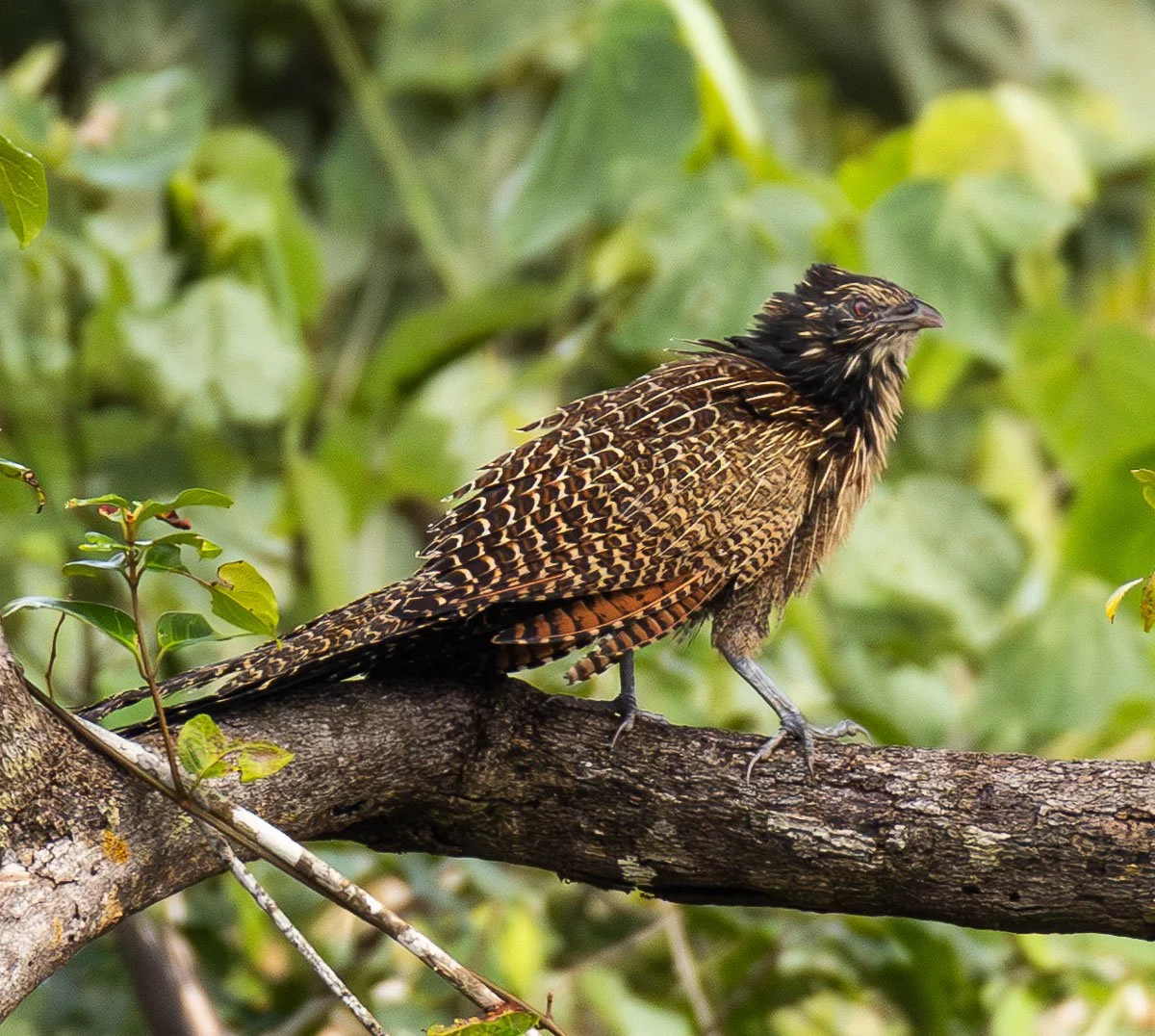
Pheasant Coucal
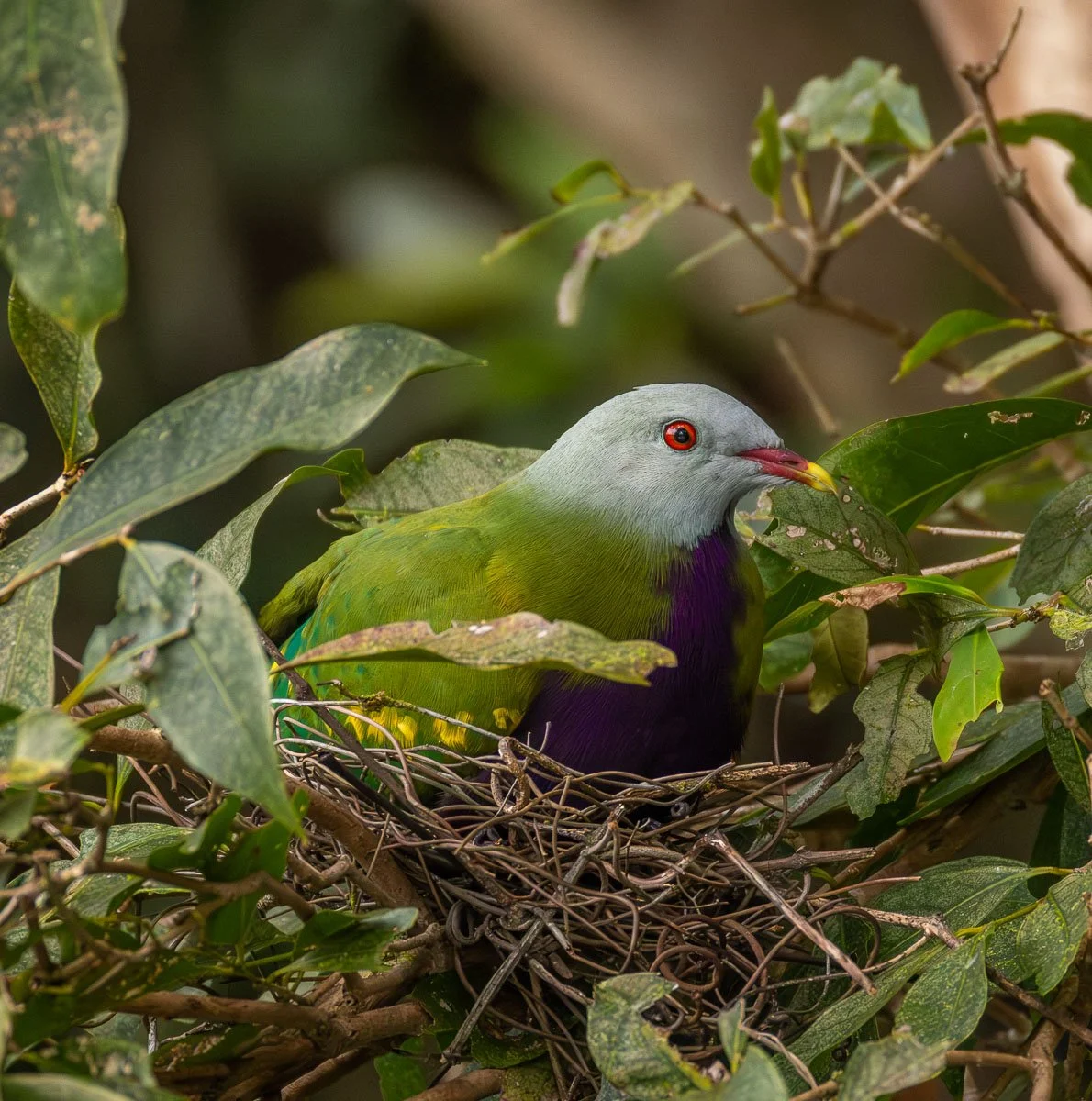
Woompoo Fruit-dove nesting. We will also see some feeding in Cooktown Botanic Gardens.
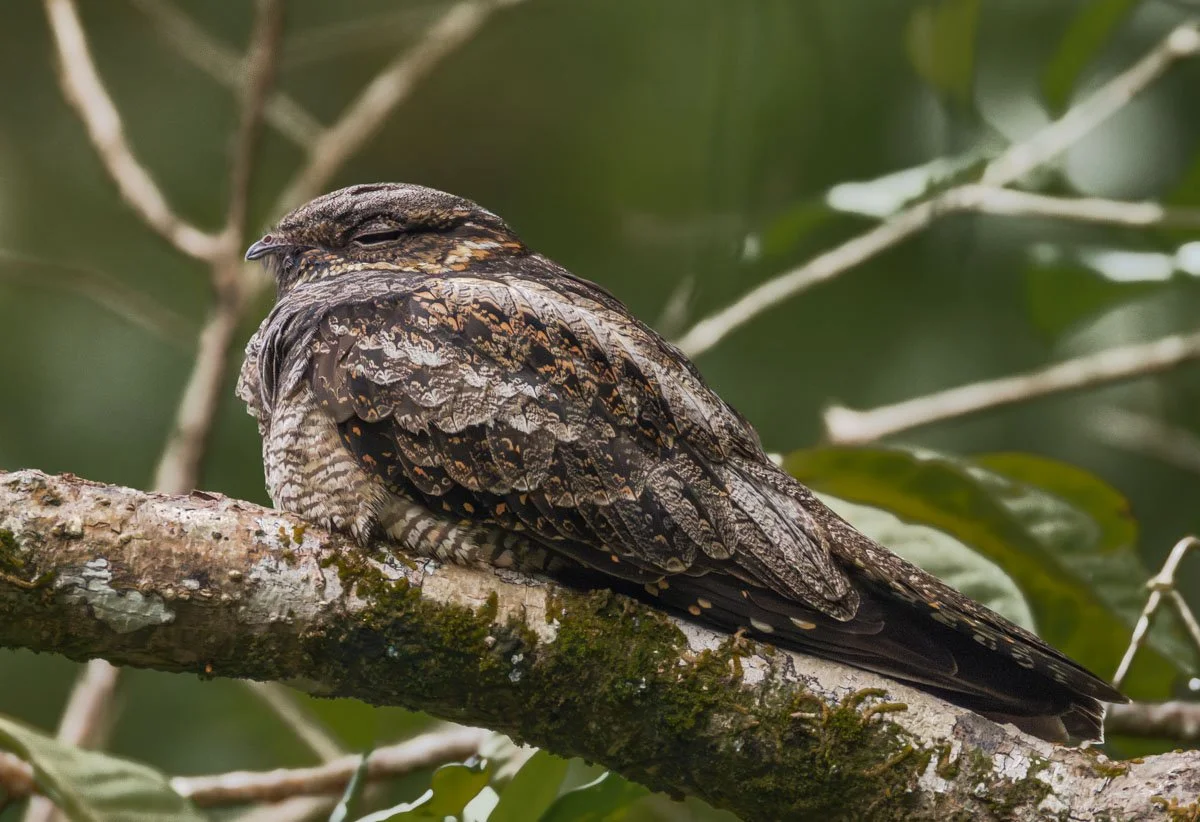
White-throated Nightjar
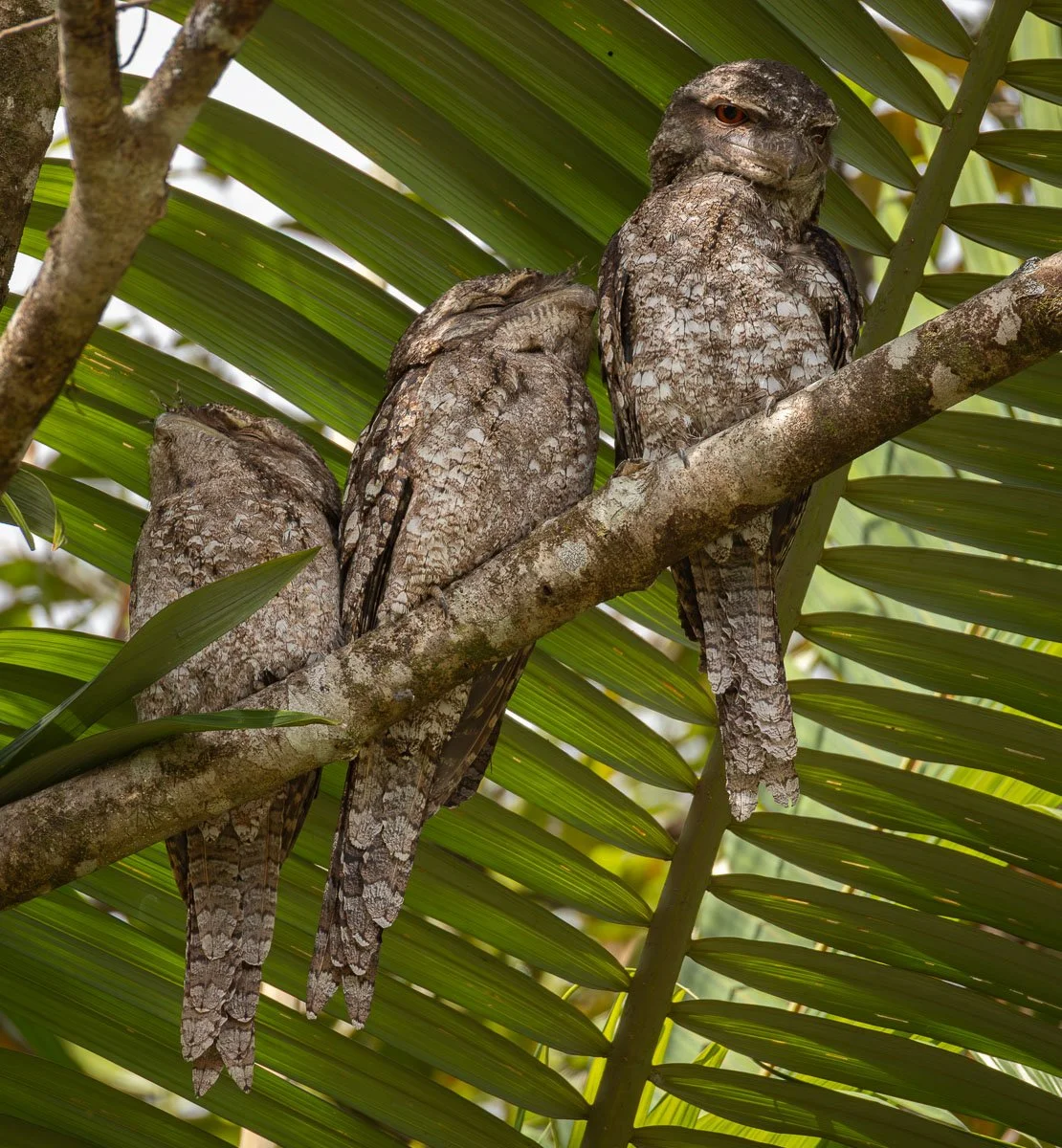
Papuan Frogmouth.
Noah Beach, the only Parks campground inside Daintree National Park. We spent a few days here.
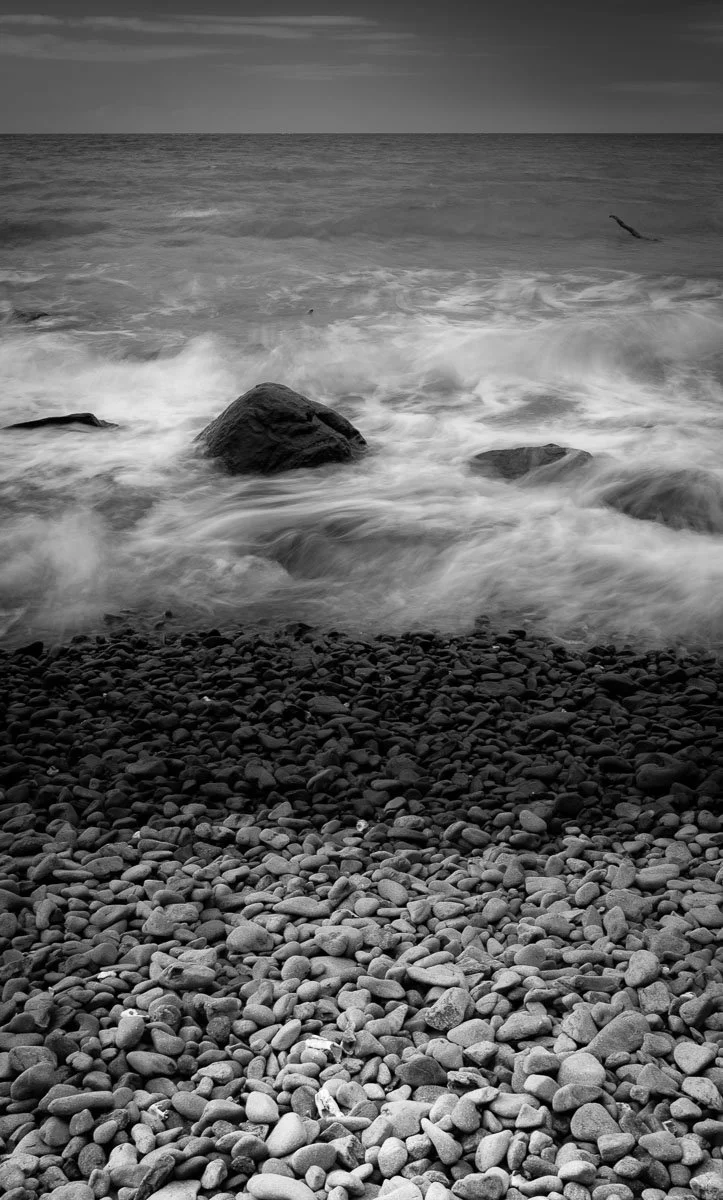
I went for a walk with the intent to take some photographs that were not just about birds on a fairly boring (for photography) beach. I decided on black and white before taking the shots, it changes what you look for.
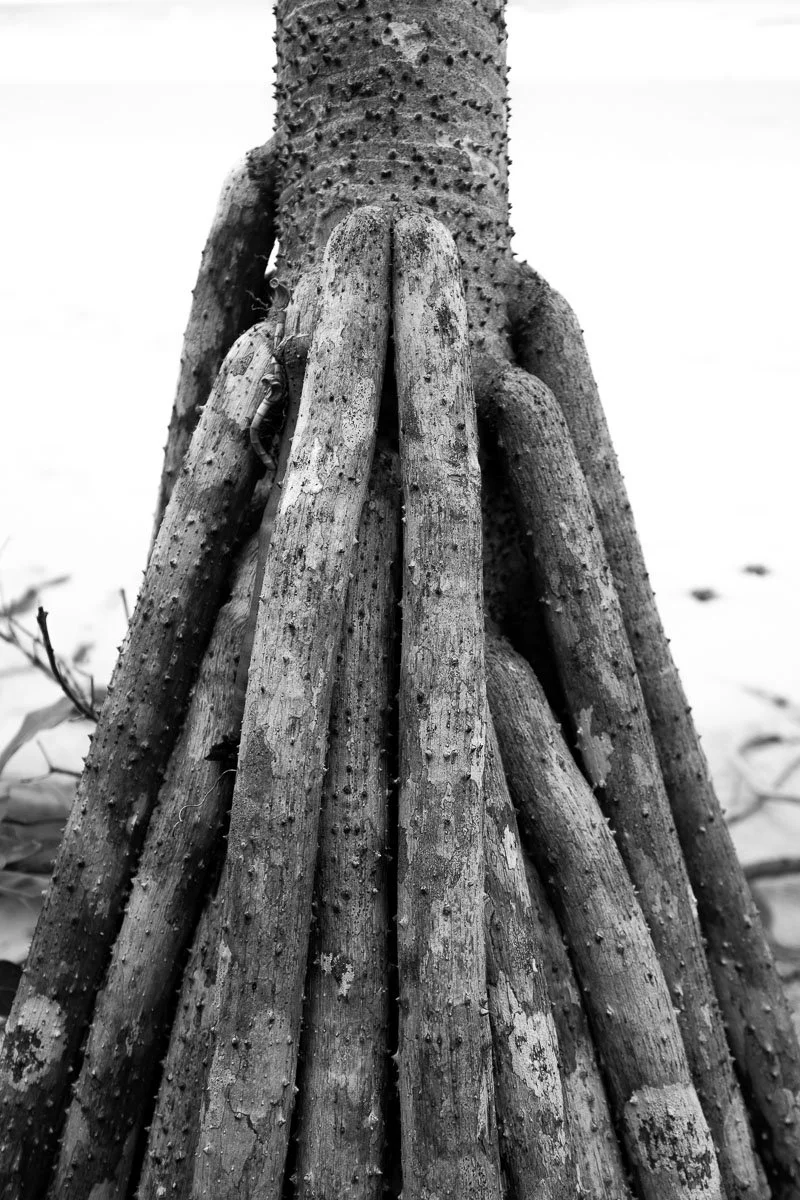
Noah Beach 1
Noah Beach 2
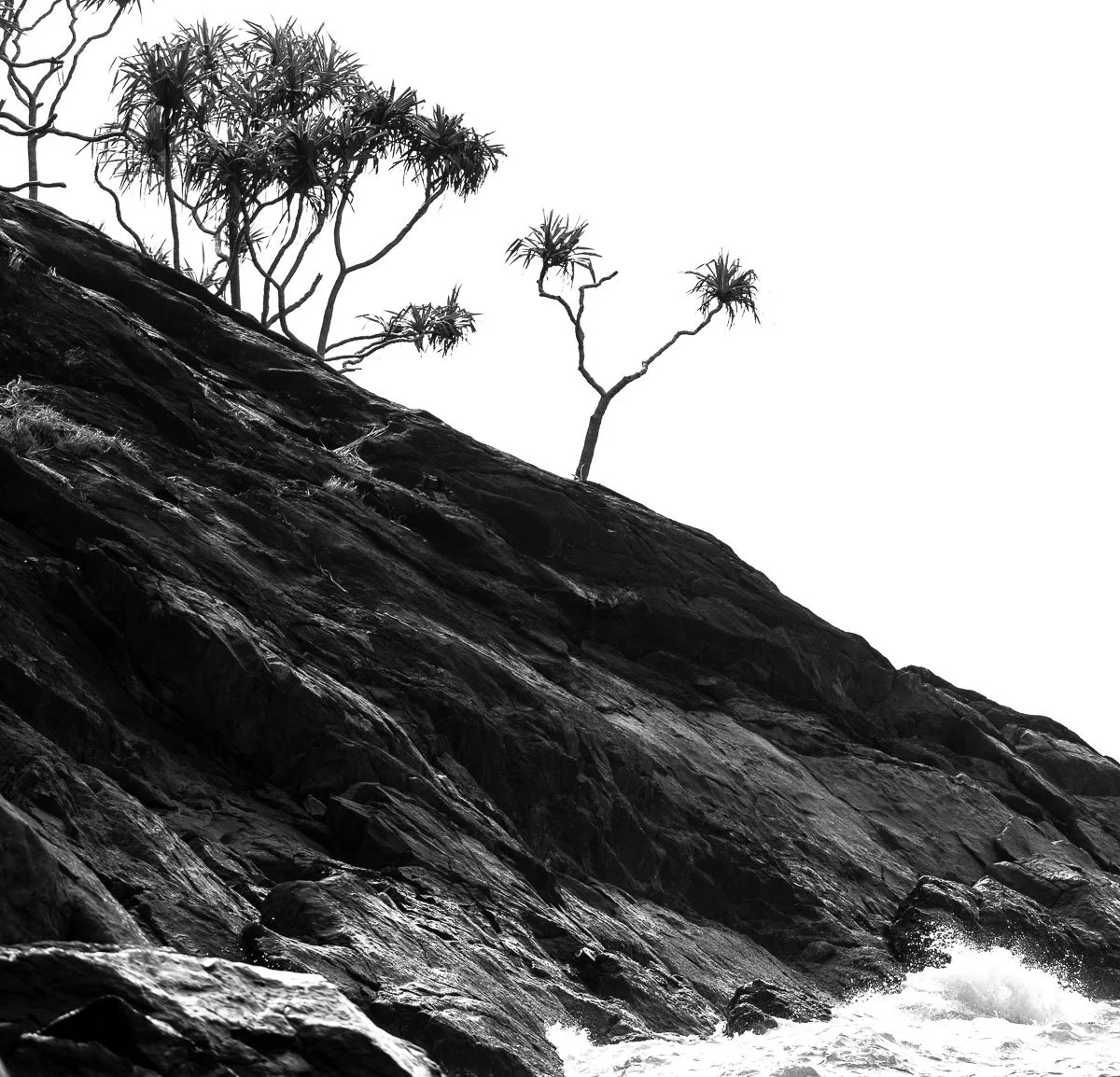
Noah Beach 3

A Black-necked Stork approaches a lone Mangrove, Edited as high contrast black and white.
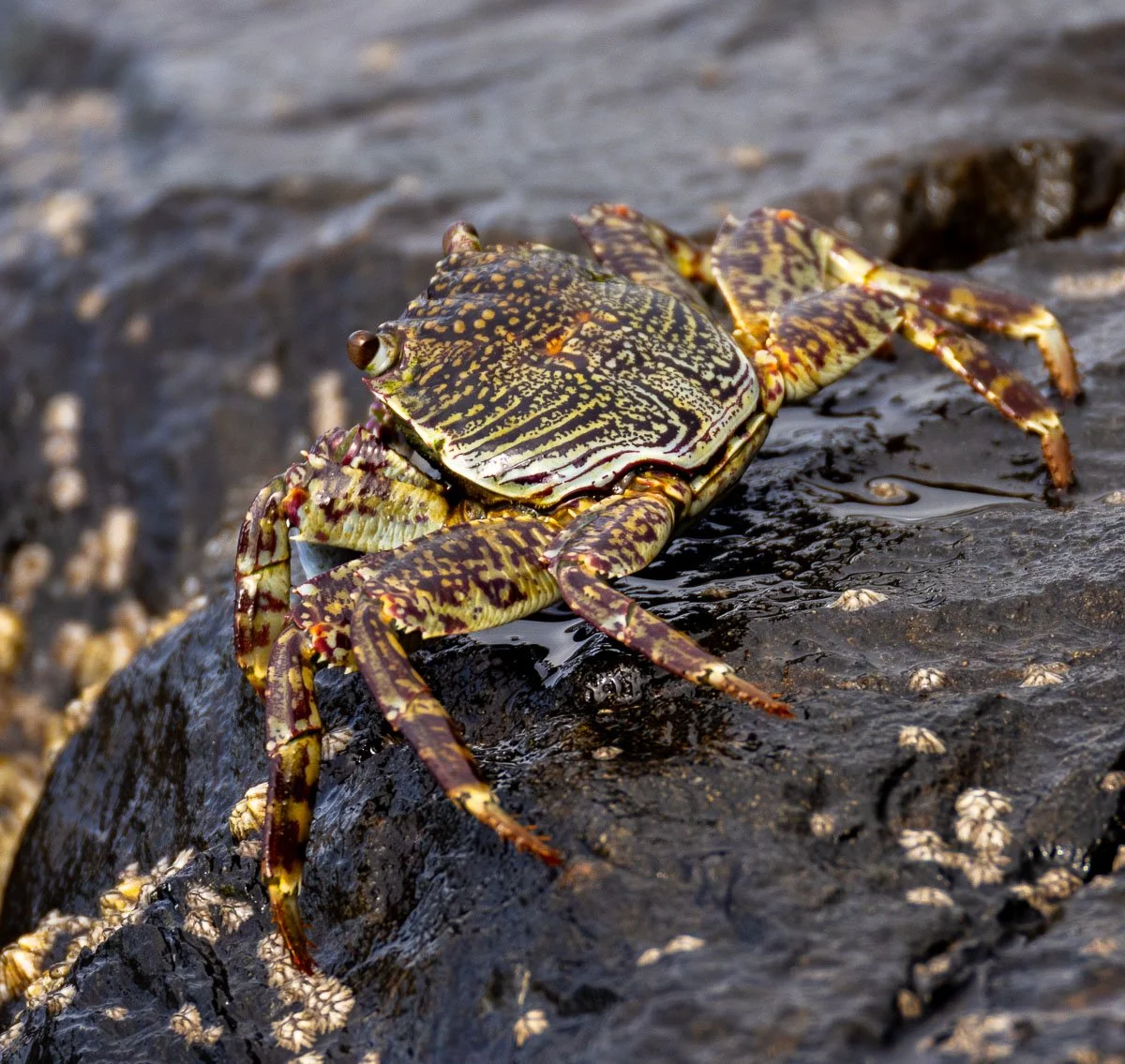
I noticed these guys while on the rocks. If I stayed still for long enough, they would crawl out of their crevices. Slightest movement (like aiming a camera) and they would scuttle back in. About 6 or 7cm across including legs.
Later we went for another walk and Bridget spotted this Near Threatened species off in the distance. (Critically endangered in NSW) Even with an 800mm telephoto lens the bird image was tiny in the frame. This image is way cropped in. However glad to have recorded it. Beach Stone-curlew.
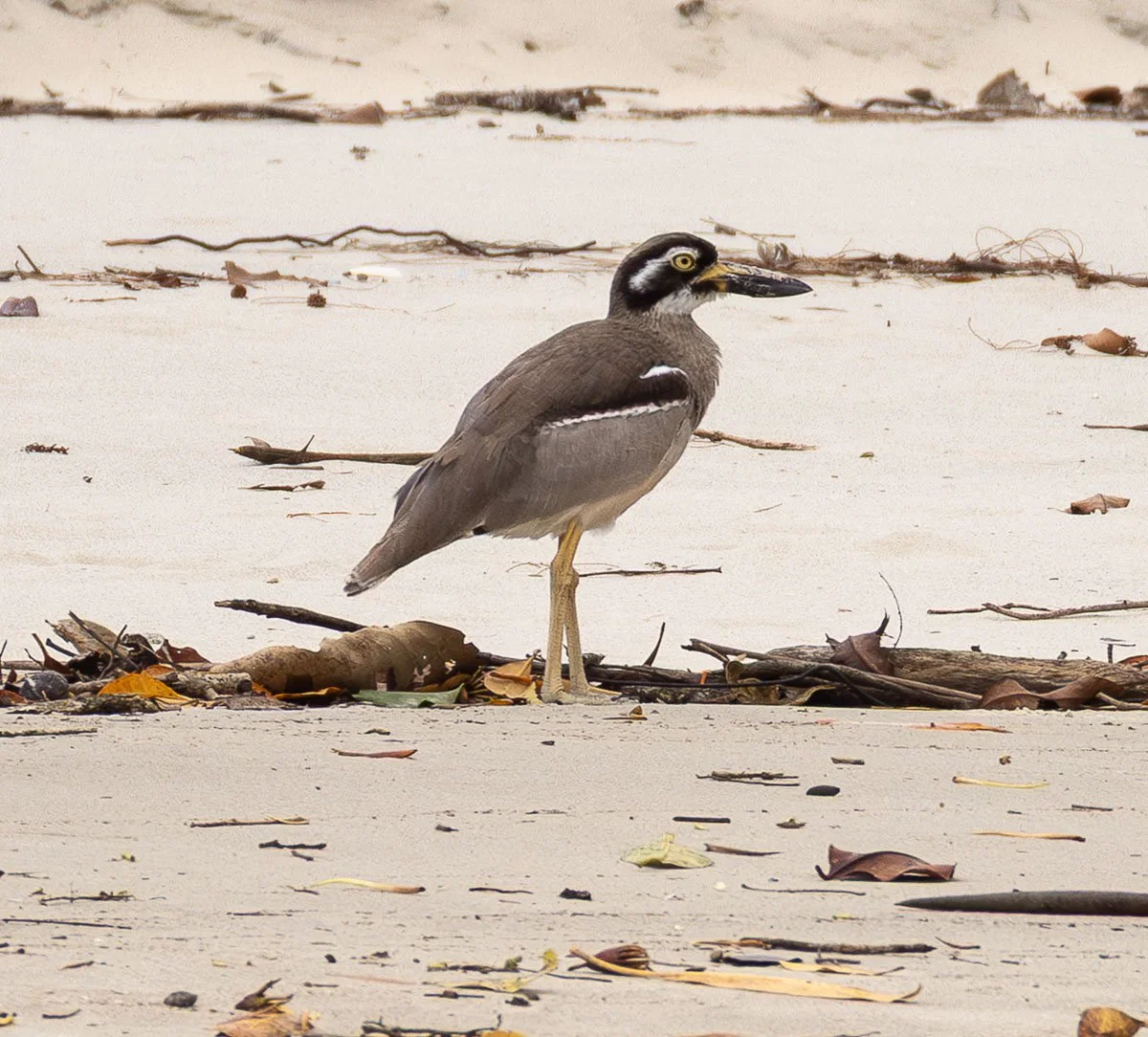
Beach Stone-curlew.
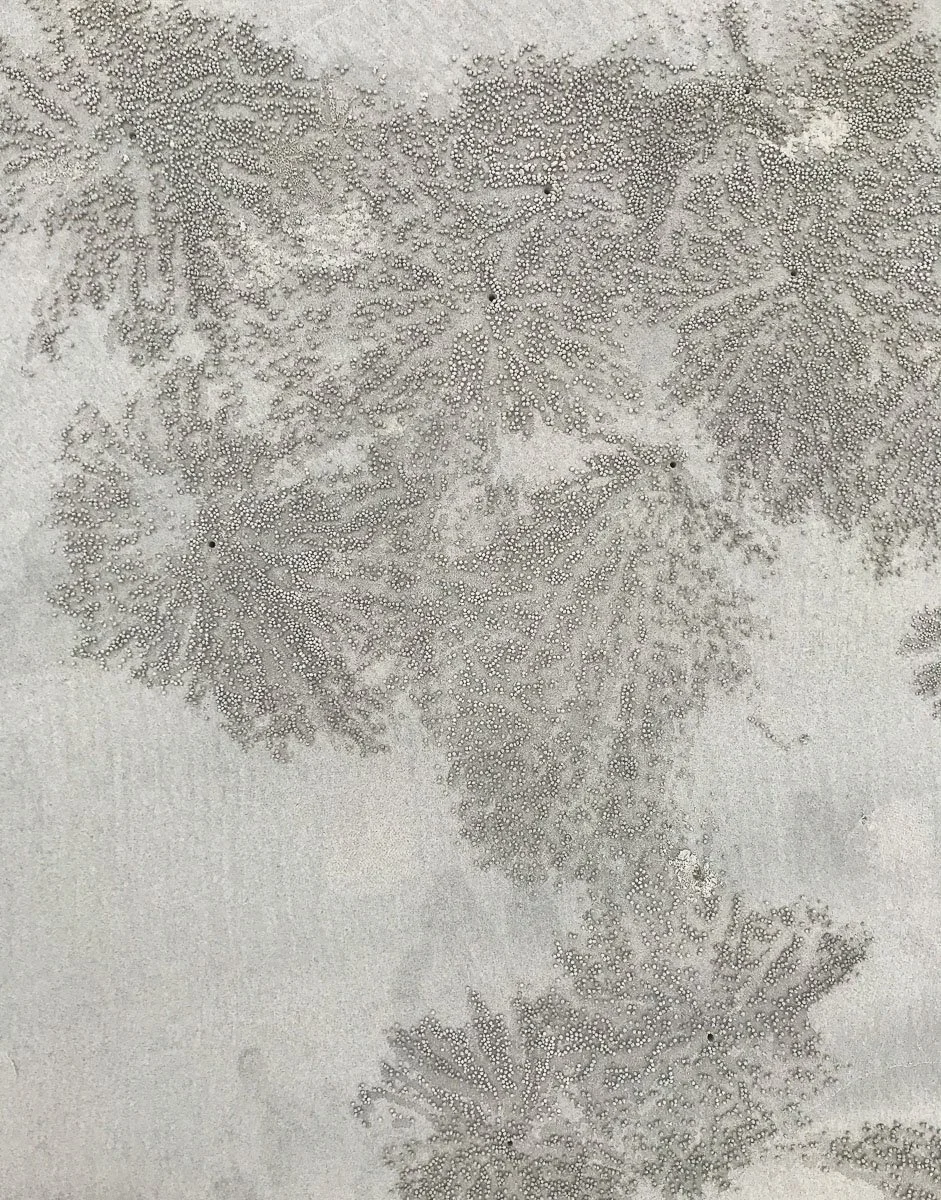
Small Sand Bubbler crabs roll the sand into balls as they burrow, and push them out to create these radial patterns as the tide recedes, every tide. Do they question the purpose of life?
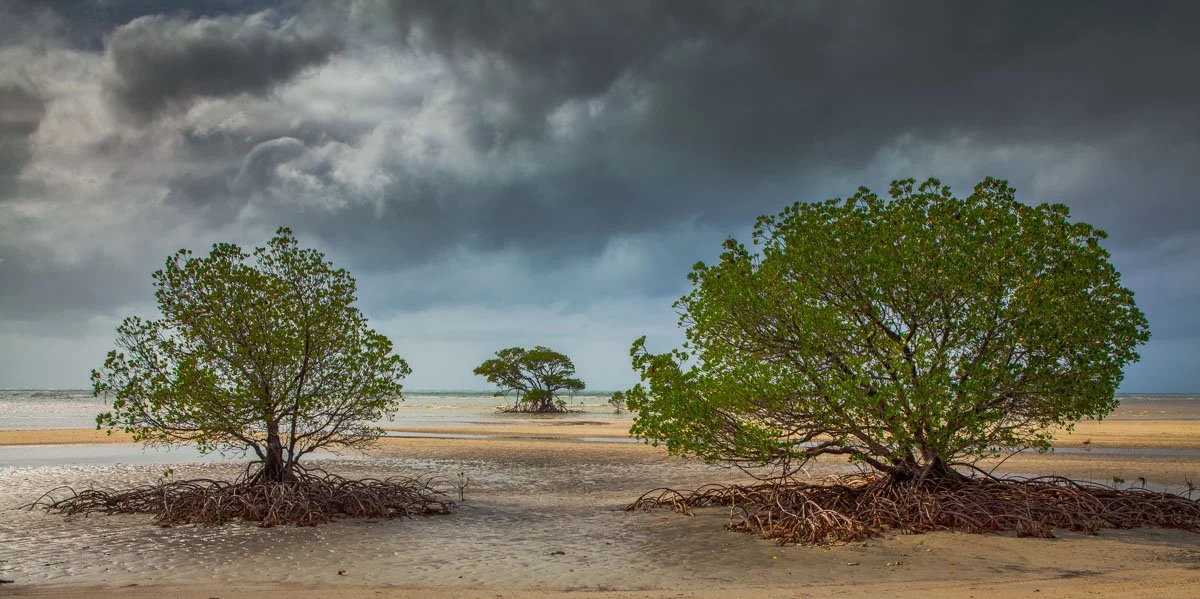
Coastal Mangroves claw at the shifting sands on Cowie Beach, Cape Tribulation. 12th July 2025
Approaching Cooktown and north of Cooktown.
A small but wonderful lagoon just south of Cooktown called ‘Keatings Lagoon’ contained some interesting birds as well as being picturesque.
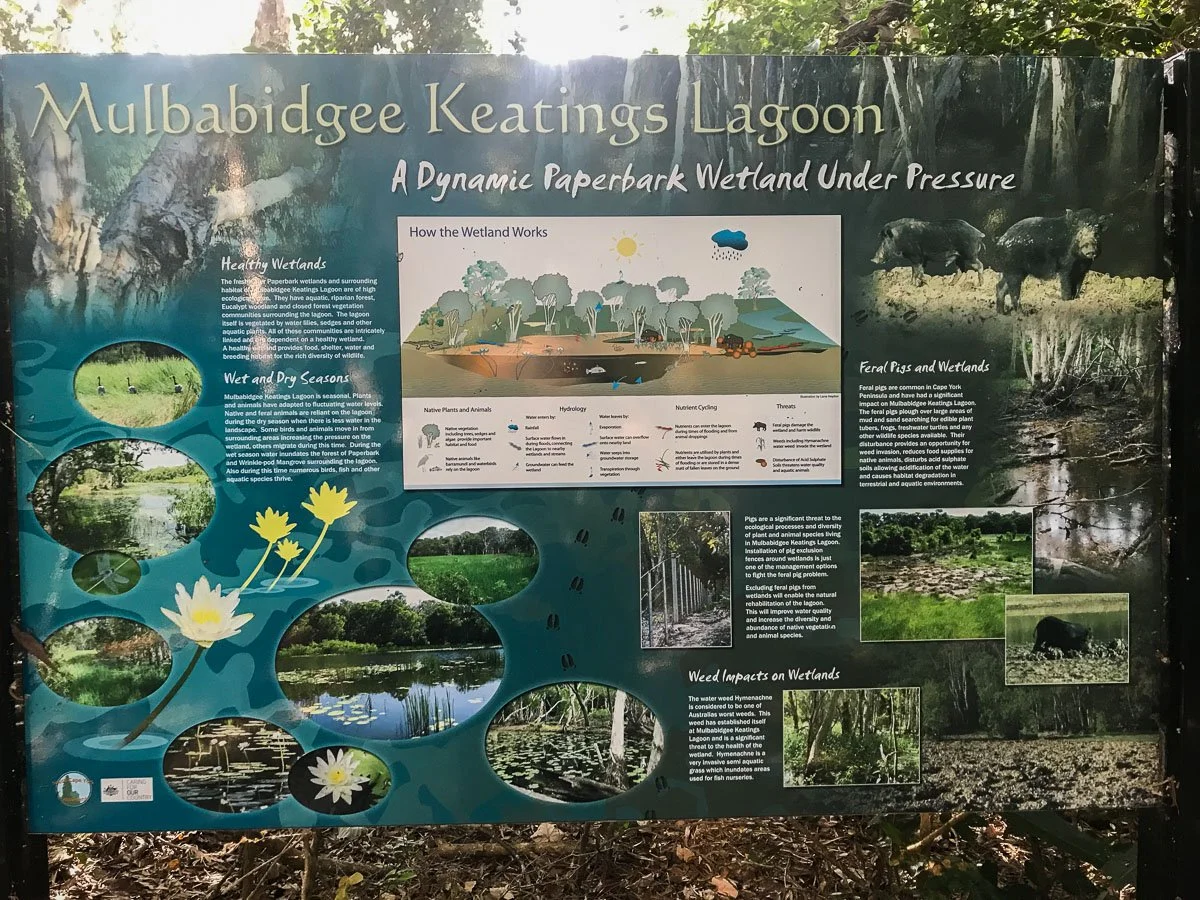
Information sign on the walk in. The lagoon needs constant management to protect it from pests.
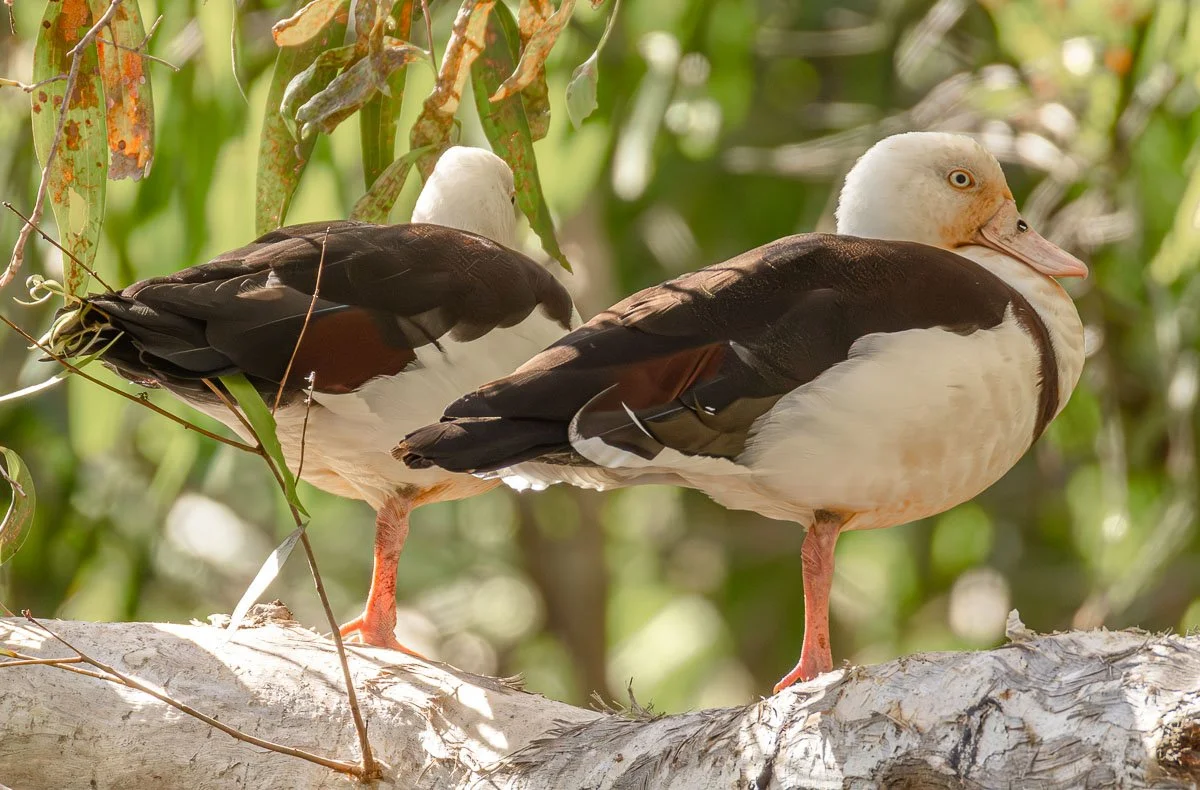
Radjah Shelducks
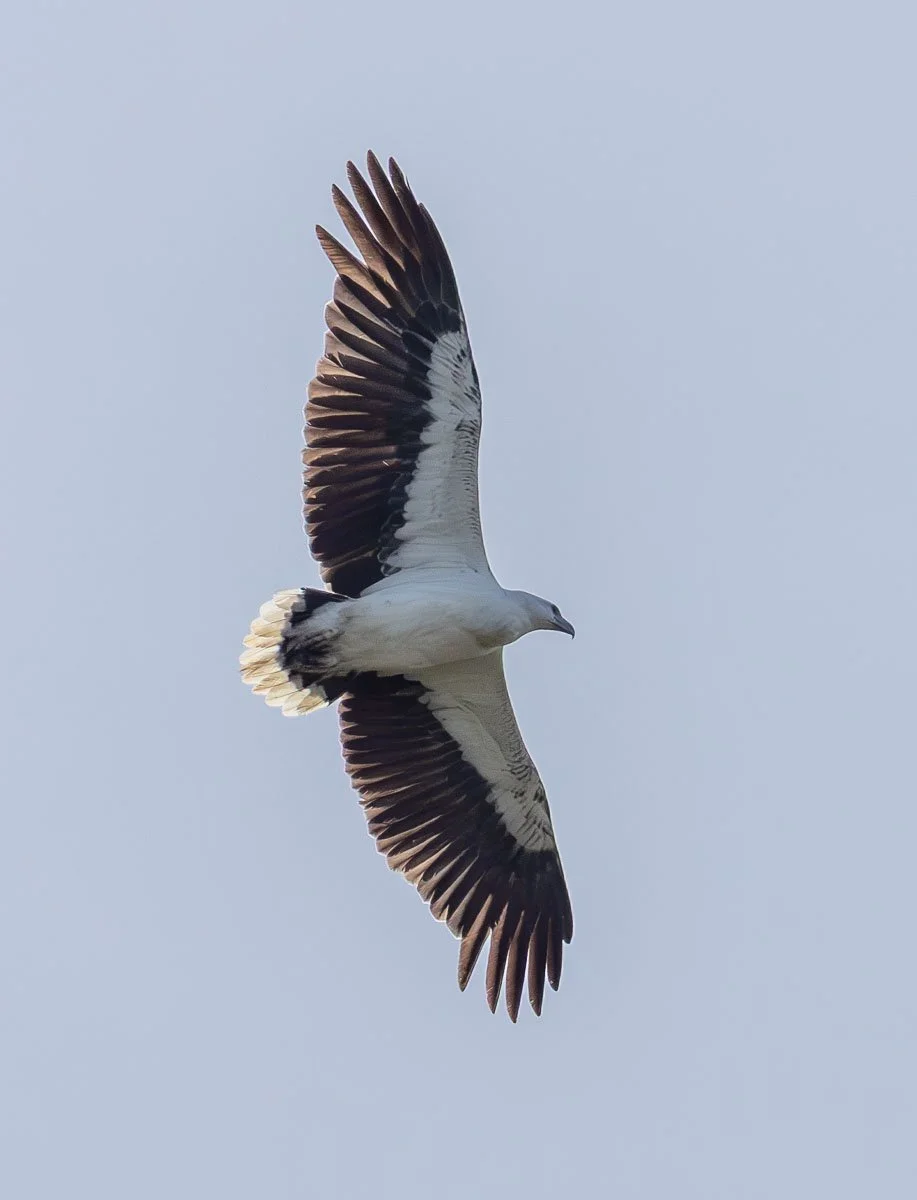
White-bellied Sea-Eagles patrol overhead.
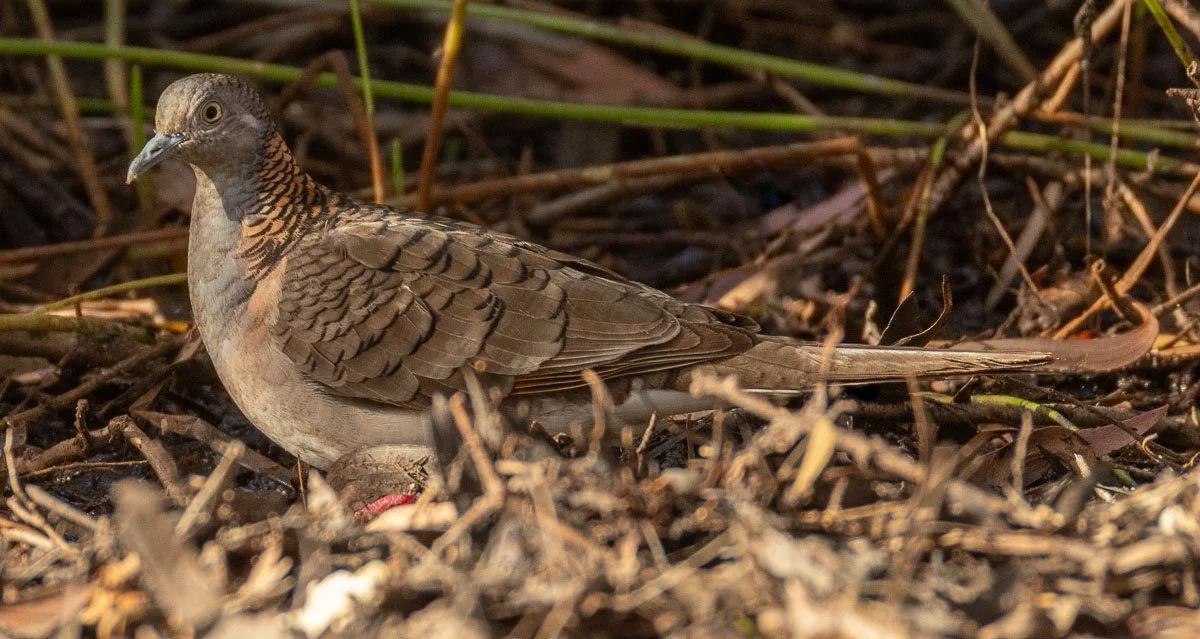
Bar-shouldered Dove. This time in a natural setting, where its colouring blends into the surroundings.
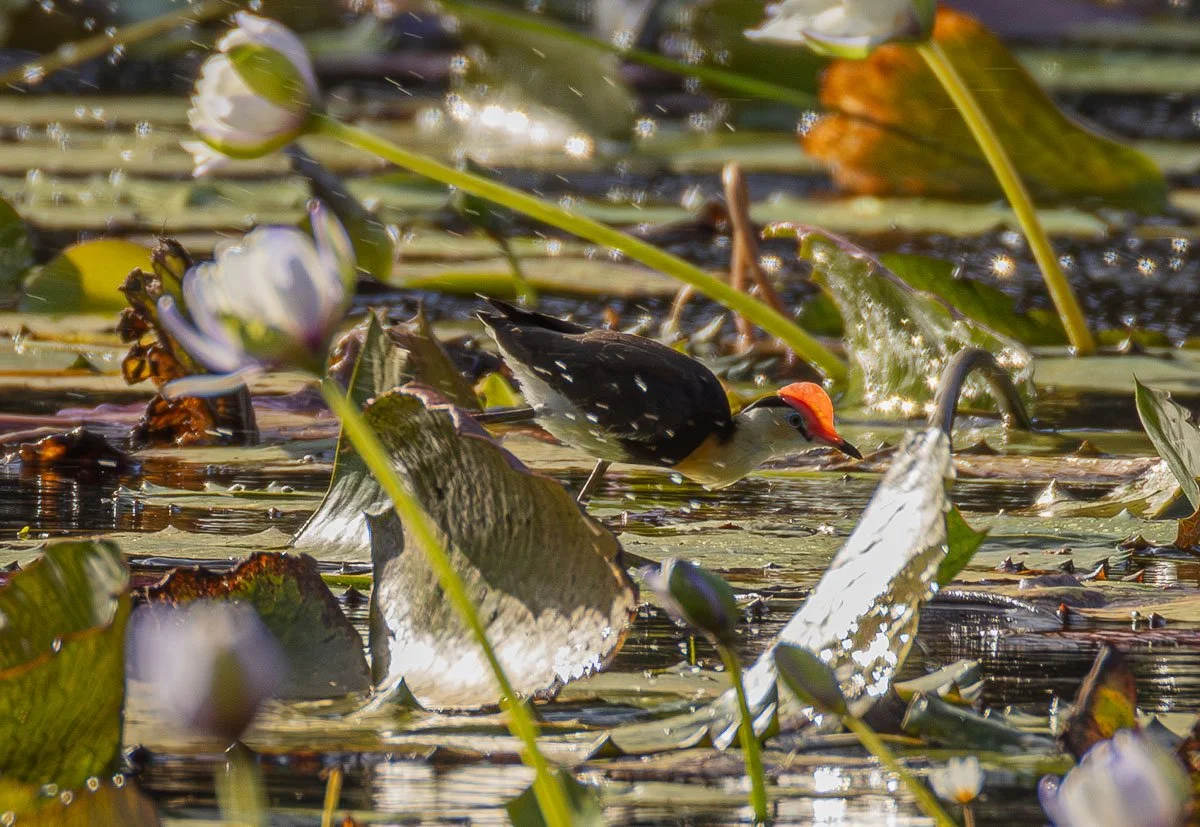
A Comb-crested Jacana (above) disturbs insects as it walks on the floating Lily pads. A few Green Pygmy-goose were too distant to photograph.
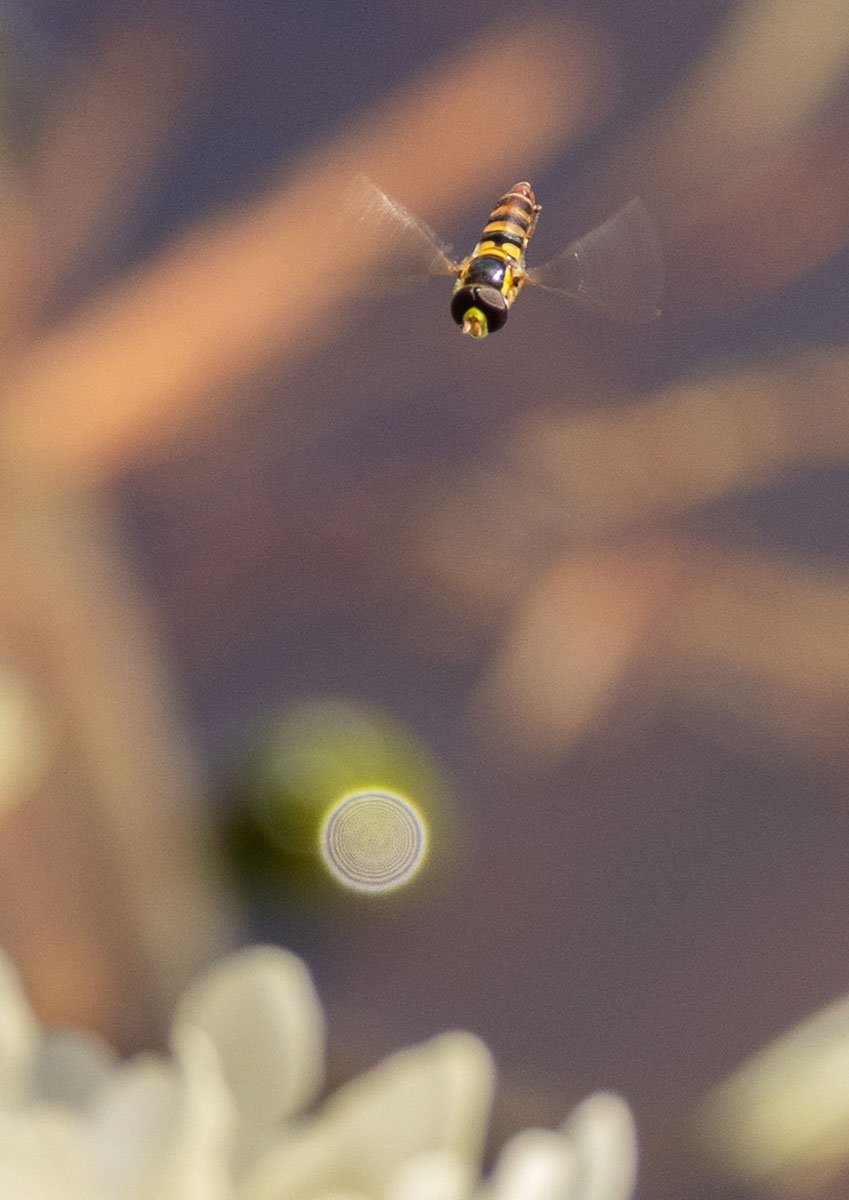
A native bee investigates a Lily flower. Wisely, it has sent ahead a Proximity Landing Orb Probe or PLOP to help it set down. The readers who are also photographers will know what this actually is.
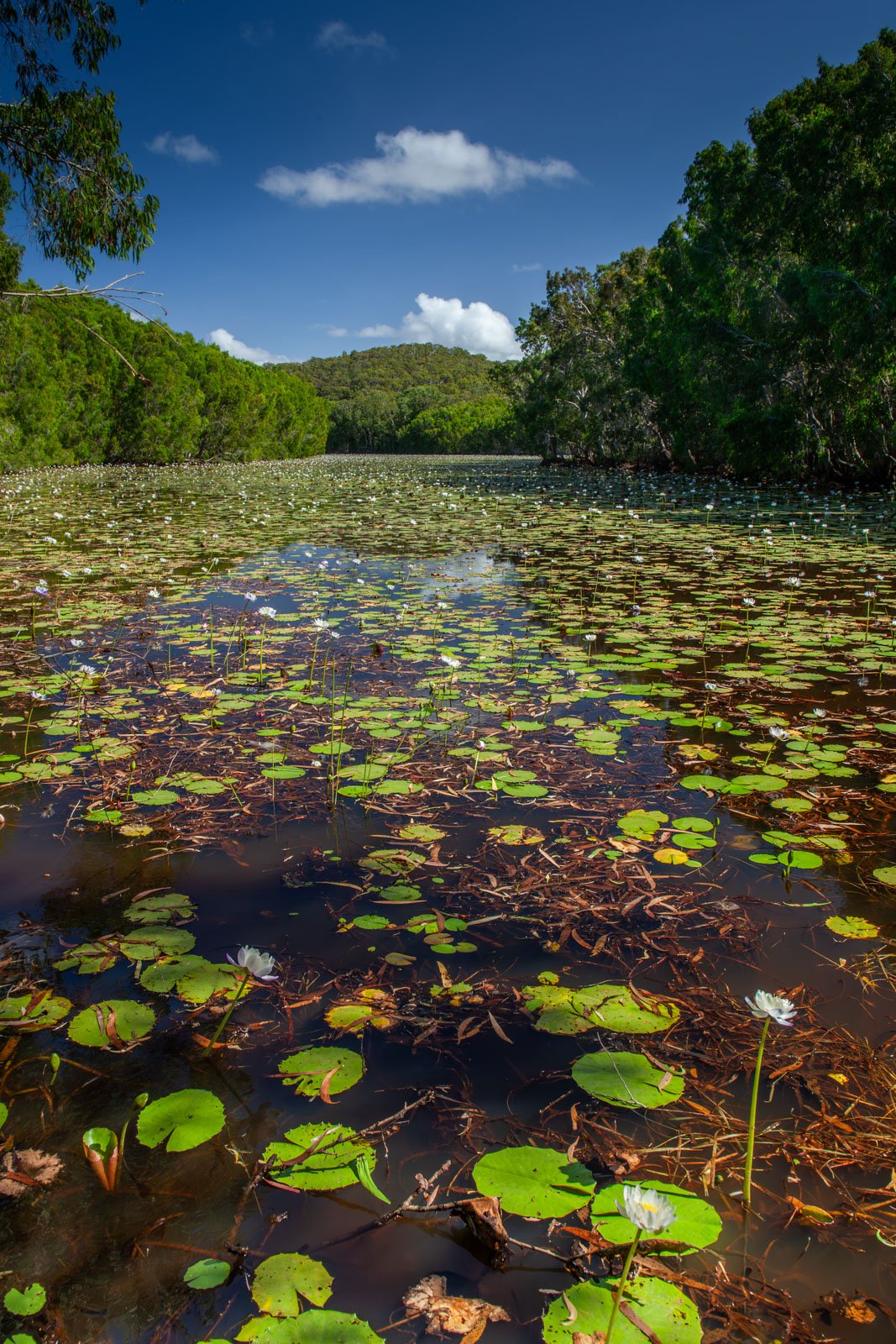
Keatings Lagoon
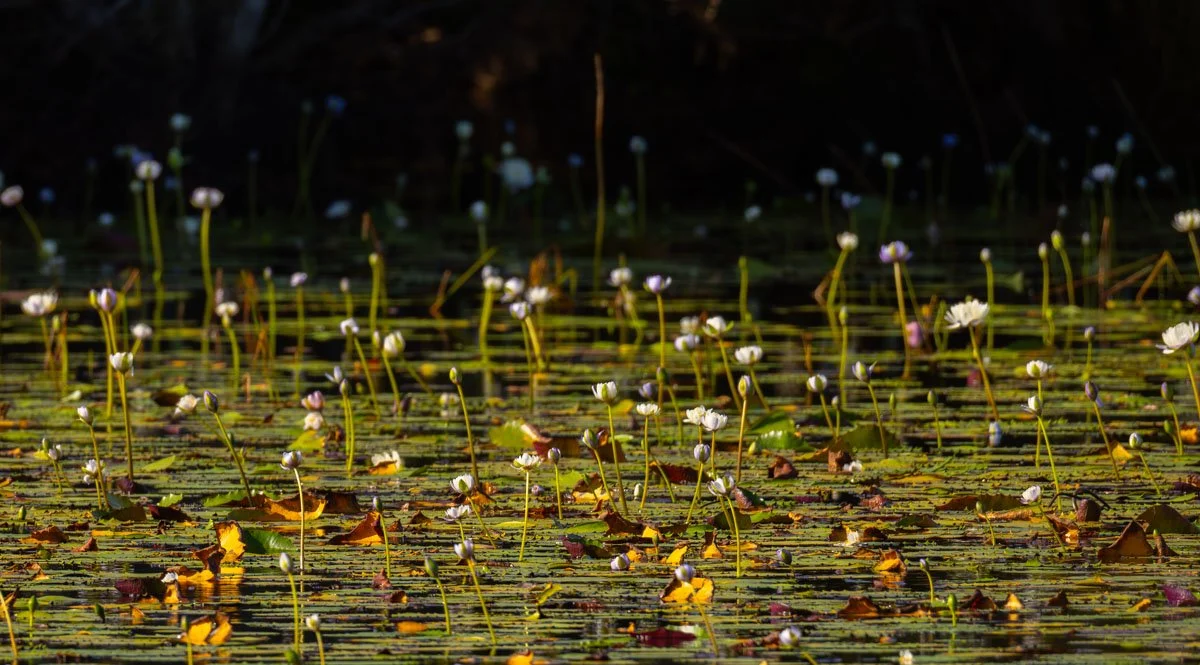
Keatings Lagoon
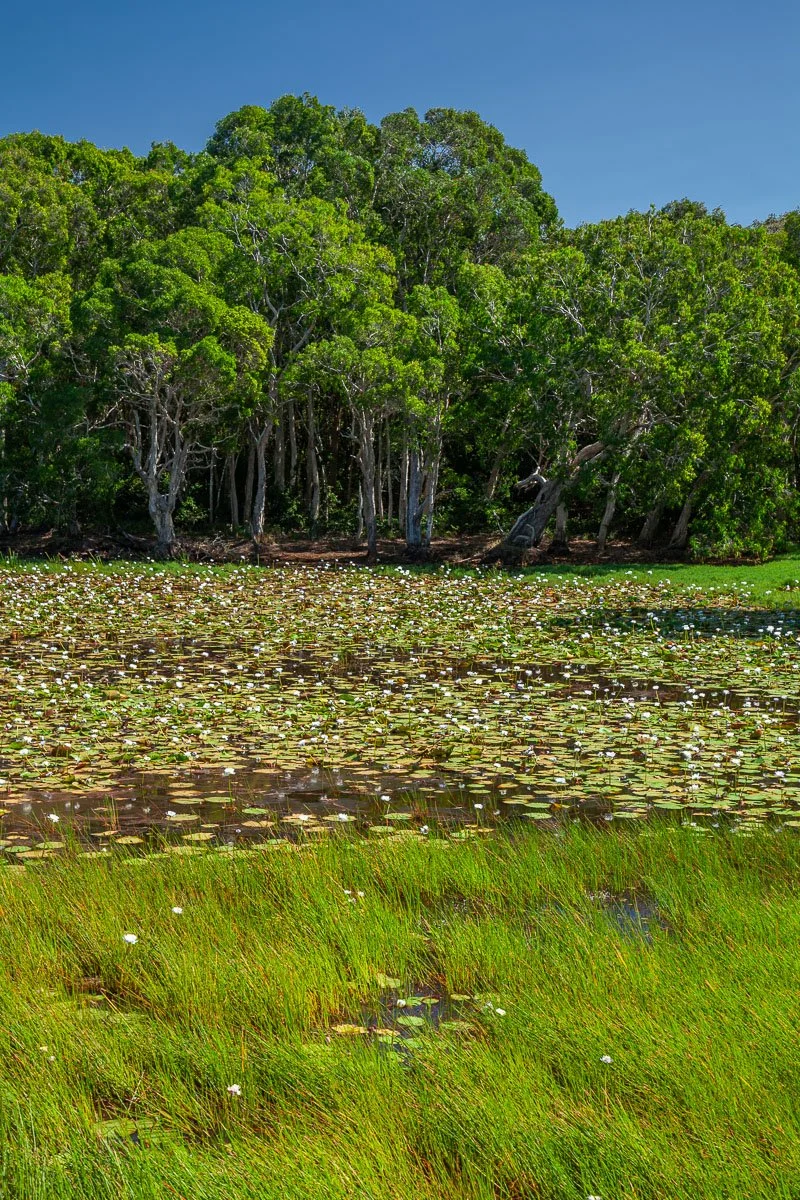
Keatings Lagoon is beautiful. I would like to have been there earlier to get better light.
Cooktown Botanic Gardens.
One of the great things about botanic gardens is there is usually some open space where birds can be photographed. It also helps that they are used to people and therefore not as eager to flee.
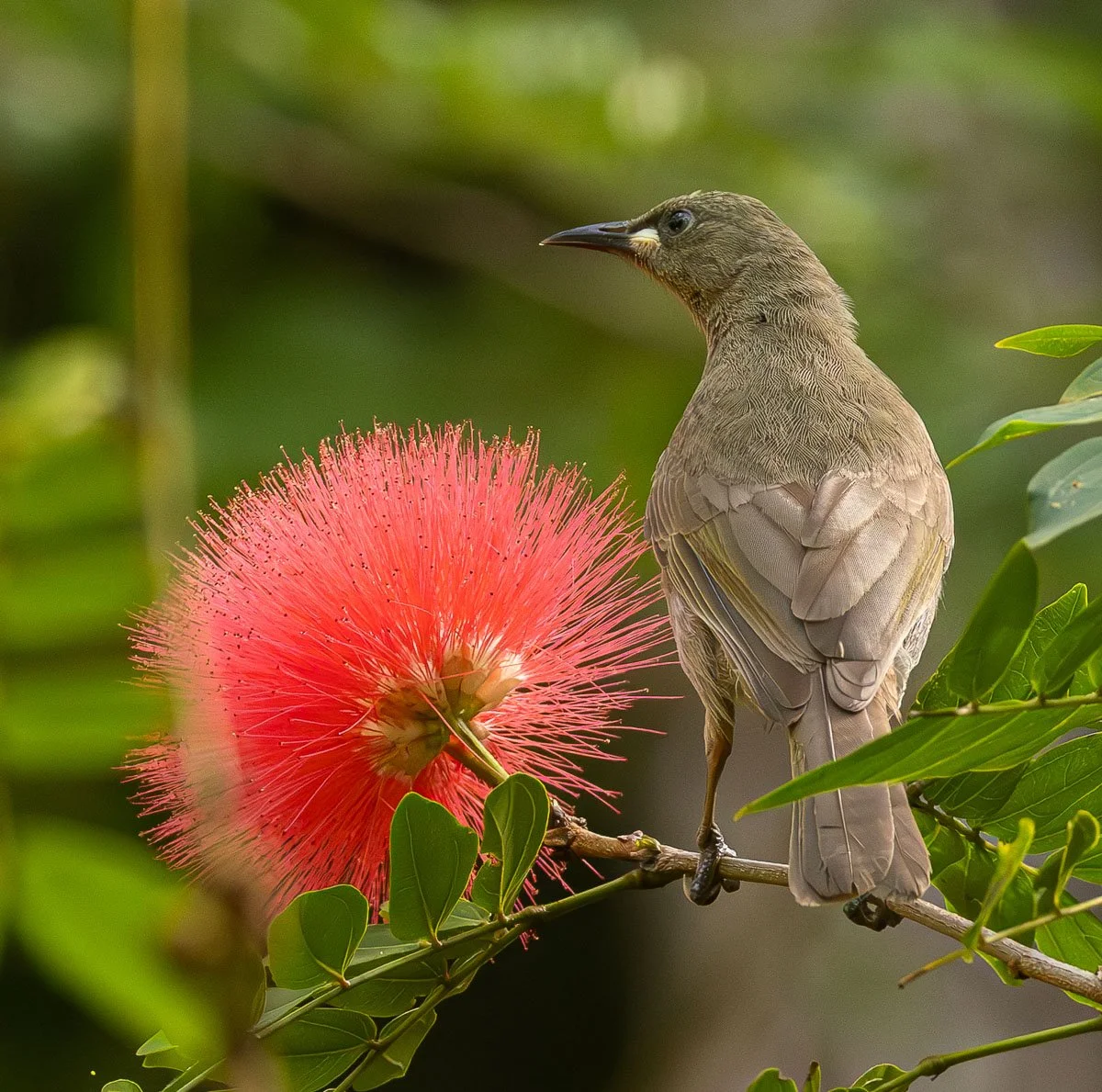
White-gaped Honeyeater

Macleay’s Honeyeater
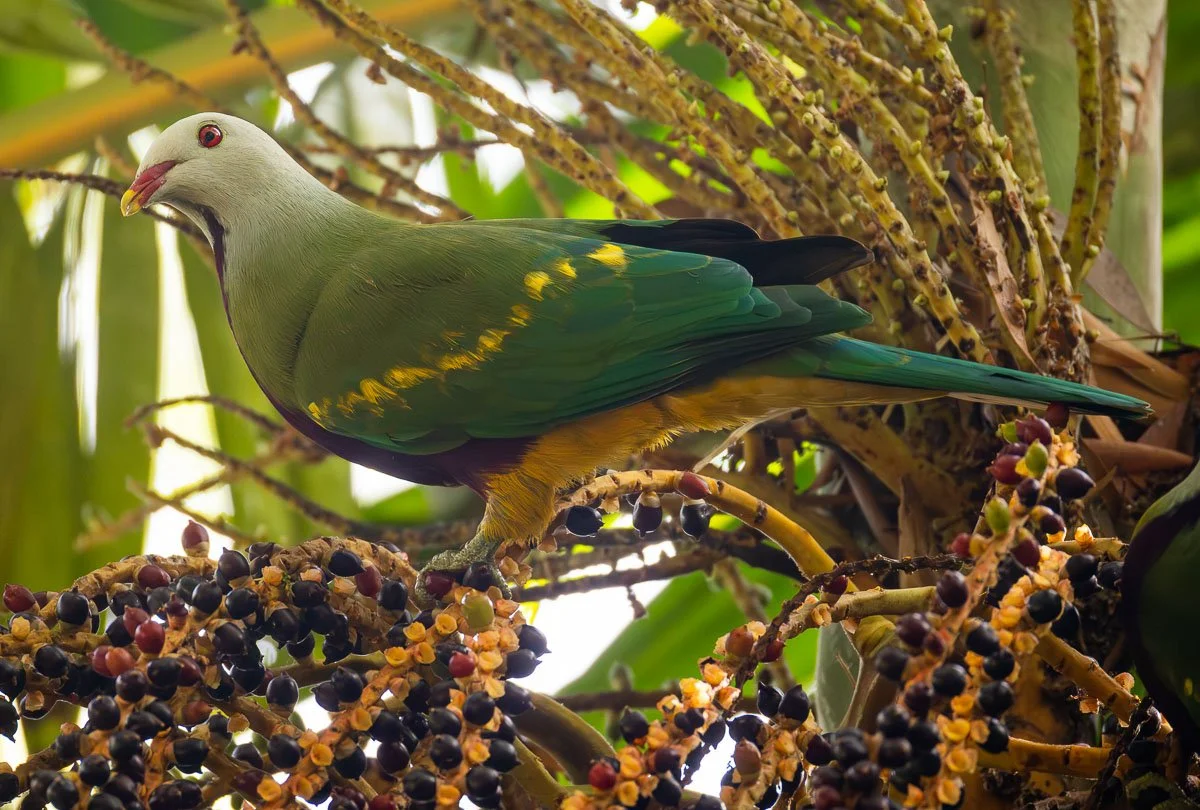
Wompoo Fruit Dove. Perched on the berries it was eating.
North of Cooktown.
We stayed at Endeavour River Escape, another farm stay campsite. This was the best farm stay of the trip. There we had the opportunity to photograph the resident Brahminy Kites.
It also marked the most Northerly reach of our trip.
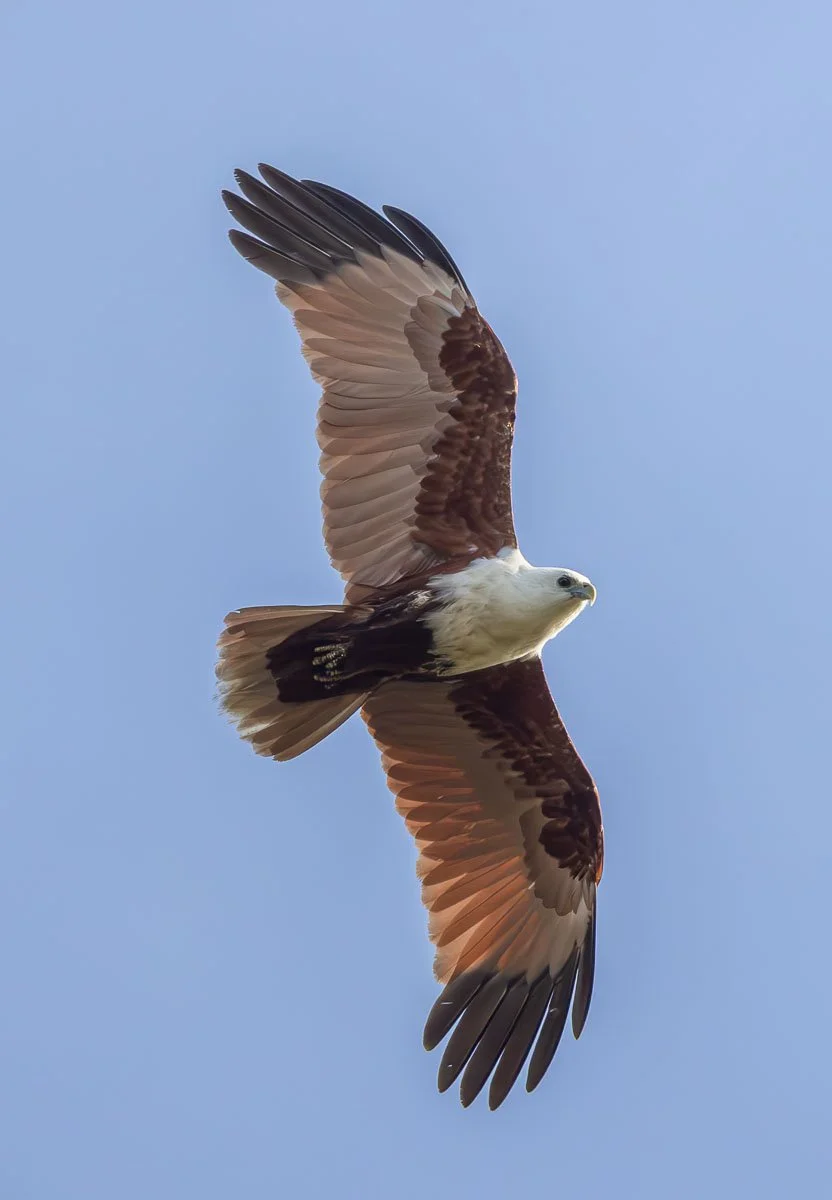
Brahminy Kite
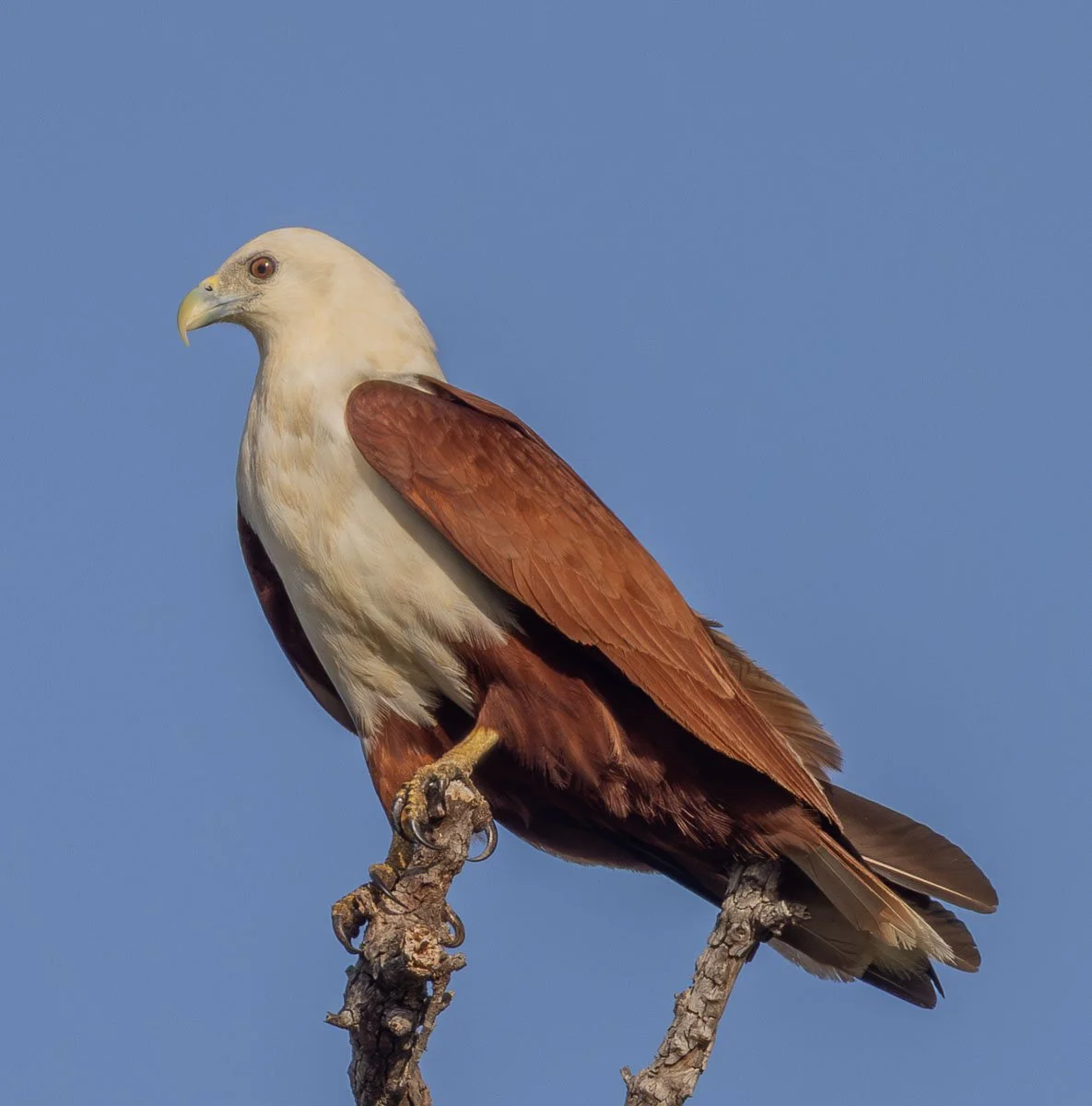
Brahminy Kite
The return Journey on the inland side of the Great Dividing Range.
We passed through the Atherton area. For one reason or another I did little photography. One of them was the darkness inside the rain forests, but I did capture this tree a Bumpy Satin Ash which flowers from its trunk and not its canopy. A phenomenon known as Cauliflory.

Bumpy Satin Ash
Moving south from Atherton we stopped at another farm stay Pinnarendi Station.
Out back of this were extensive walking tracks, filled with birds.
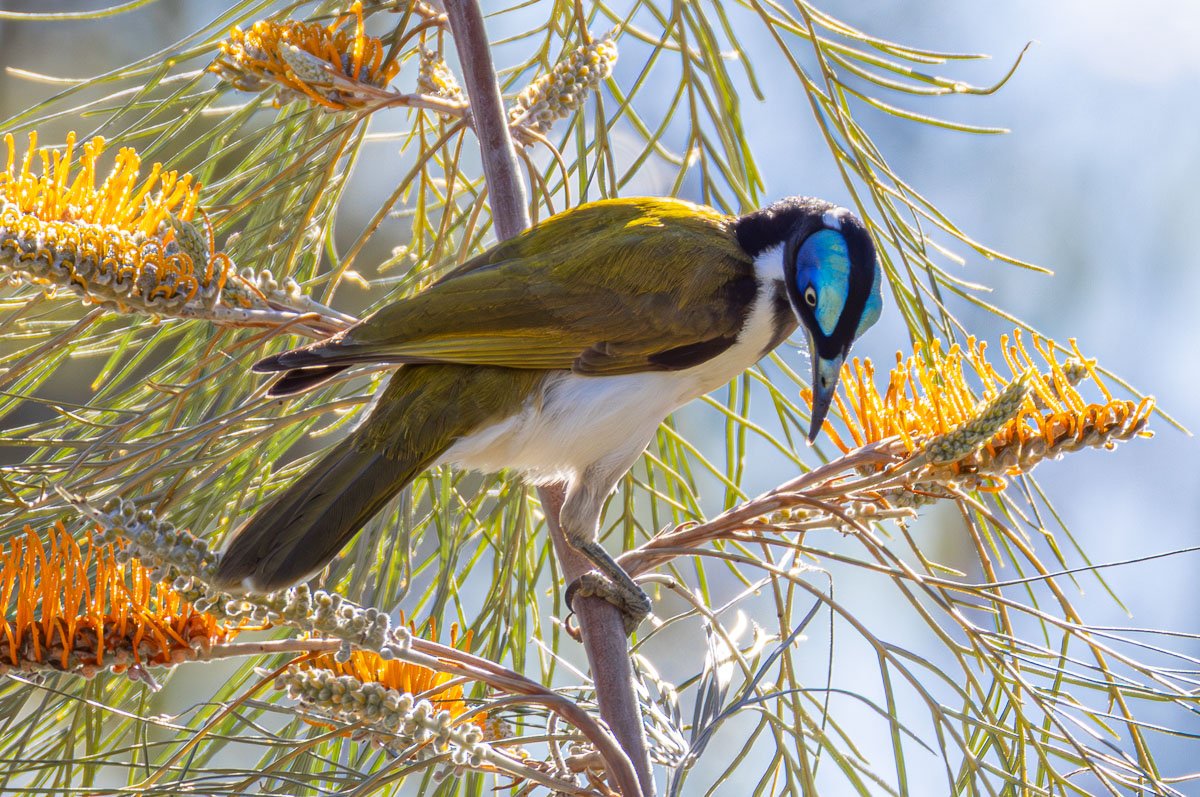
Blue-faced Honeyeater. (also found in the southern states)
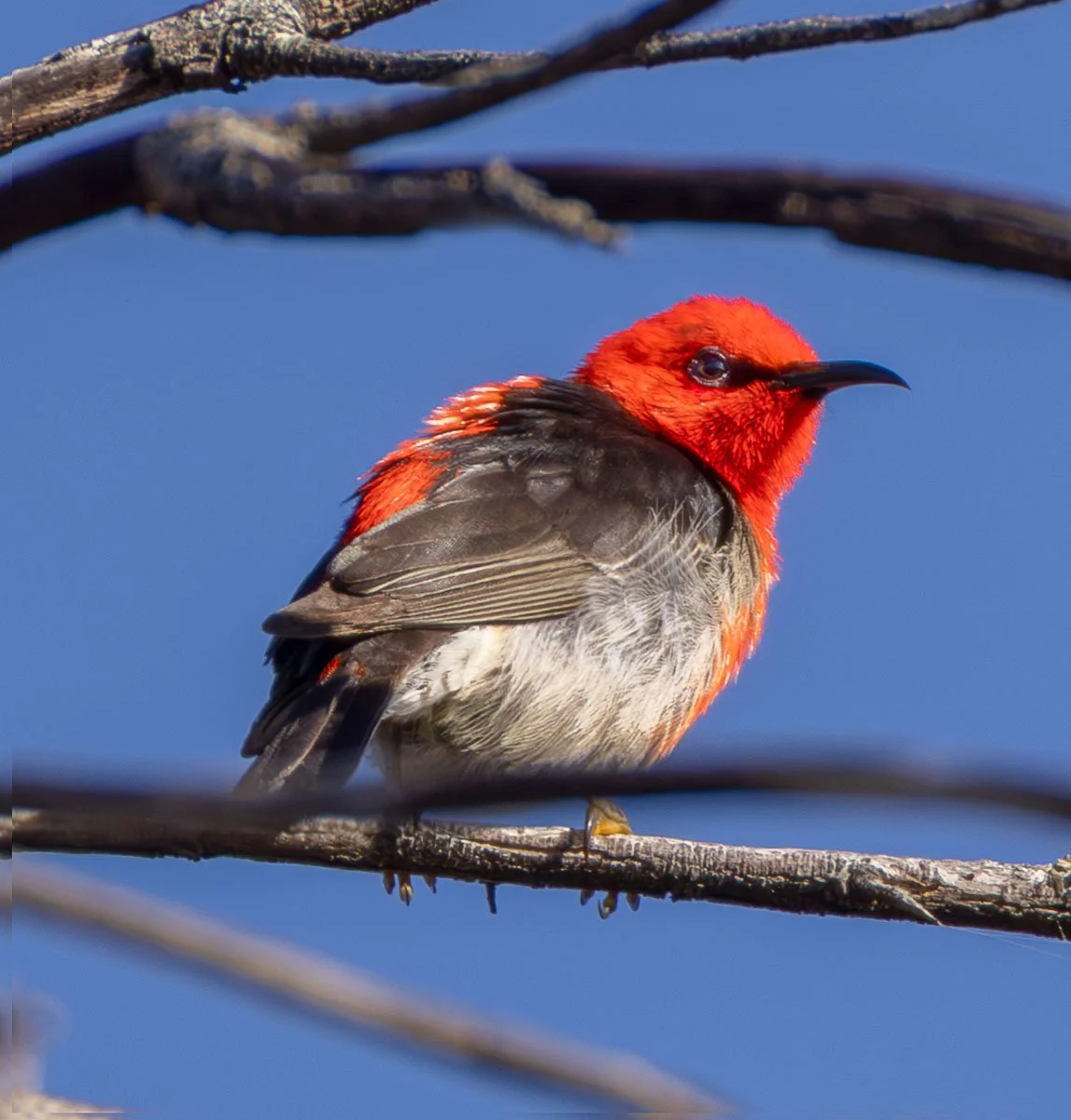
Scarlet Honeyeater (M)
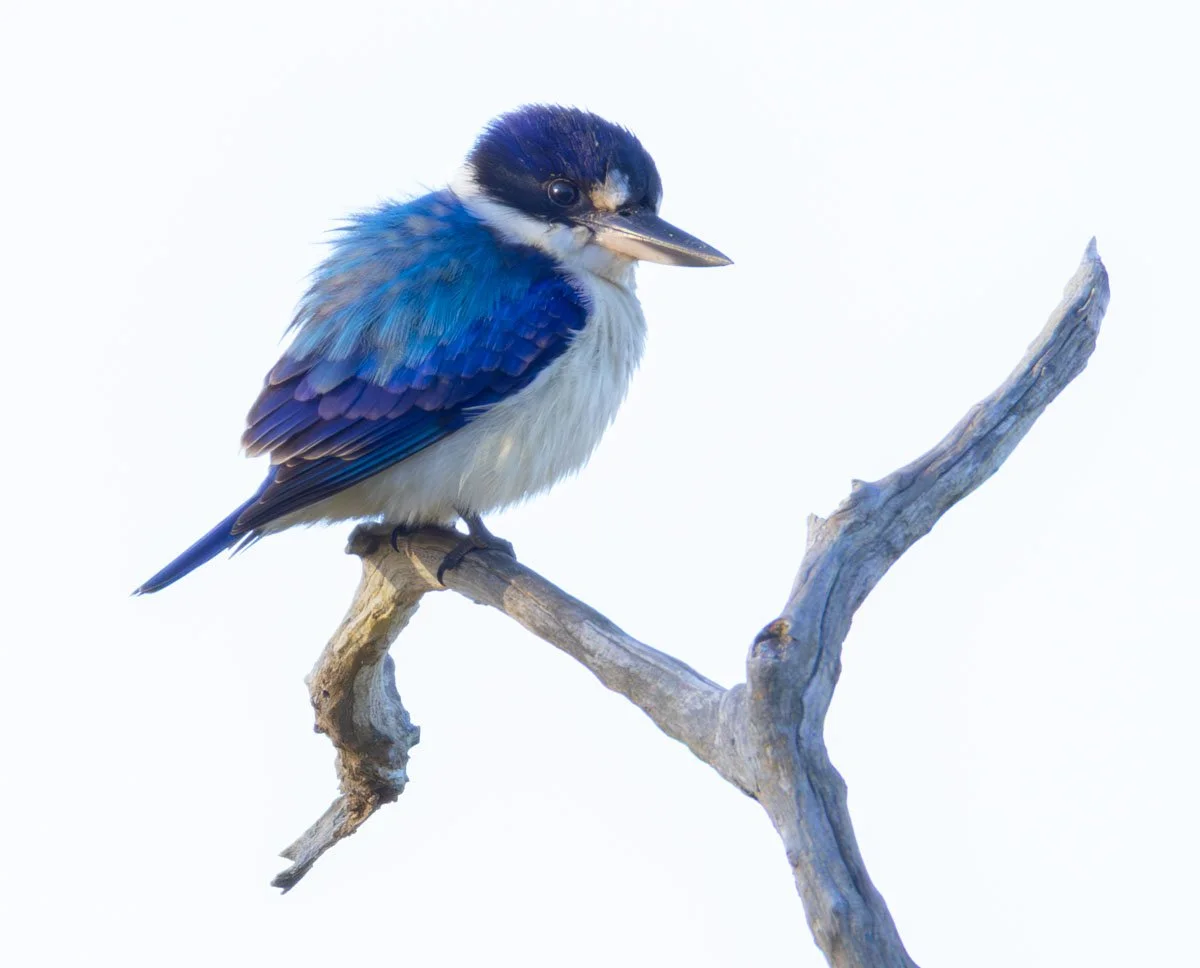
Another look at a Forest Kingfisher. Such a beautiful bird. Unfortunately, no camera can capture the true iridescence of its plumage.
Porcupine Gorge
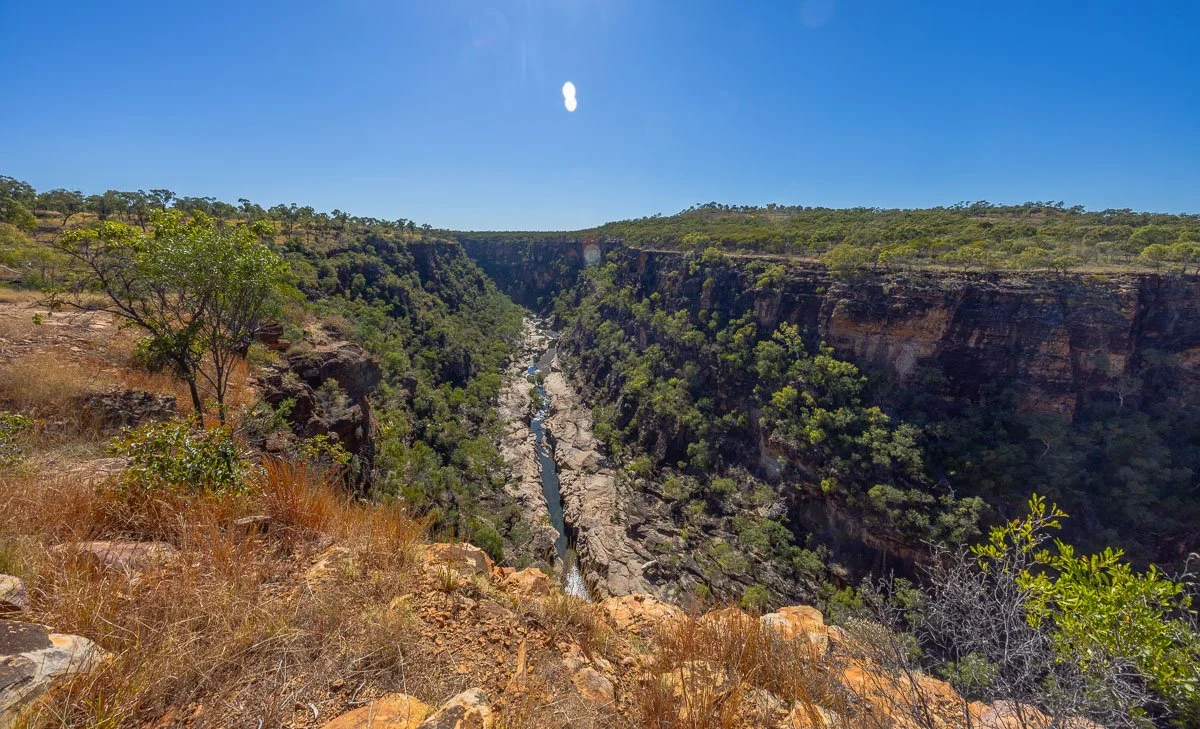
A deep ravine carved out over millennia by Porcupine Creek.
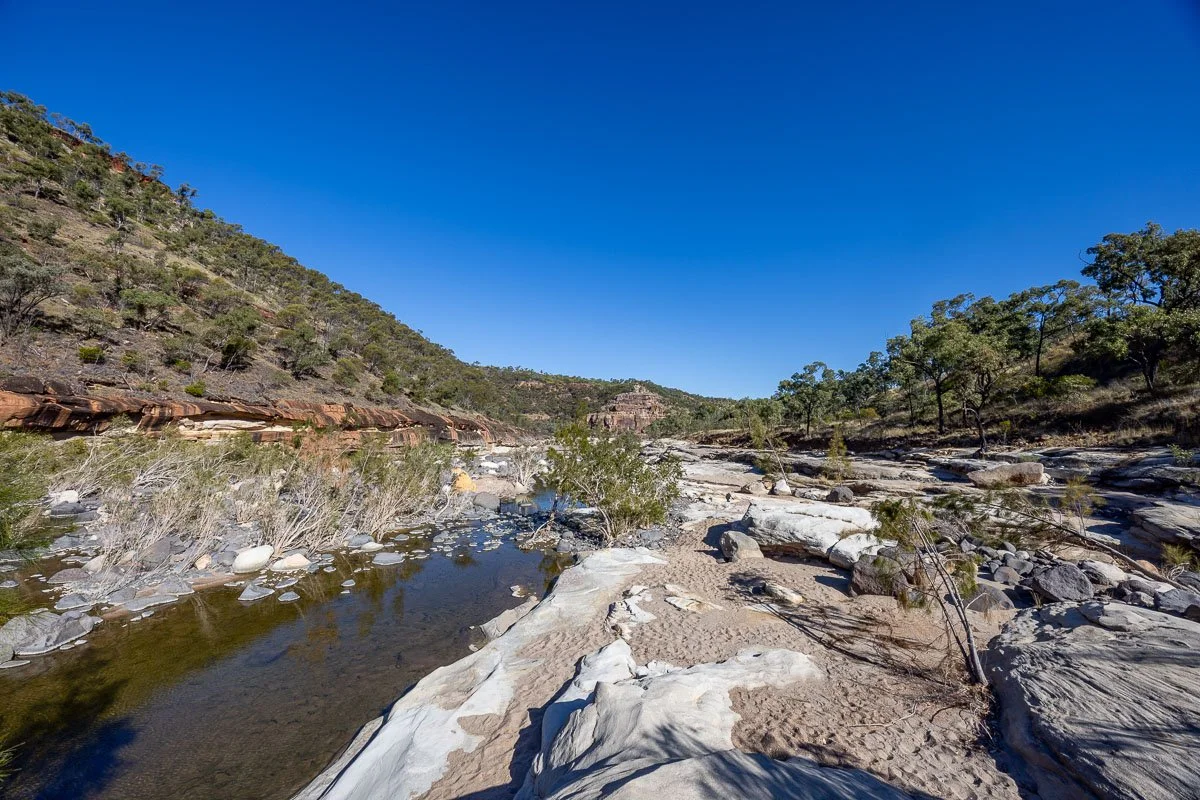
Once again, I wished I had better light to do landscapes but you find yourself needing to be somewhere later in the day, so you do what you can, and without extensive editing.
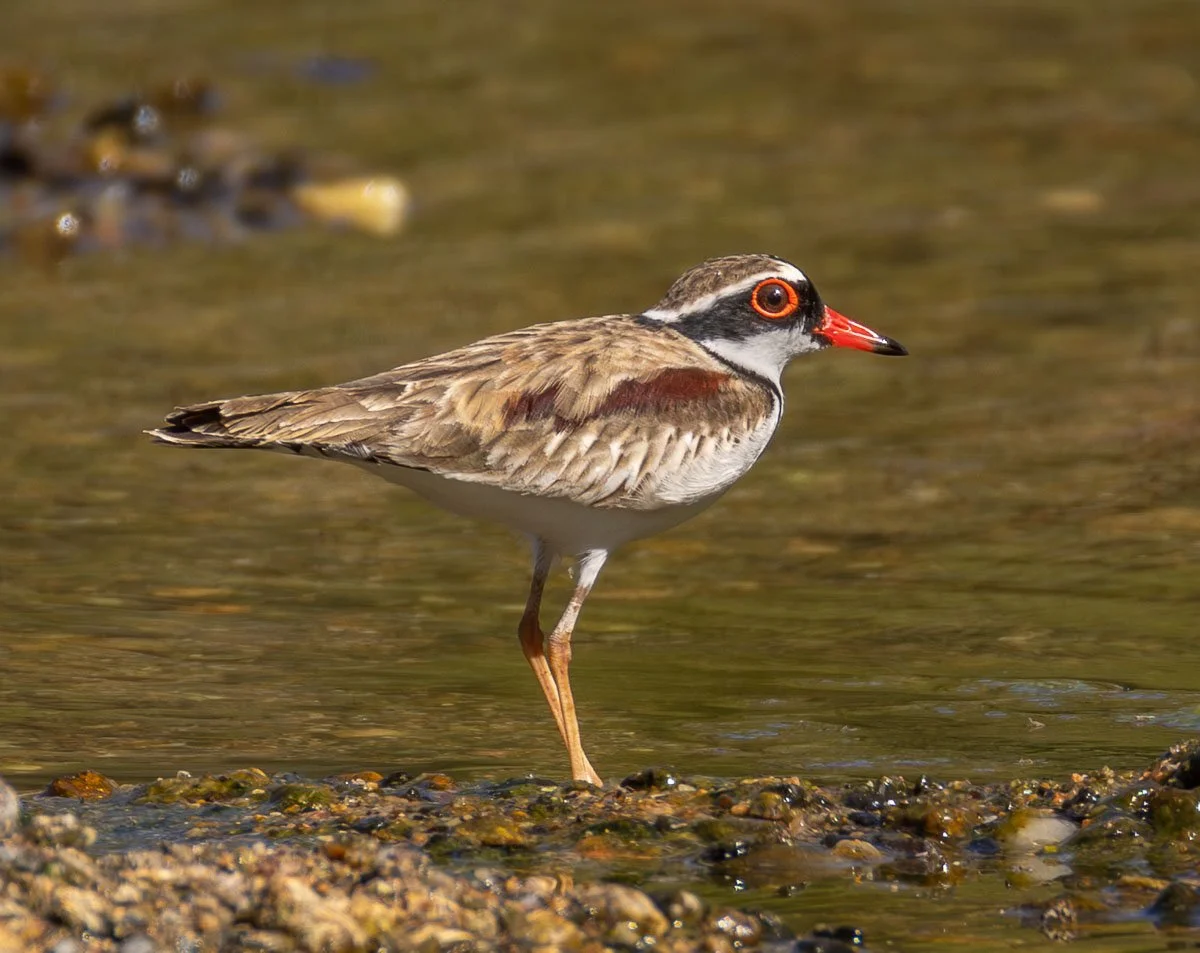
Black-fronted Dotterel. One of a pair wading in the creek.
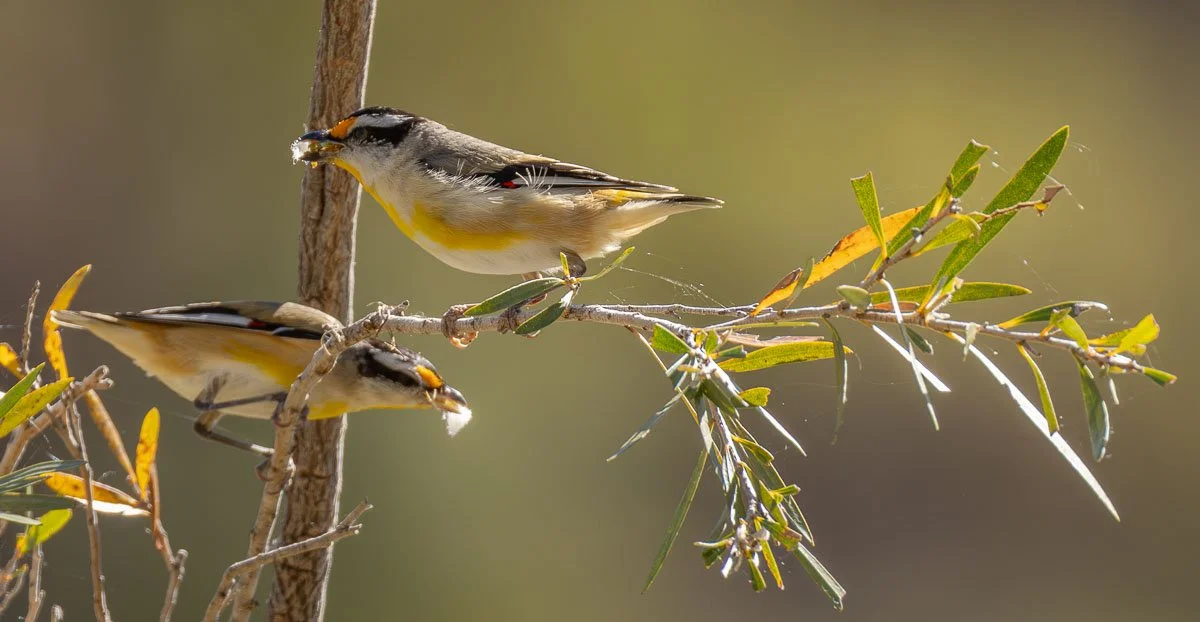
Striated Pardalote inland version, (melanocephalus) collecting nesting material.
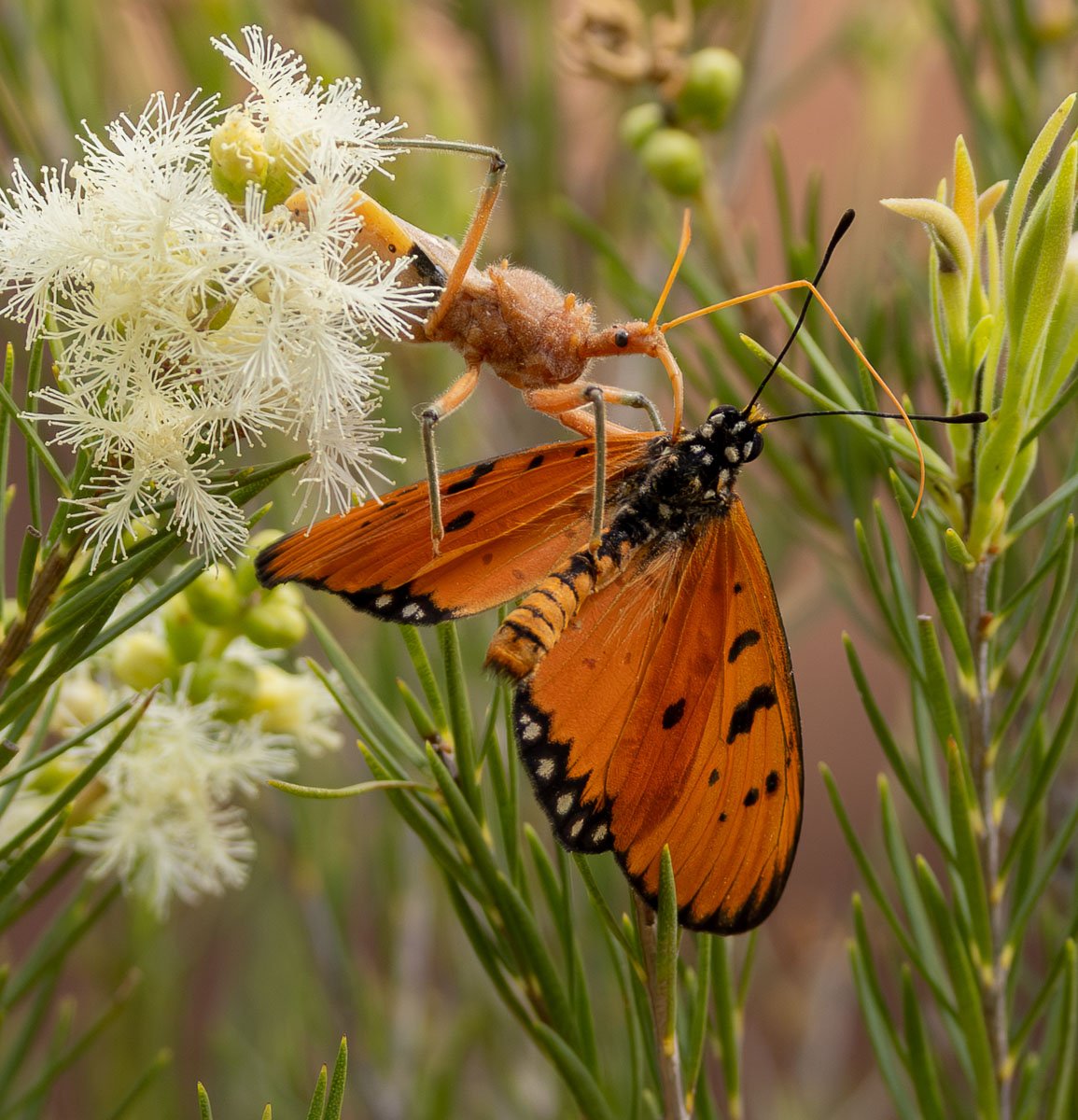
(Something strange) consumes a butterfly.
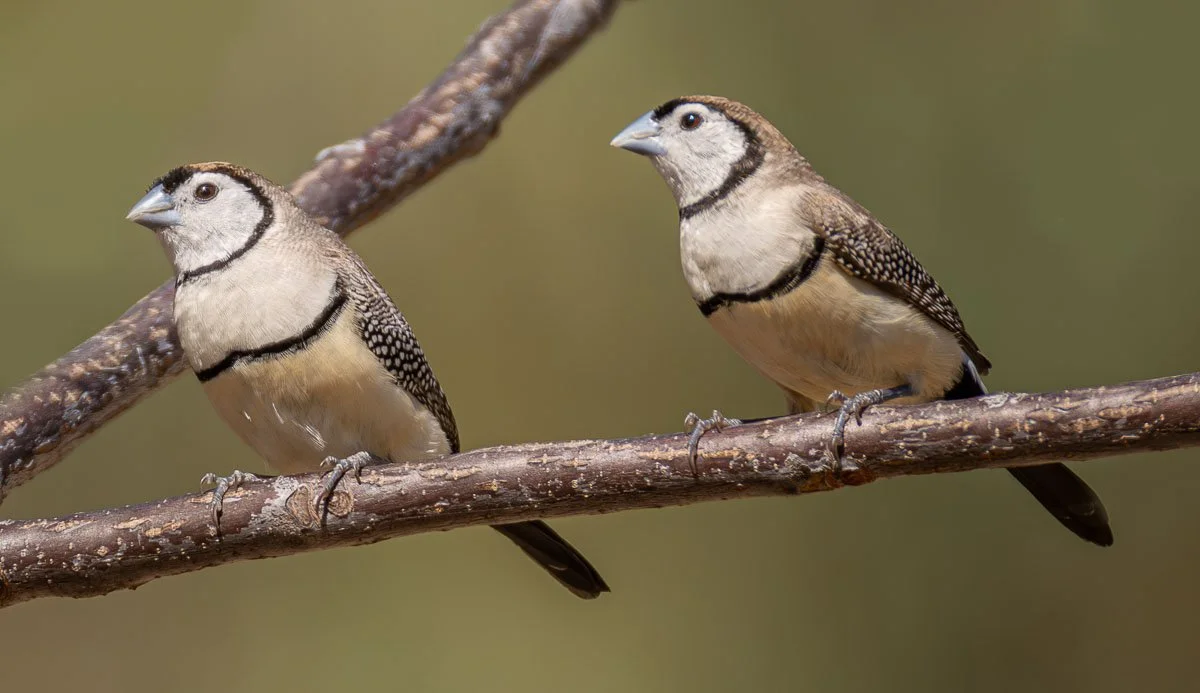
Double-barred Finch (doubled)
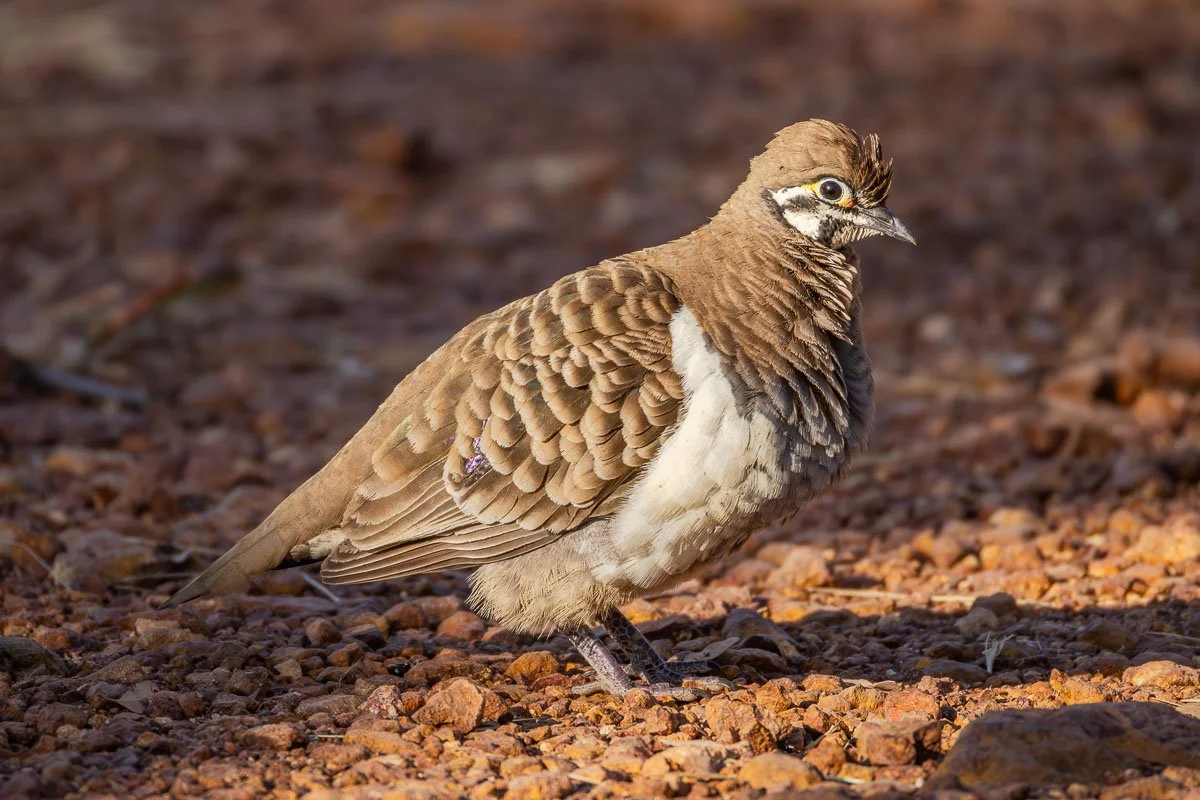
Squatter Pigeon. So named as its defense is to freeze and pull down. This made them easy to catch by early settlers (squatters) which cemented the name.
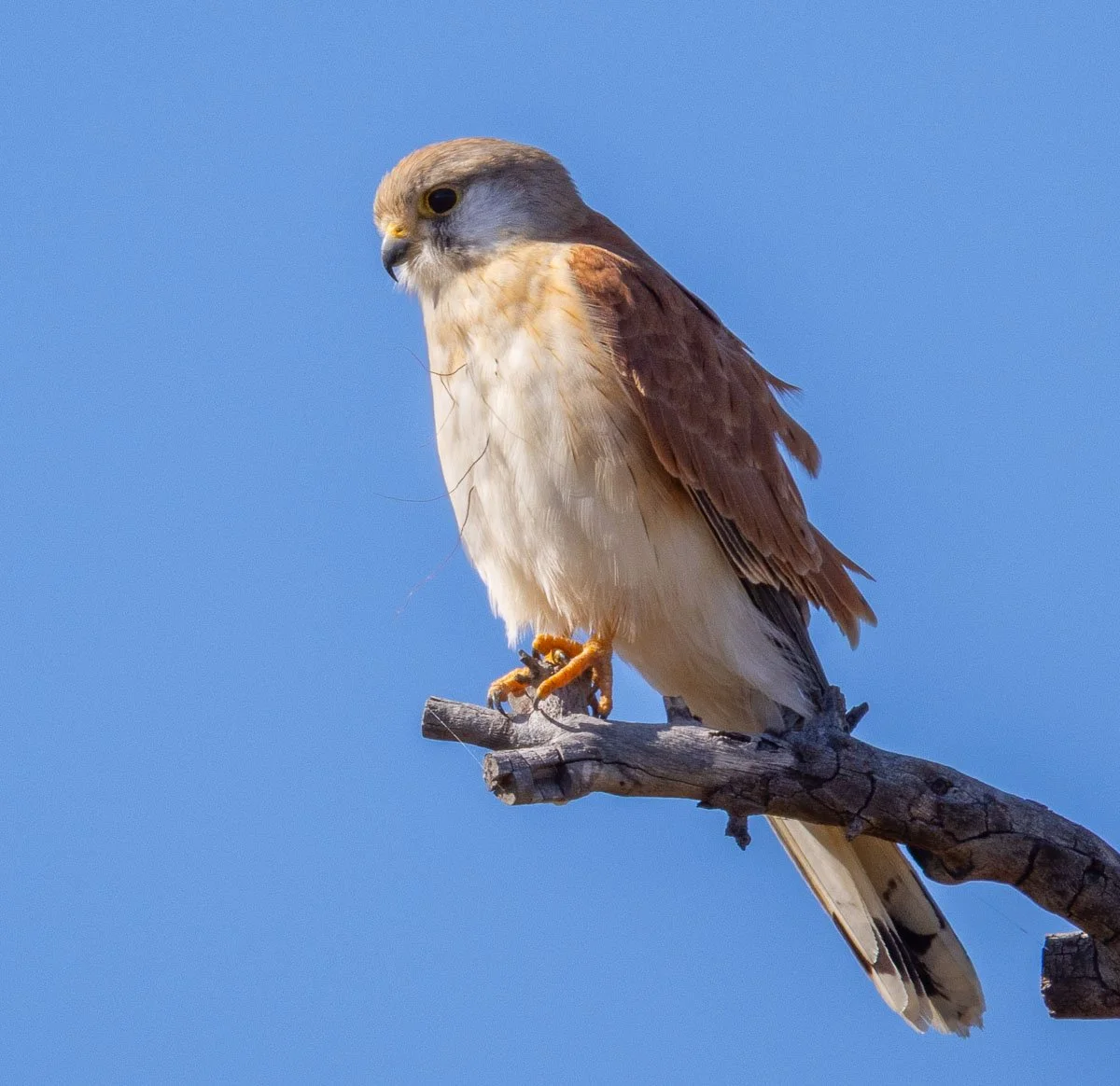
A Nankeen Kestrel surveys the gorge from a vantage point on the rim.